ANA MENDIETA – SELF PORTRAIT WITH BLOOD
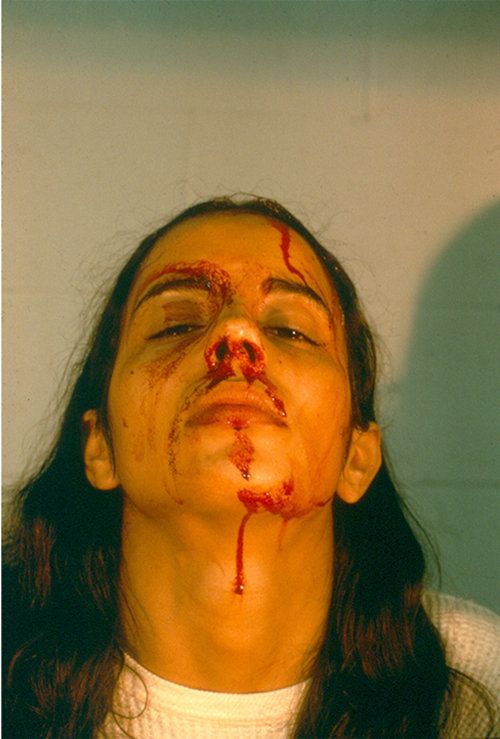
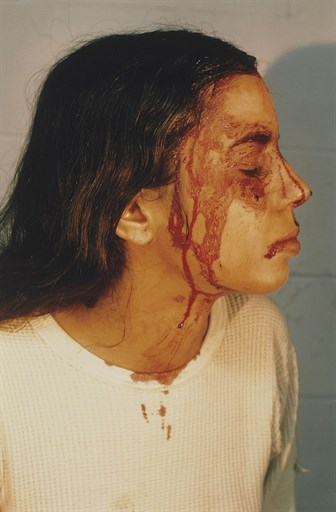
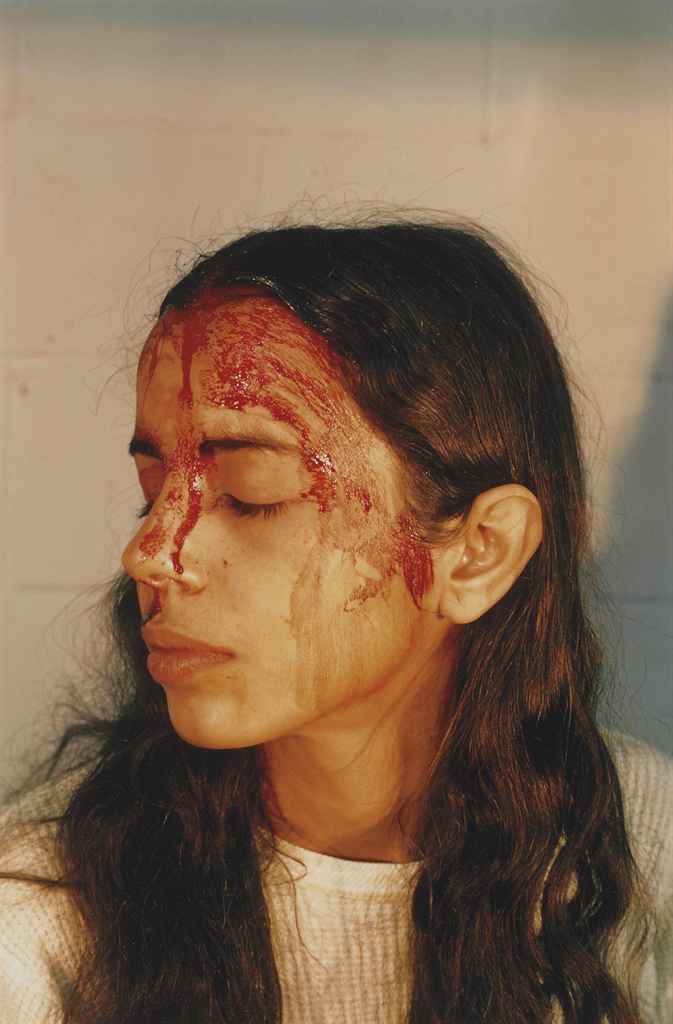
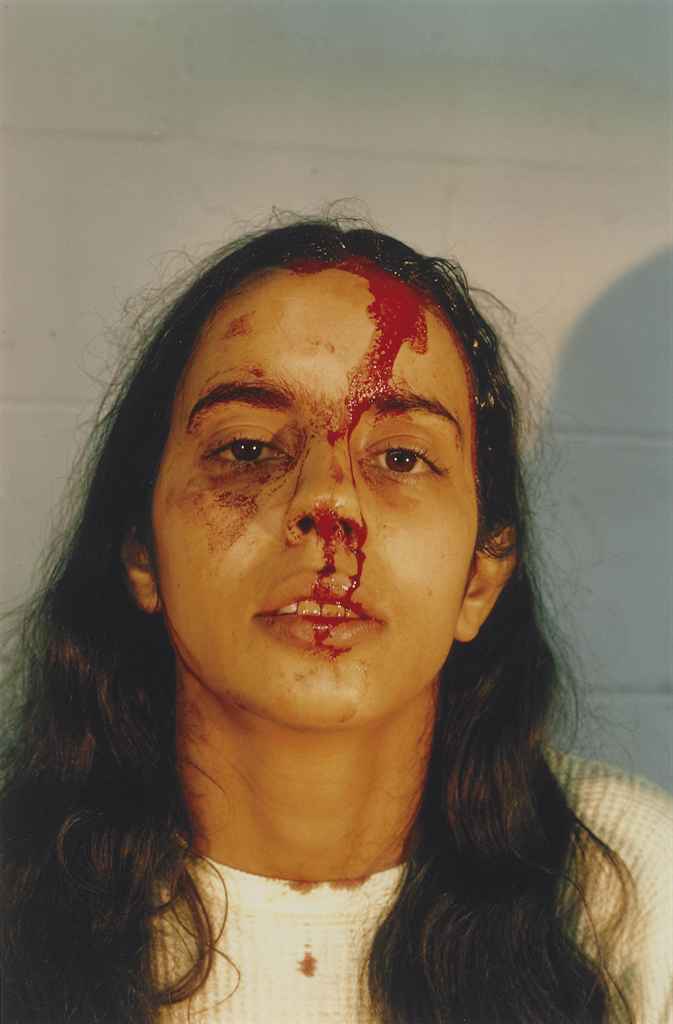
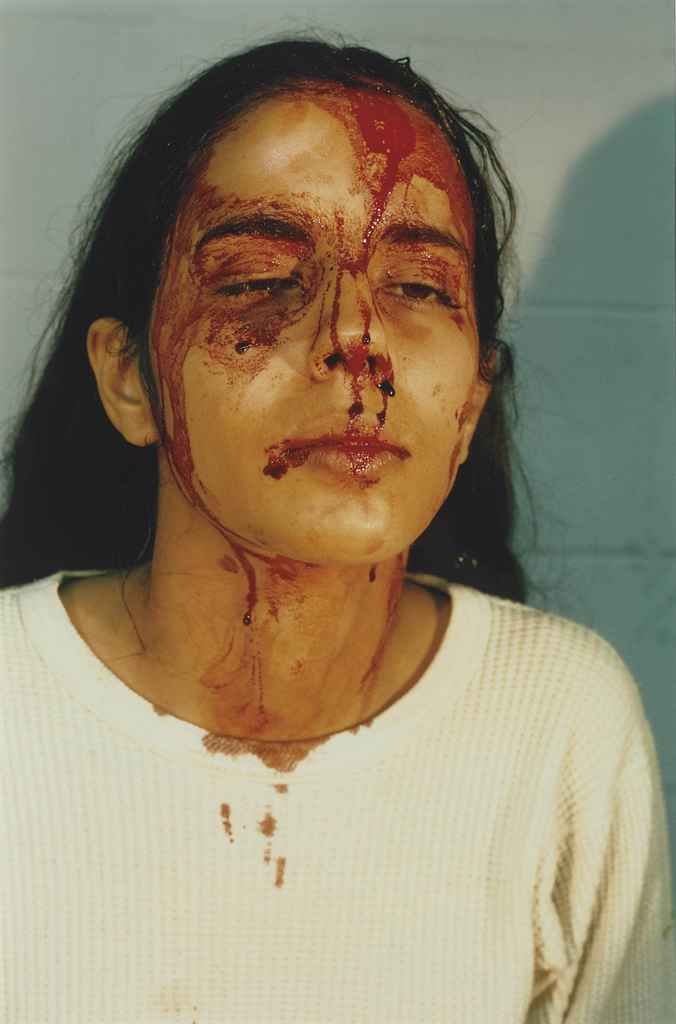
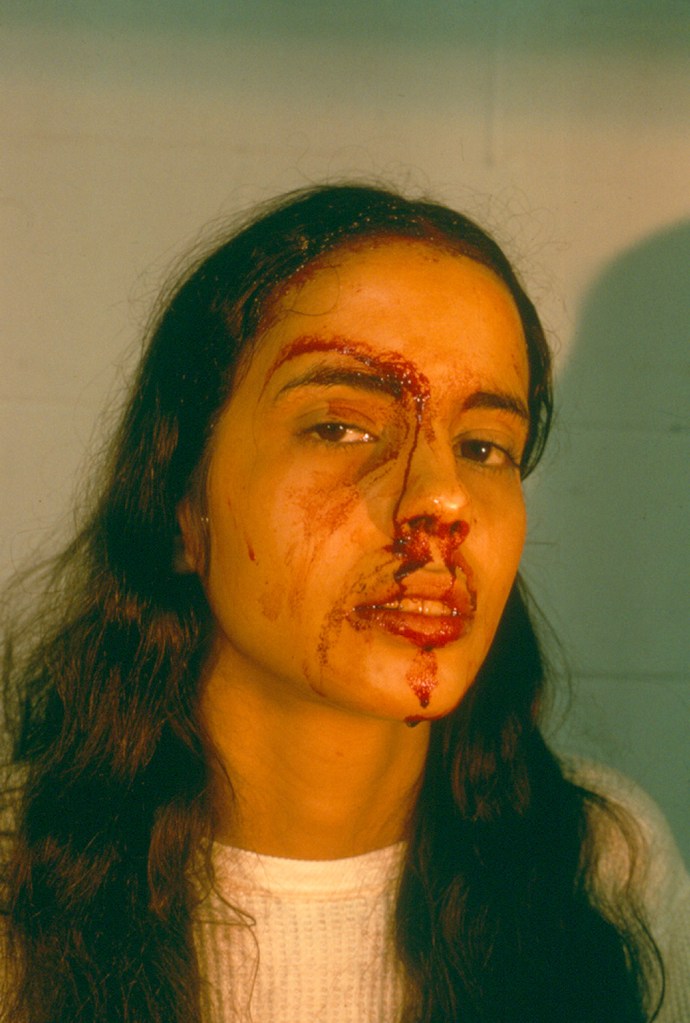
‘Self Portrait with Blood’ (1973) by Ana Mendieta is a collection of six photographs. Each portrait shows Mendieta from the shoulders up, wearing a white jumper with her face covered in dripping blood. Although containing the same subject matter, each photograph is individual in angle, pose, and placement of blood. Her hair sits long and messy combined with her thought-provoking expressions, her glazed eyes looking at the viewer or closed.
These photographs make me feel sympathetic towards the artist. It makes me question where she is and why she is covered with blood. Her expression also sticks out for me as her eyes are faced forward, staring right back at me as the viewer. Although I want to sympathise with her, she still appears very powerful and strong. The way her head is tilted back is some of the pictures could symbolise a loss of control or openness by showing her full face. My first instinct of the story behind the blood relates to domestic abuse – either a literal crime scene type picture, or an art piece constructed to signify this issue.
ANA MANDIETAS LIFE;
Ana Mendieta was born 1948 in Havana, Cuba. At the young age of 12, she and her sister immigrated to the US, with help from a Catholic charity which worked with the US Government. Her family, and father in particular, were heavily involved with politics, which led to him to spend 18 years in a political prison subsequent of being part of a military invasion known as the Bay of Pigs Invasion. While in Iowa, the Mendieta sisters spent a few weeks living in refugee camps, and then moving between numerous foster homes. Adjusting to her new life in the US, they both attended a Catholic all-girls school where she found her adoration for the arts. After this, Mendieta attended University in Iowa where it is said she dealt with a lot of inequality from fellow students. It was here that she discovered her passion for feminism which was a huge theme in her work, often working with blood and creating pieces related to violence towards women. She combined this with her spiritual connection to the earth – which could have been inspired by the landscapes surrounding her in Iowa. She depicted this in many of her works, using the outline of her body in various settings in nature.
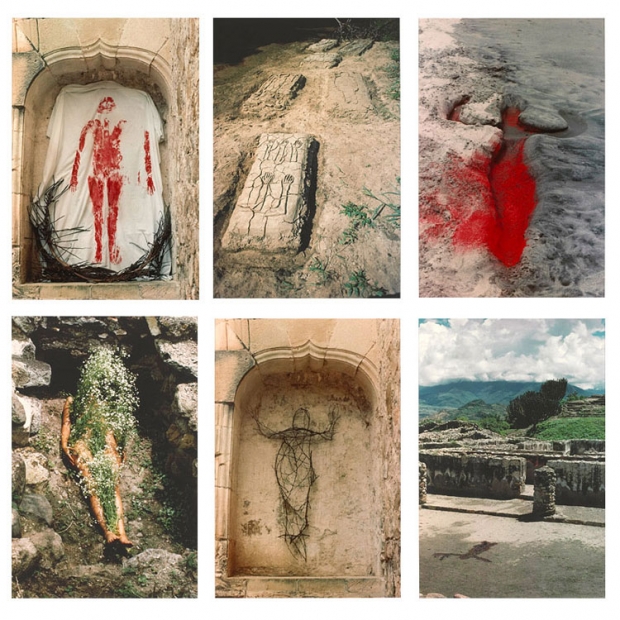
Ana Mendieta’s life was cut short at the age of 36 (1985). Her death to this day is still viewed as controversial as there is little evidence of what really happened. It is reported that she and her husband, a fellow artist, were arguing over how she feels overlooked as a female artist. Some speculate that Mendieta’s death was murder, and that she was pushed out of the window of their home – while some say it could have been suicide or just a simple accident.
SELF PORTRAIT WITH BLOOD;
Knowing more about Mendieta’s life makes me view the inspiration for these photographs differently. Her early discovery of religion through Catholic school could have inspired her. The poses, her messy long dark hair and the blood makes me think of Jeusus during the crucifixion. Furthermore, it could also link to the worldwide mysterious stories of Virgin Mary statues crying blood.
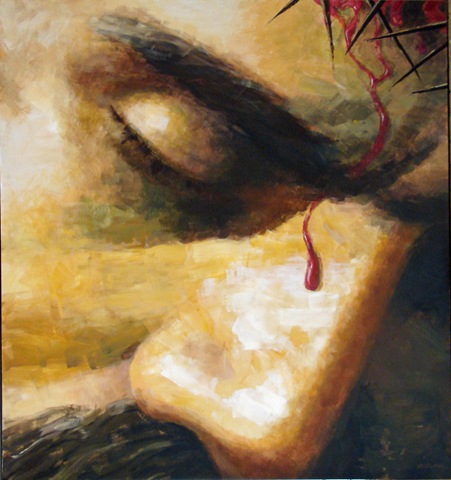
Lance Stirling 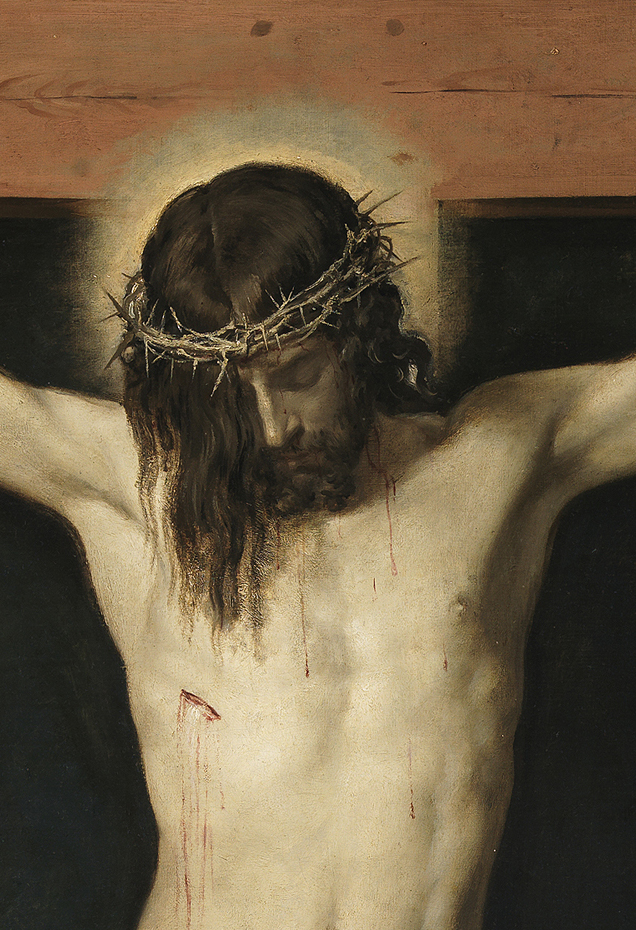
Close up of painting by Diego Valezquez 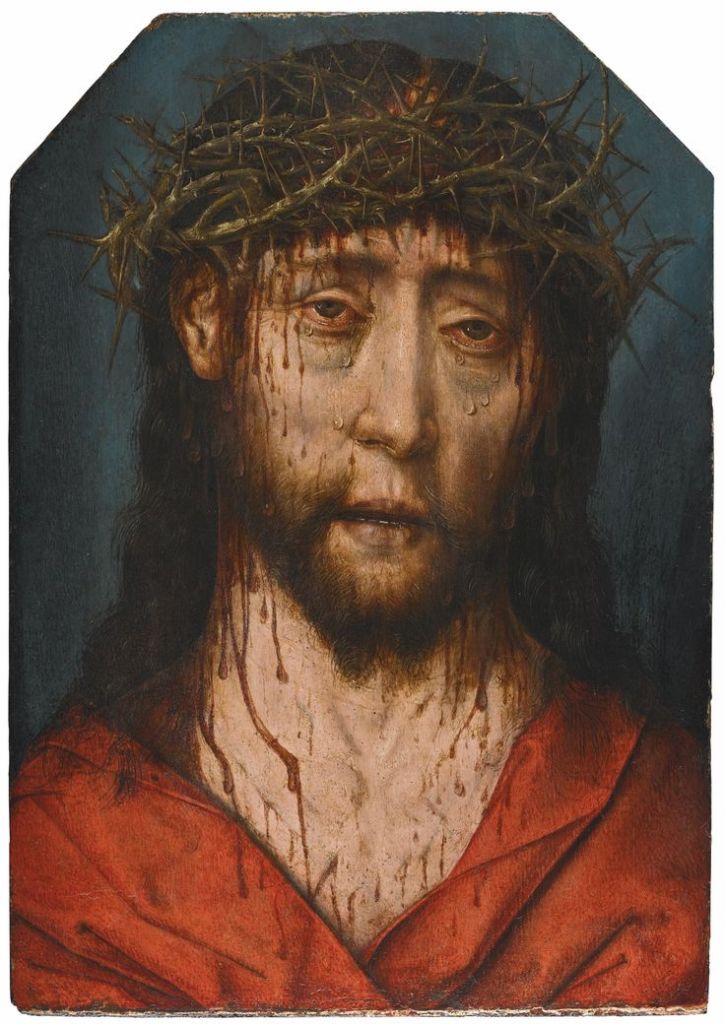
Albrecht Bouts
Her strong presence in these photographs could relate to her adolescent life. She must have felt so alone and vulnerable being away from her family.. It’s almost as if you can still see the pain in her eyes as she stares back to you. Similarly, the photographs with her eyes closed appear less powerful or personal. It is more documentative, whereas the others look like she is trying to connect to the viewer and tell/show them something.
Her passion and love for the earth and natural world could have also played a part in these photographs. Blood is often used in art to resemble humanity and equality. We are all the same underneath our shell and blood connects us all as humans. Perhaps this blood used by Mandieta relates back to her bad treatment from fellow students while studying art, or the hardships she faced as a young immigrant. Similarly, as her work was sometimes spiritual – this could also link to the use of blood and its natural connotations.
MOVEMENTS;
Related to Feminist Art movement – Ana Mendieta regularly explored the theme of feminism in her work. Her works such as ‘Facial Hair Transplant’ (1972) and ‘Rape Scene’ (1973) seen below are visual responses to gender exploration and the treatment of women.
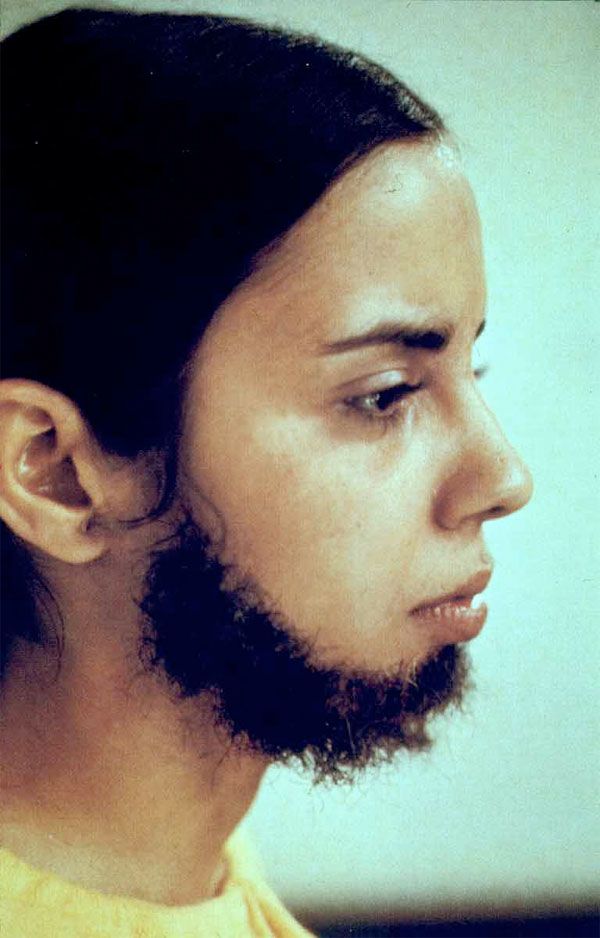
‘Facial Hair Transplant’ 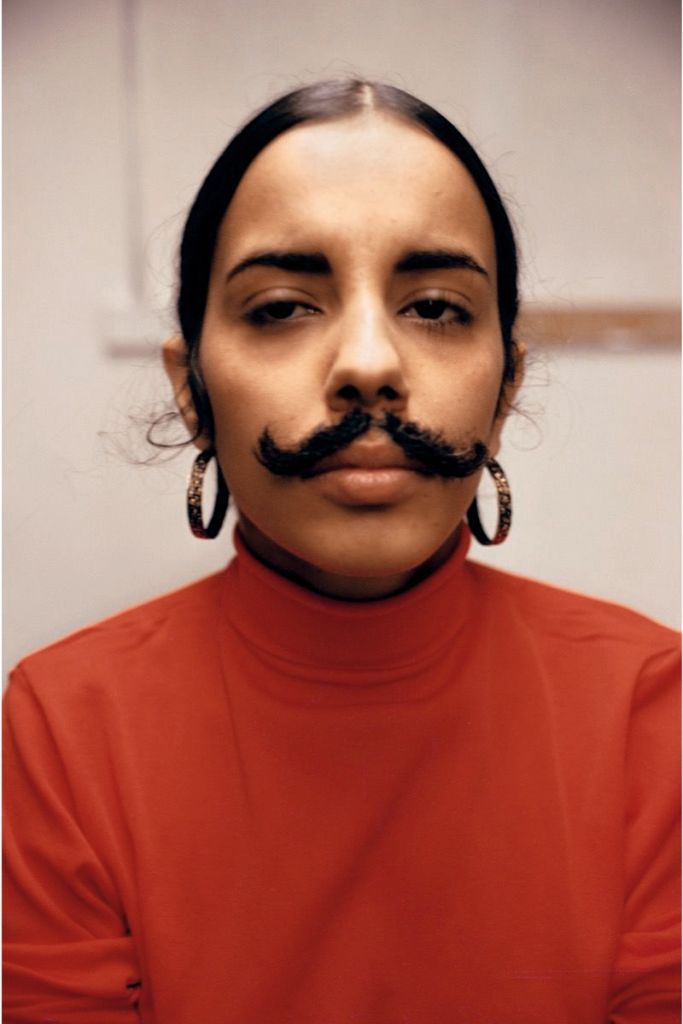
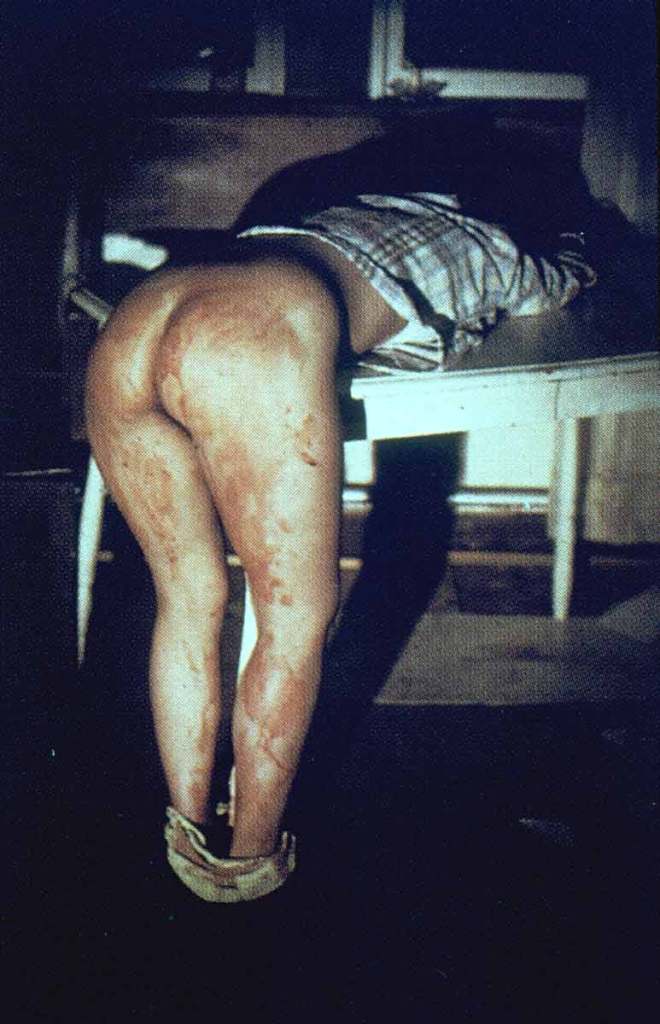
‘Rape Scene’
In 1978, New York, Mendieta became part of the A.I.R (Artists In Residence Inc), a feminist organisation that supports women’s recognition in the art world. This was cut short after her departure in 1982 as she believed “American Feminism as it stands is basically a white middle class movement” – which influenced her following work. As art was (and still is today), heavily centred on white males, Mendieta wanted to fight against this and showcase her beliefs, often by using her self in her work. Because of this, Mendieta is recognised in the Body and Land Art Movement.
 ninamcmullanHND