My week at the Edinburgh Sculpture Workshop began with an introduction into using heavy machinery. I was taught on how to safely use the band saw, jigsaw, nail gun, pillar drill and sander.
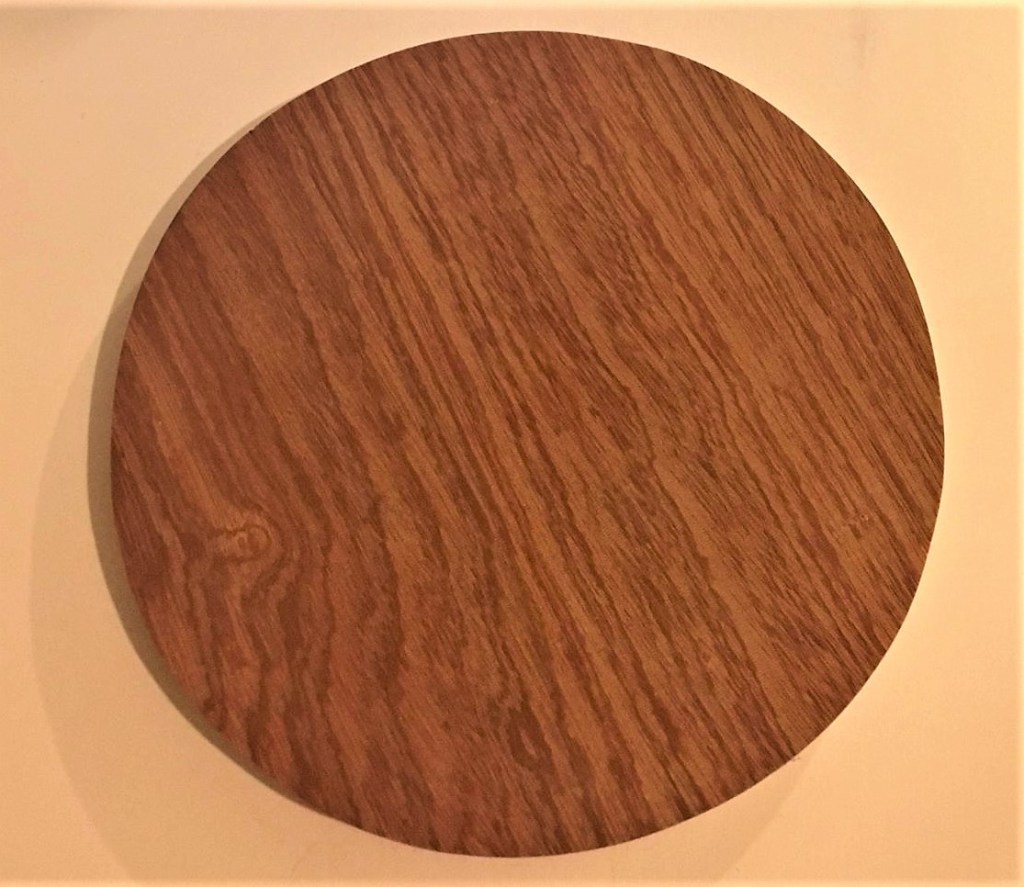
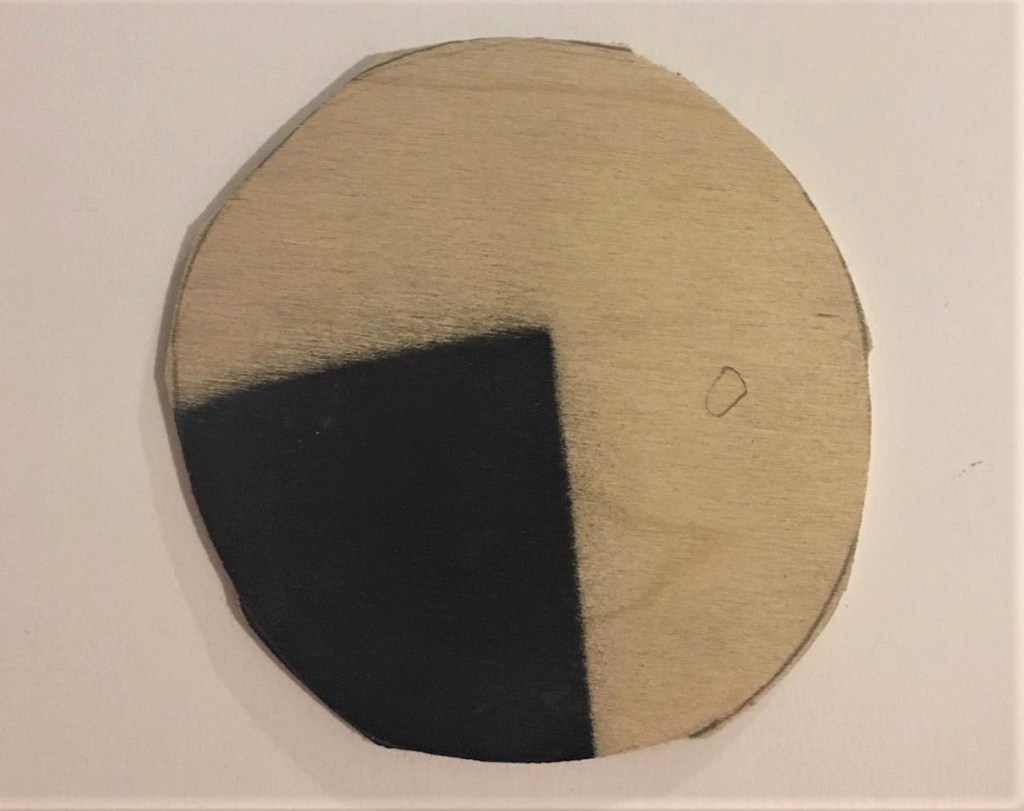
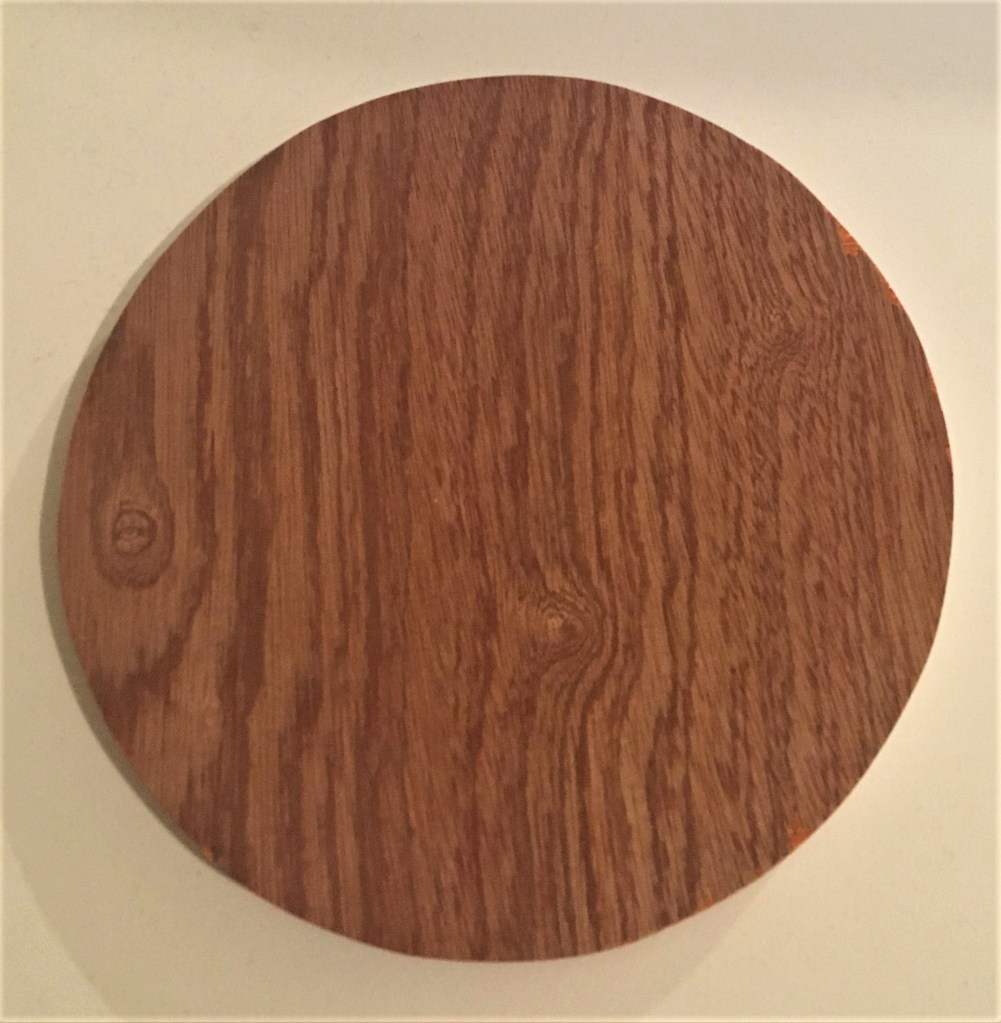
The next day started with a 15 minute walk, finding inspiration from the surrounding area. Focusing on the natural pattern, textures and form of the world. I felt I was naturally drawn towards the texture around me – and how things age and its appearance this happens. For example, with the ESW being a very flat building, it was interesting to see the remnants of old art works stained on the floor, or the cracks forming on the ground.
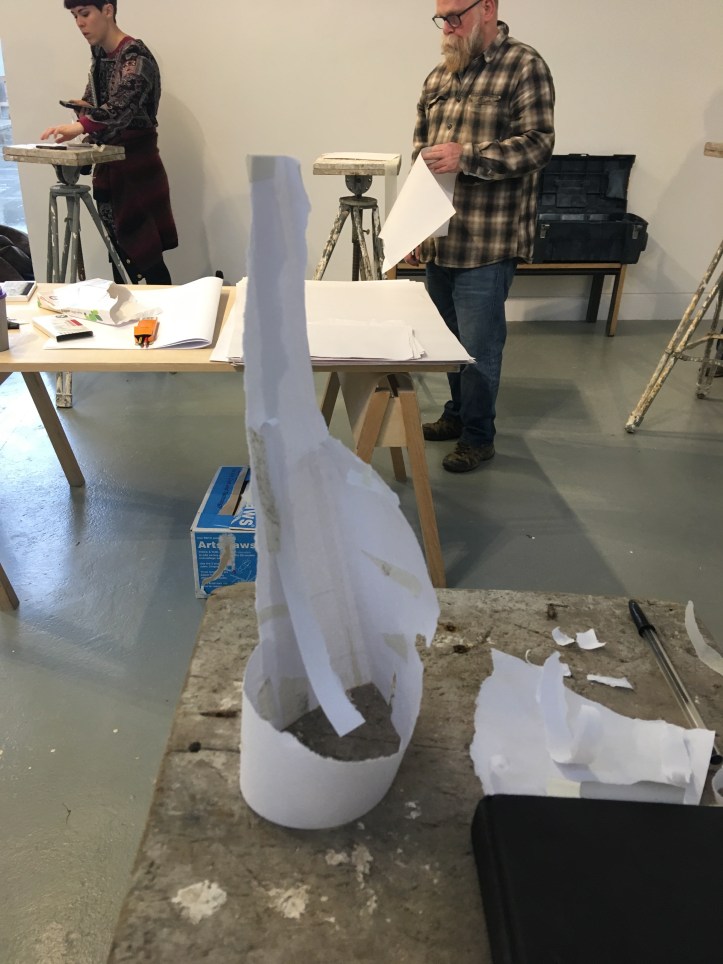
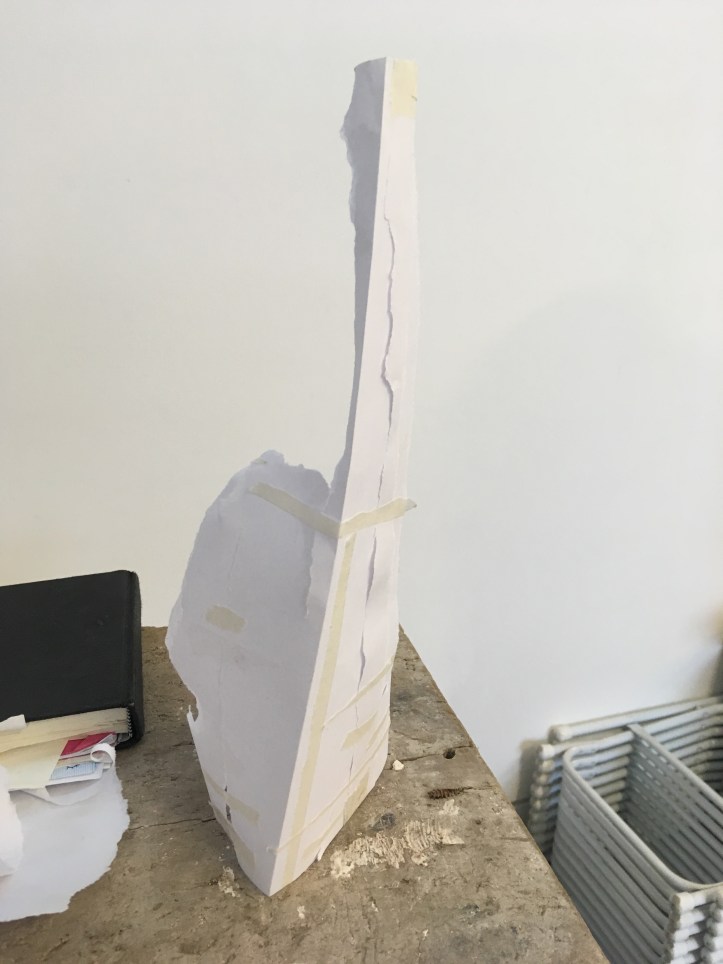
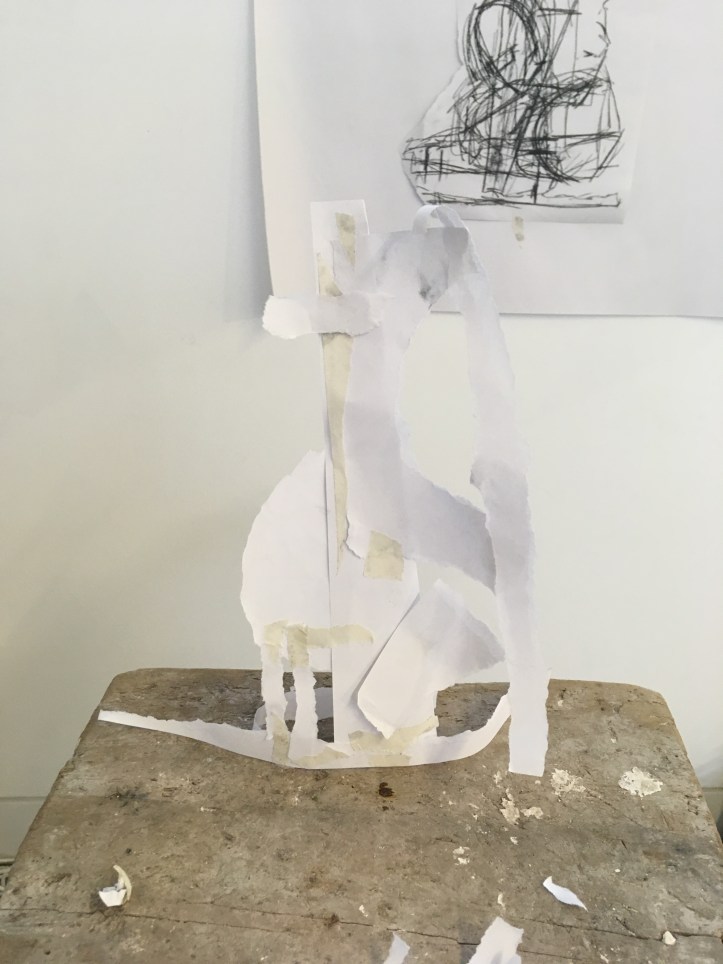
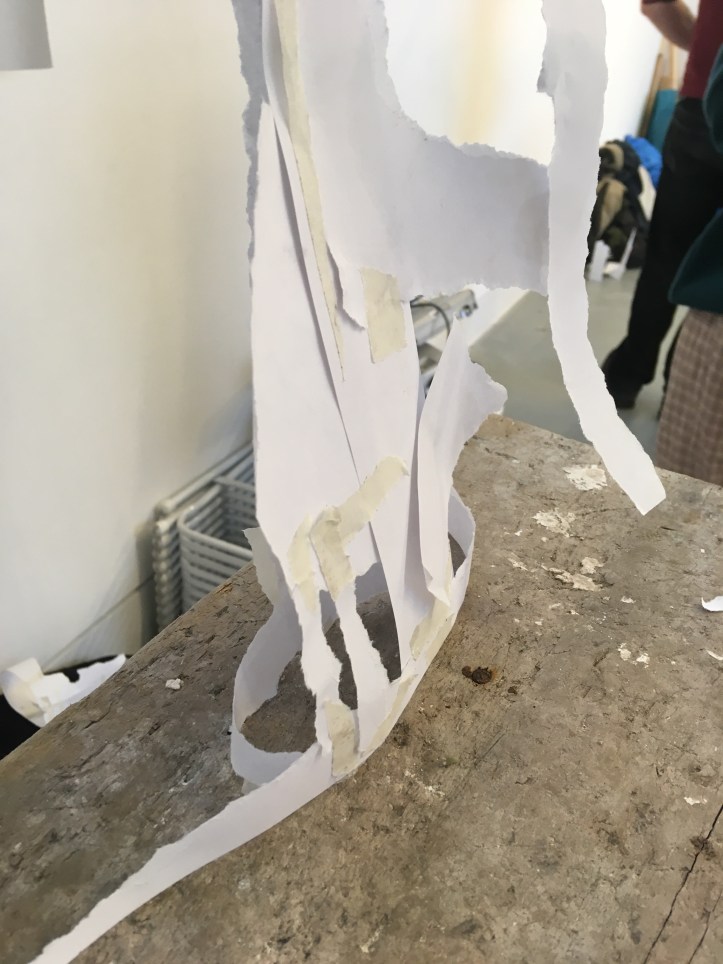
After the walk, I was given a strip of masking tape and one A4 piece of paper, and told simply to make a 3D form inspired by the walk. After making my first maquette, I drew its shape from different viewpoints continuously over each other. The next step was to make a new maquette inspired by the drawing I just created. I repeated this process a few times and although it gave different results each time, I could still see the relationship between each drawing. It was incredible to see how much my work had changed and developed from the original 3D form. It amazed me how much progress could come from just walking around for a quarter of an hour.
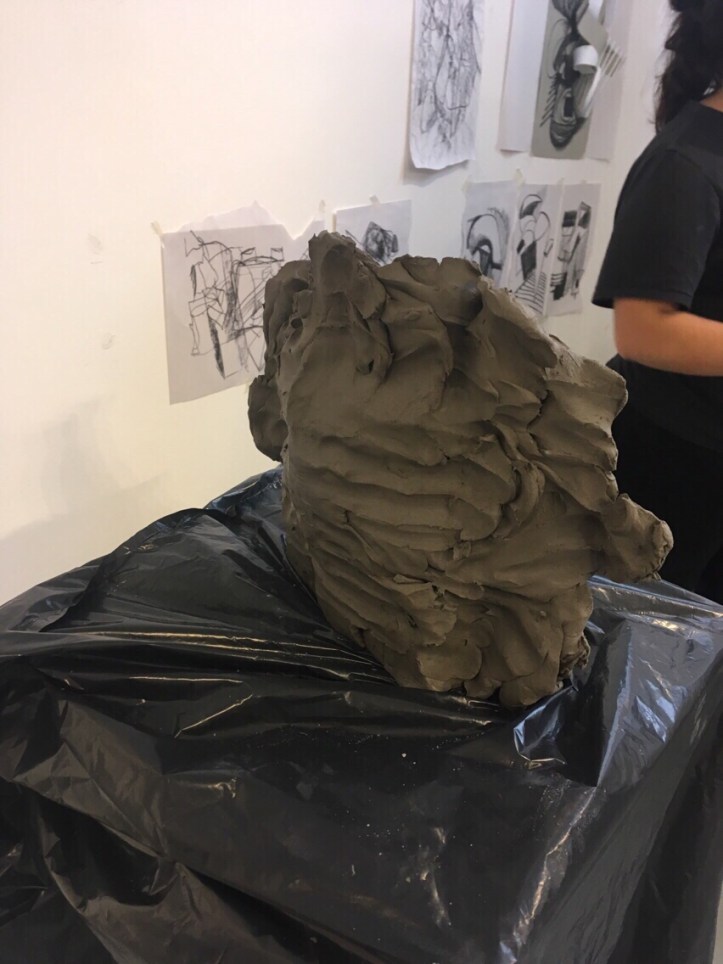
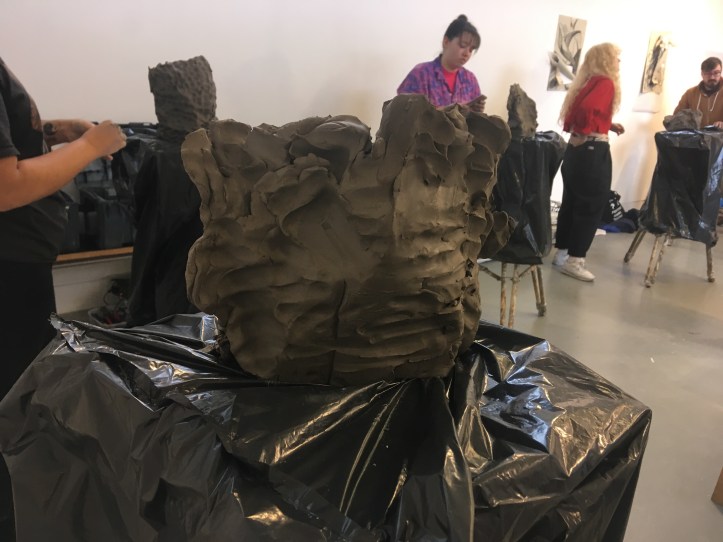
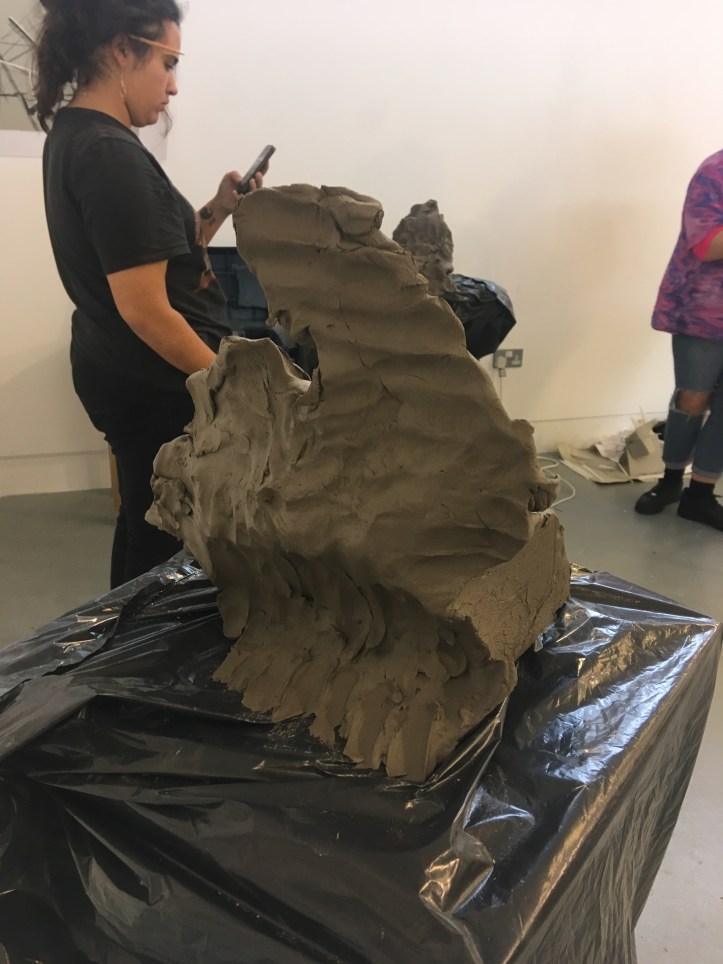
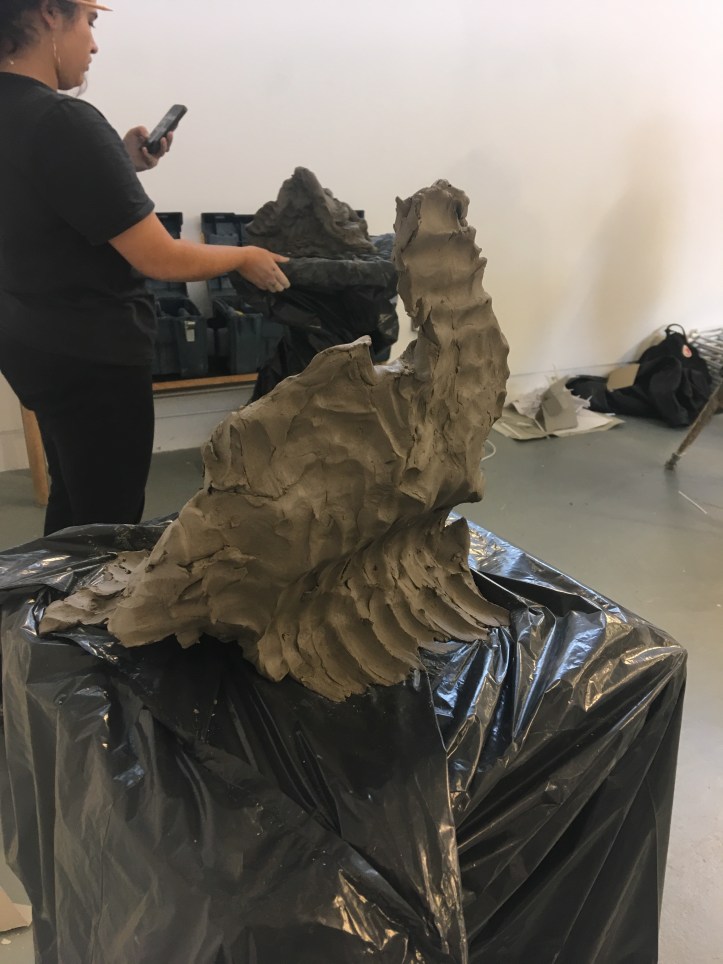
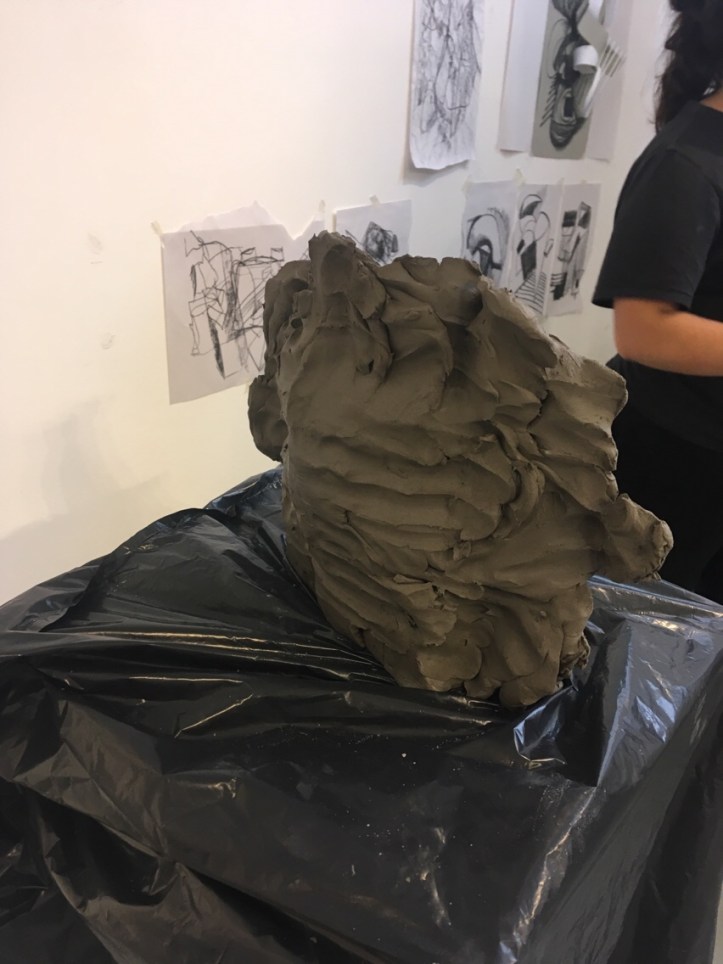
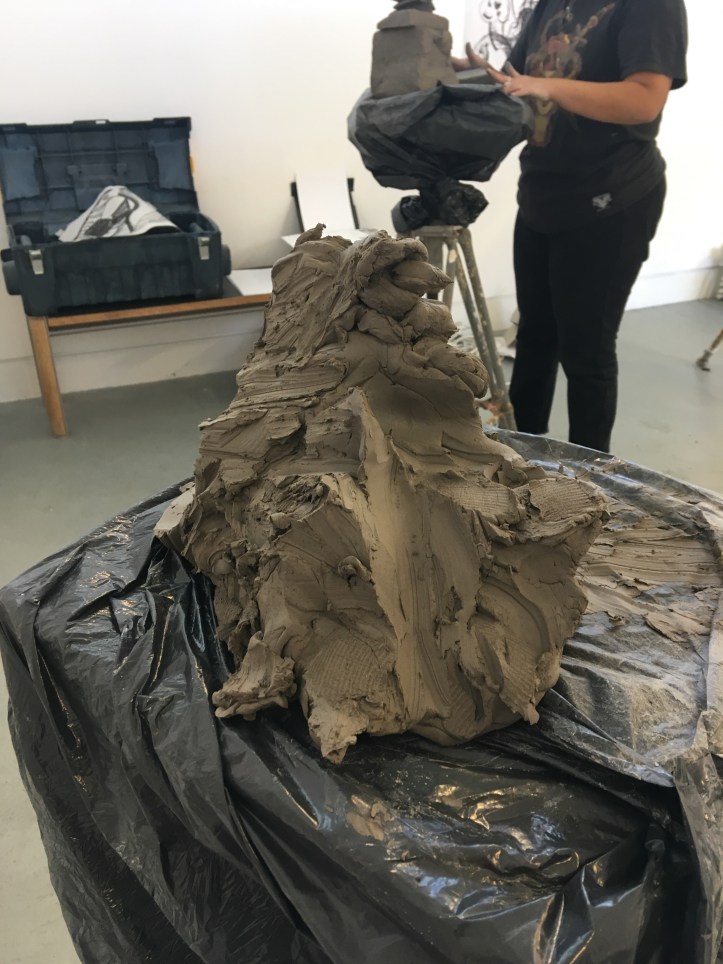
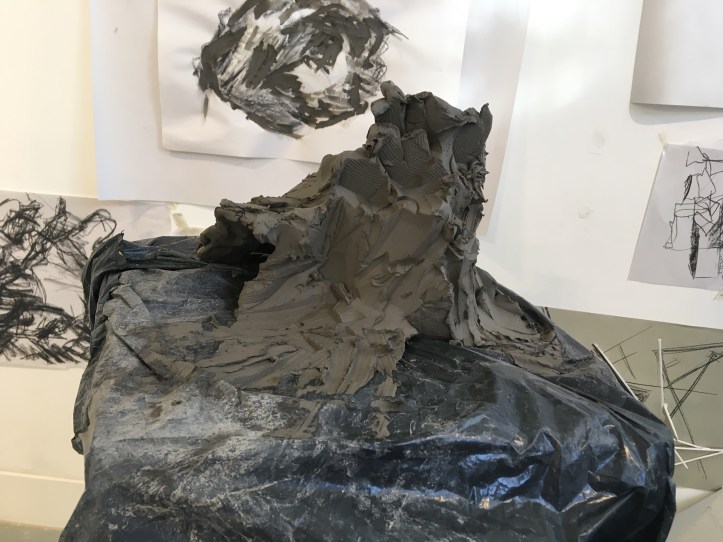
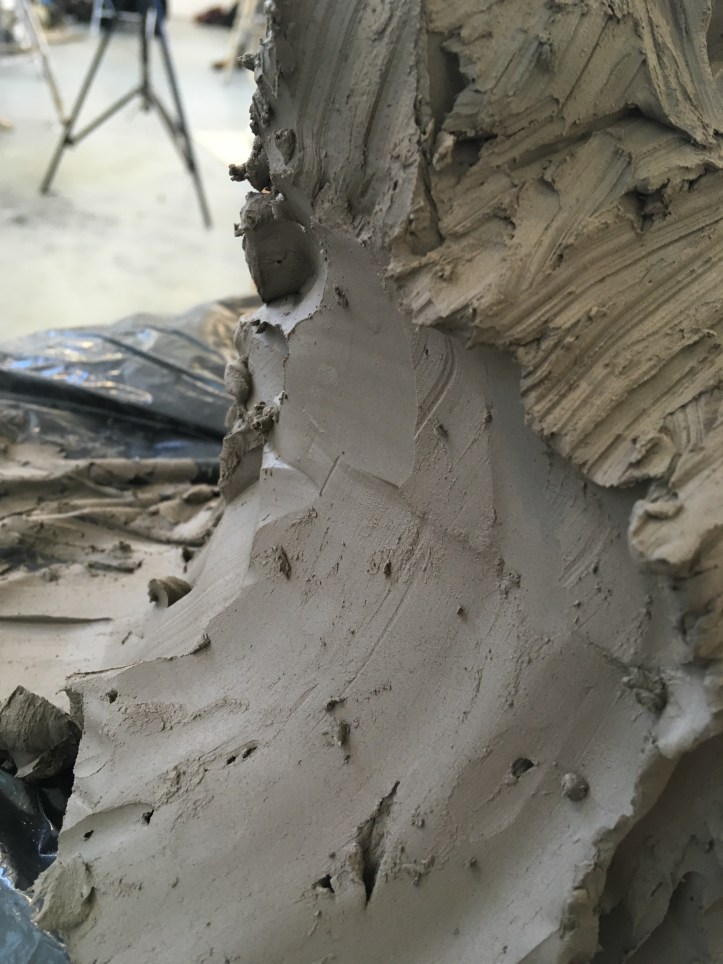
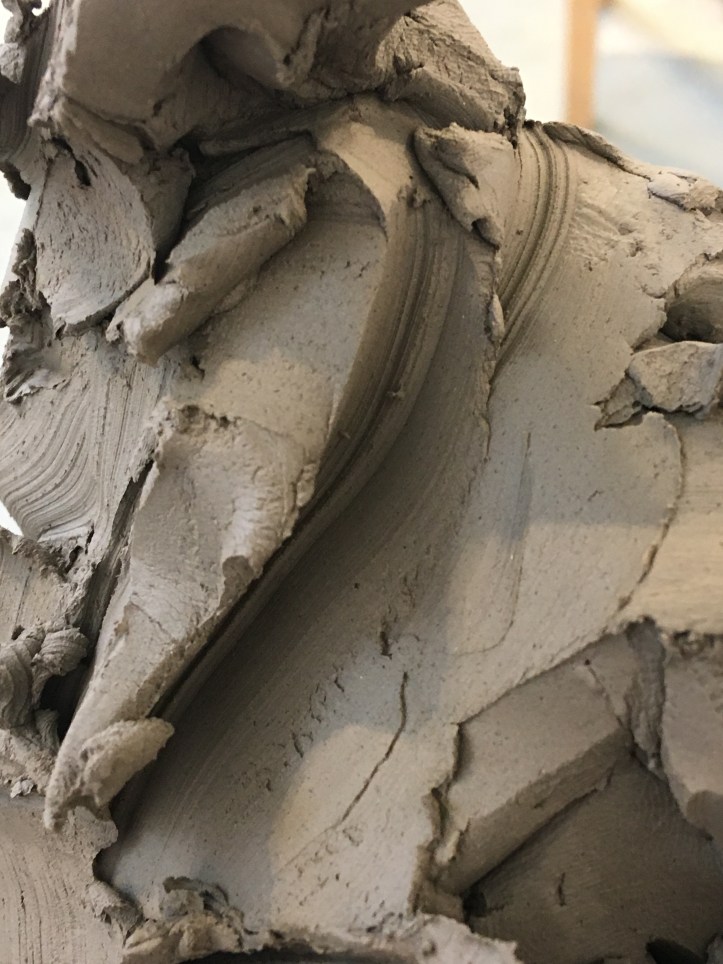
Next came a series of challenges using clay. Each sculpture was created using (or not using) a set of tools. First I was to only use our fists, then sticks, wire, and then a mixture of all of them. These are the outcomes.
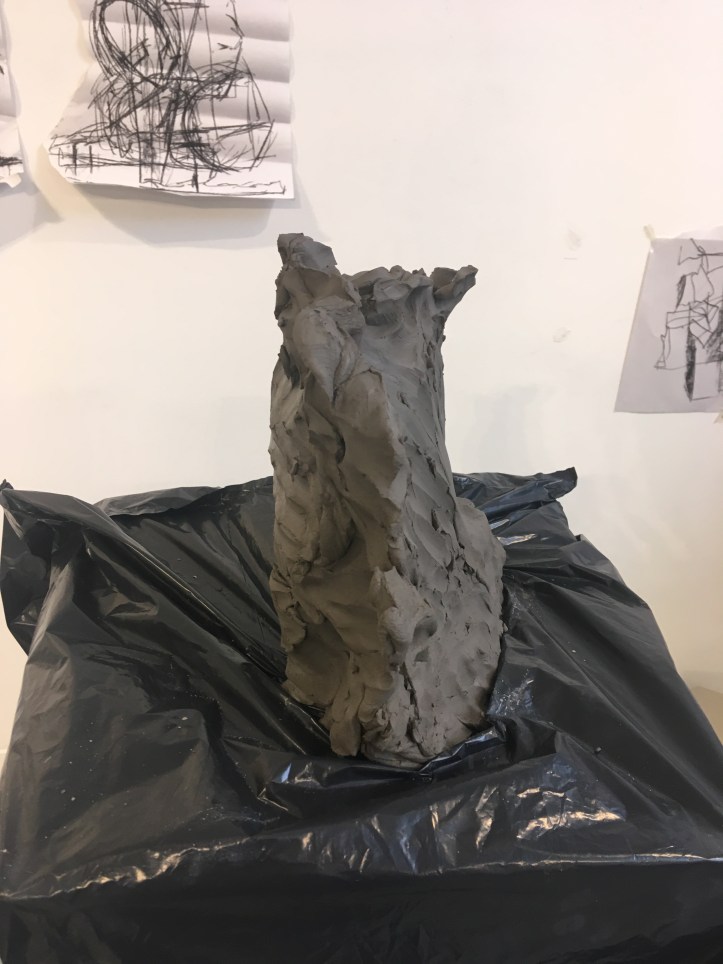
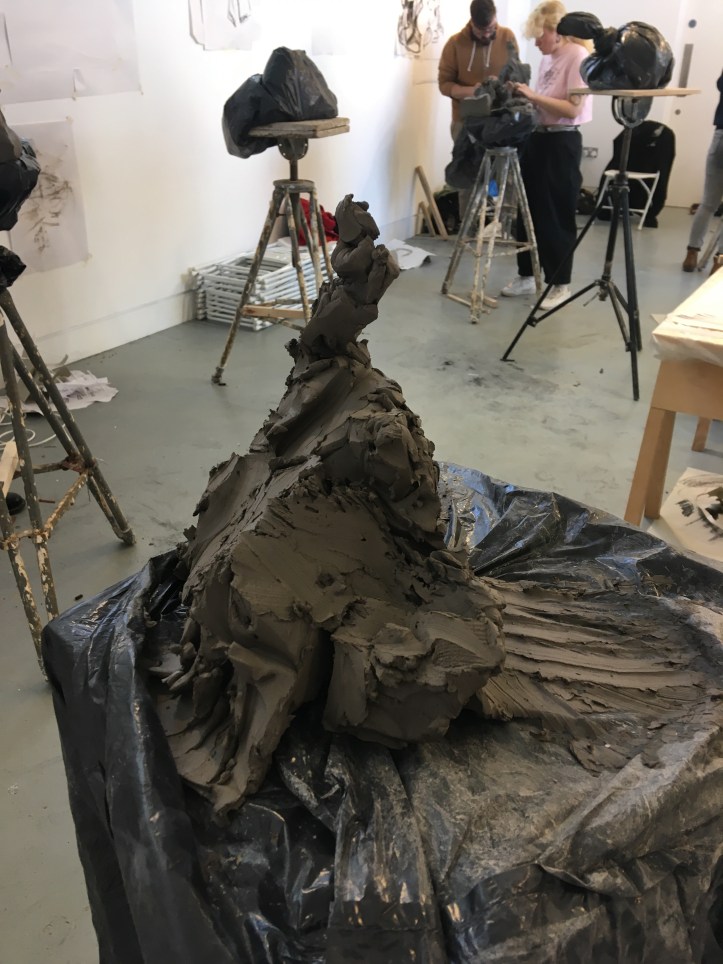
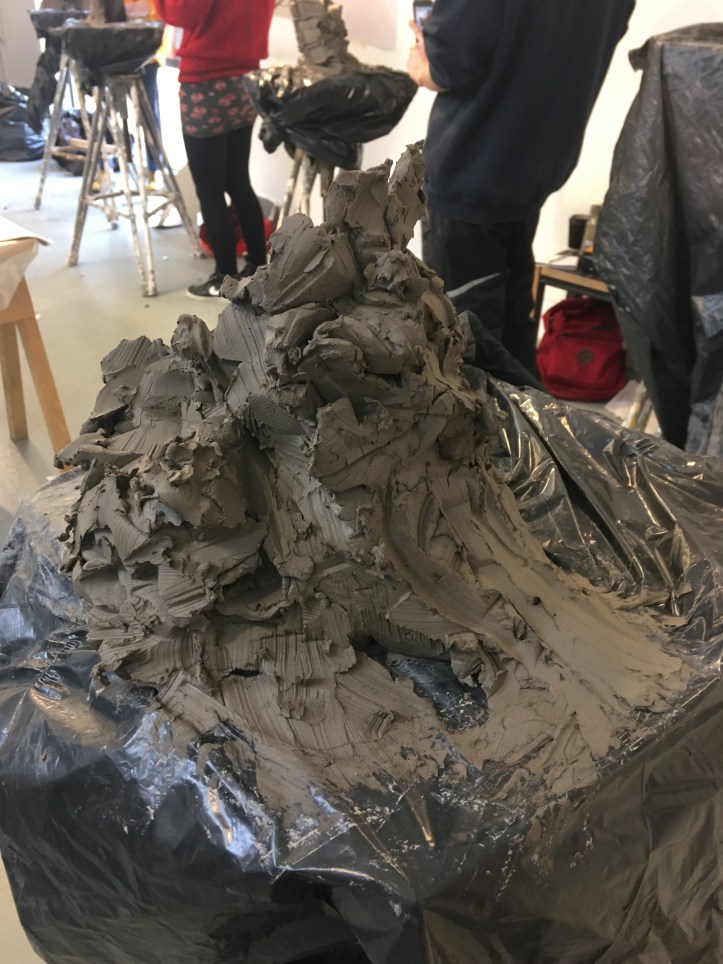
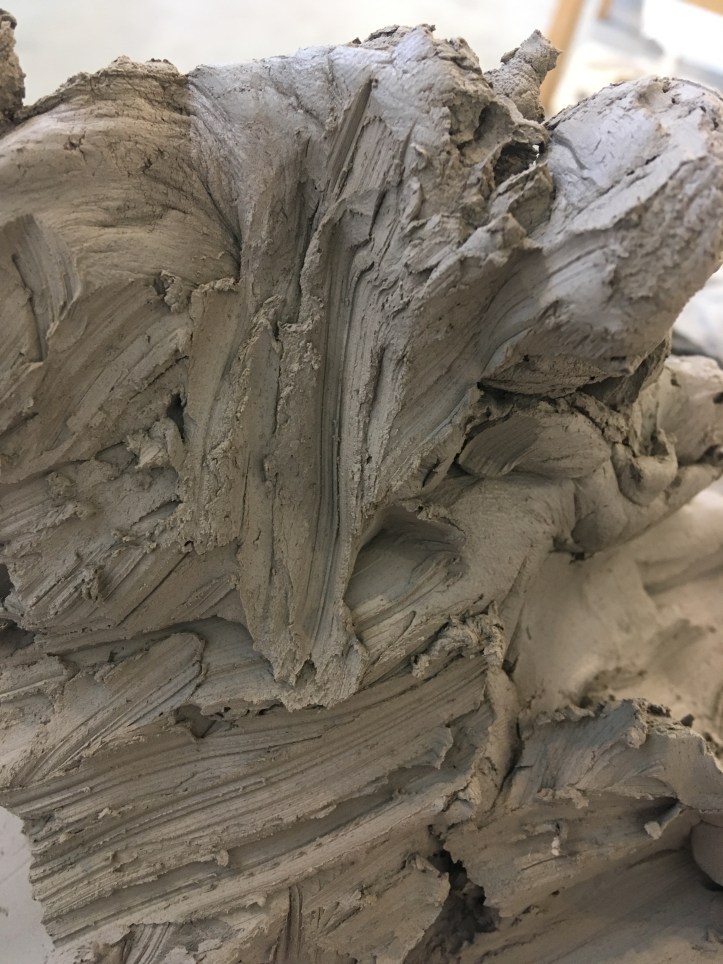
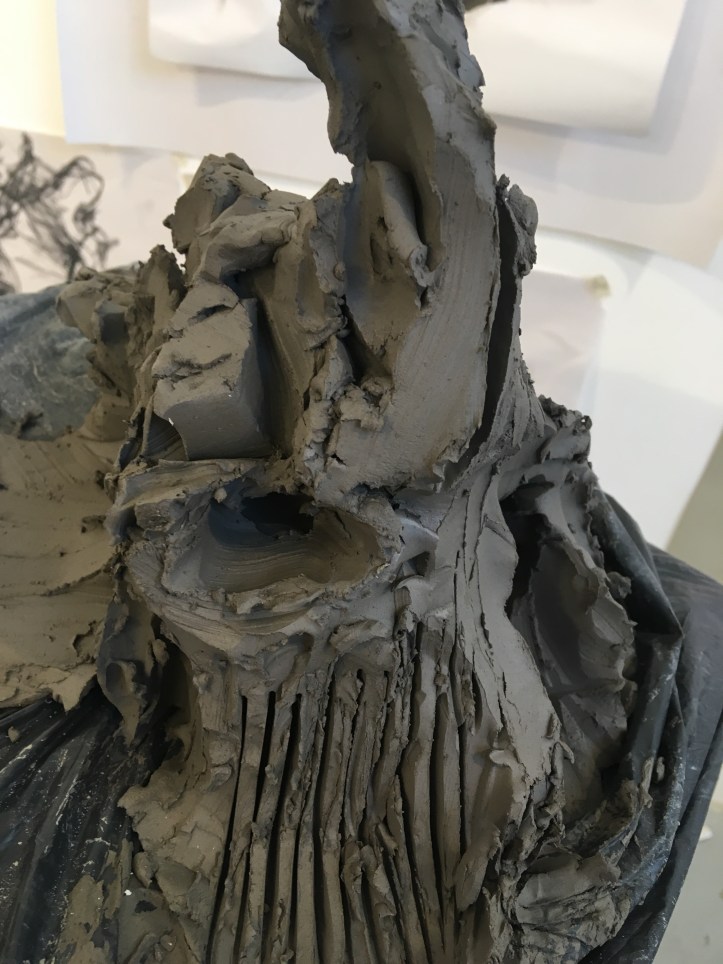
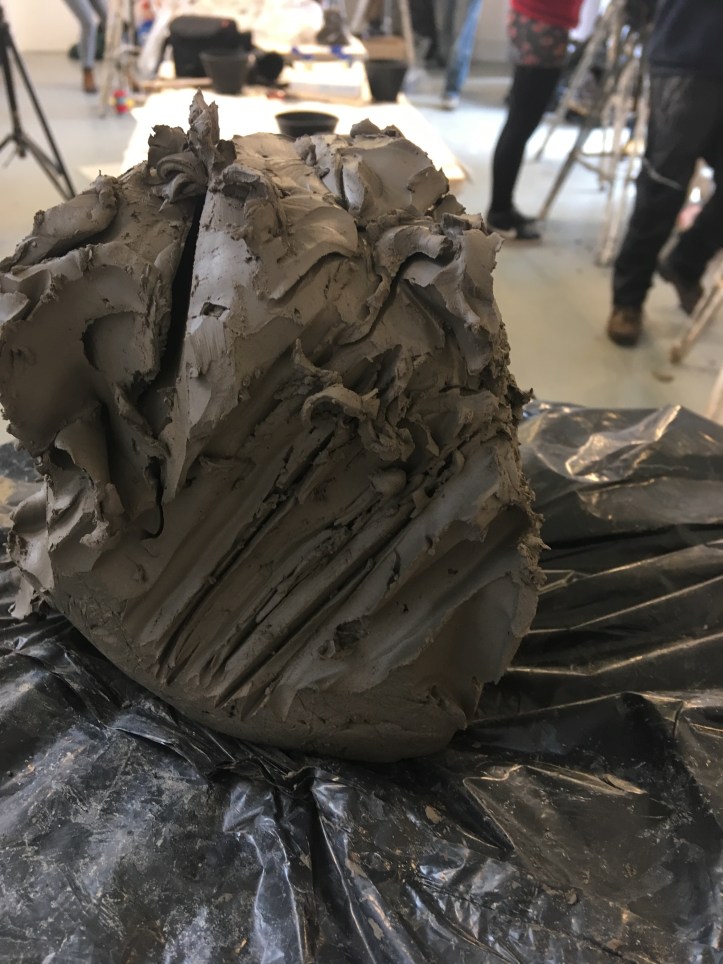
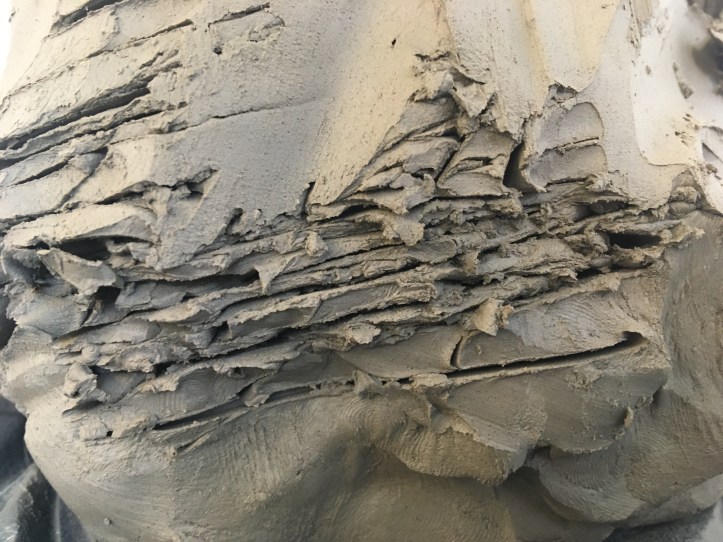
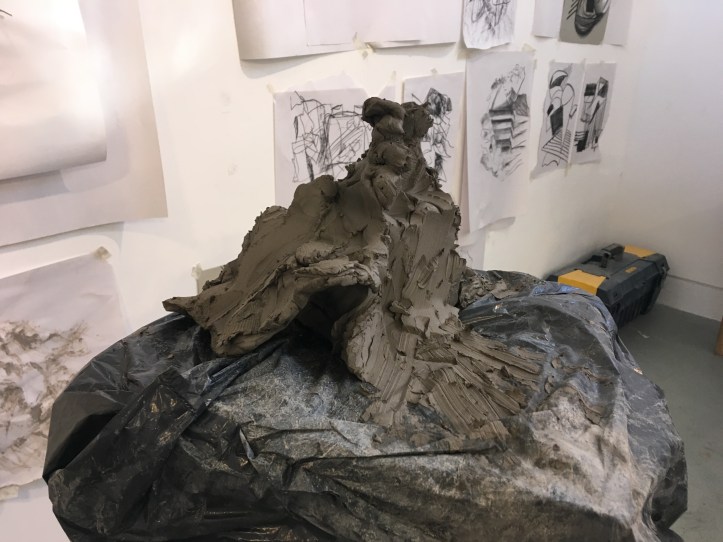
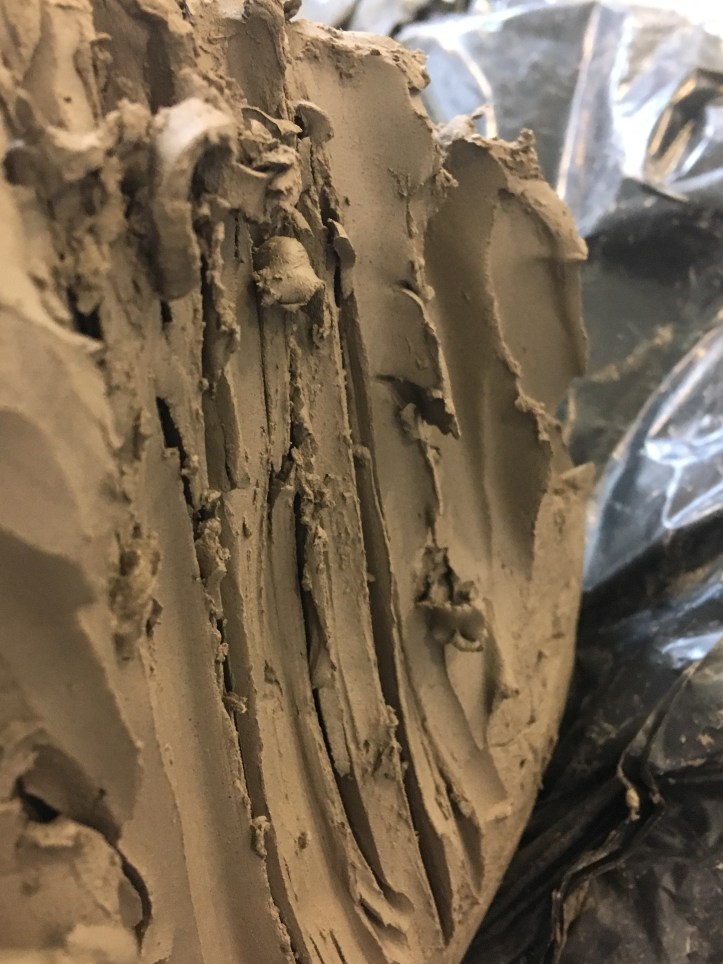
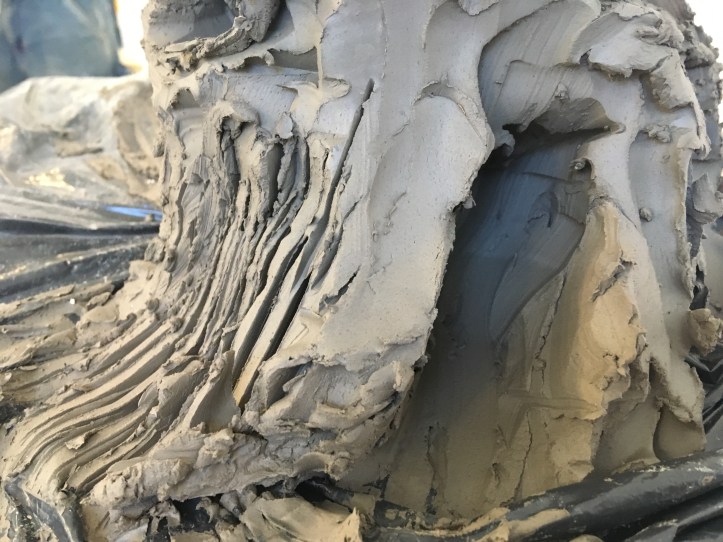
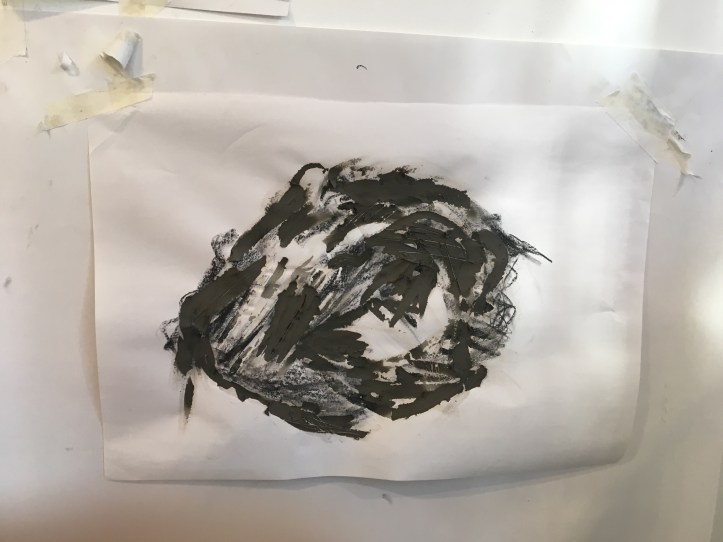
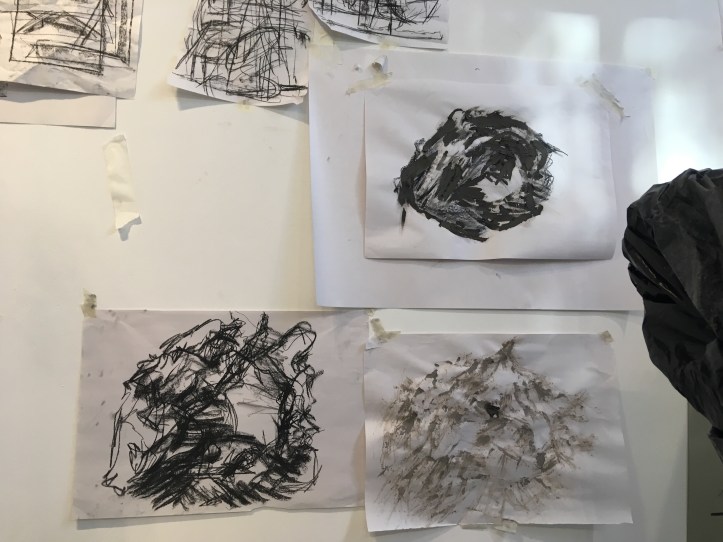
I next used clay directly on newsprint. I loved the restriction of being unable to perfect my drawing as the clay was difficult to use in this way. I also love how as the clay dries, my marks slightly changed or even chipped off completely. It reminded me not to be too precious in my work and to experiment without solely focusing on the outcome. It was also beneficial for me to work in this way as I could feel the direct relationship between sculpture and drawing while working with form and texture.
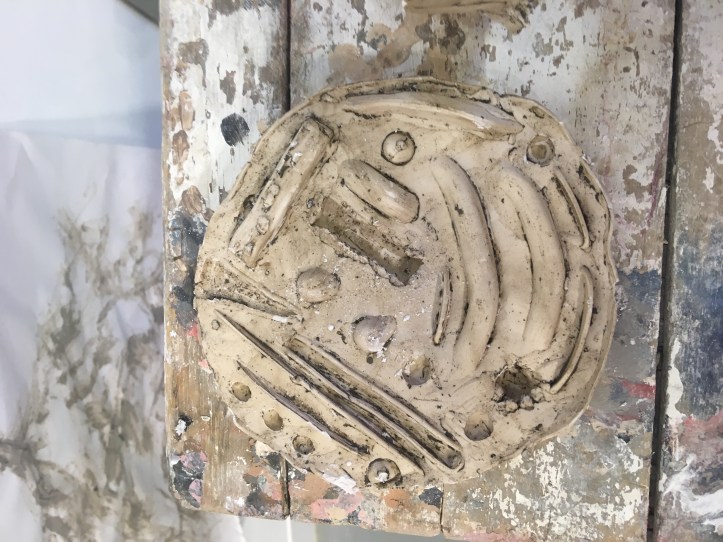
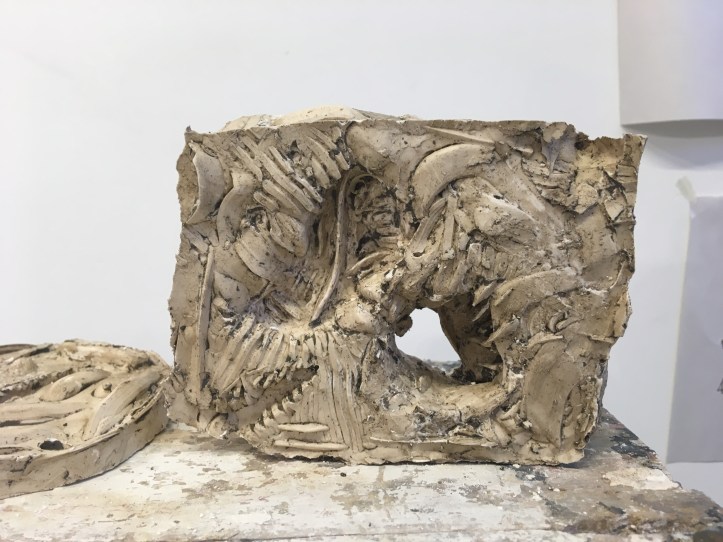
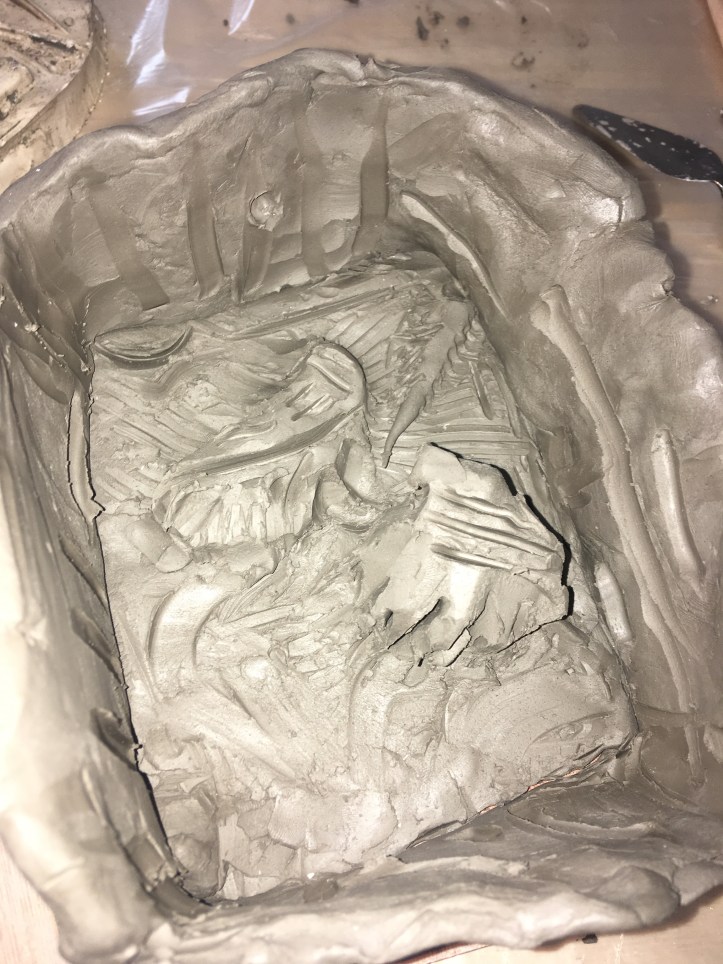
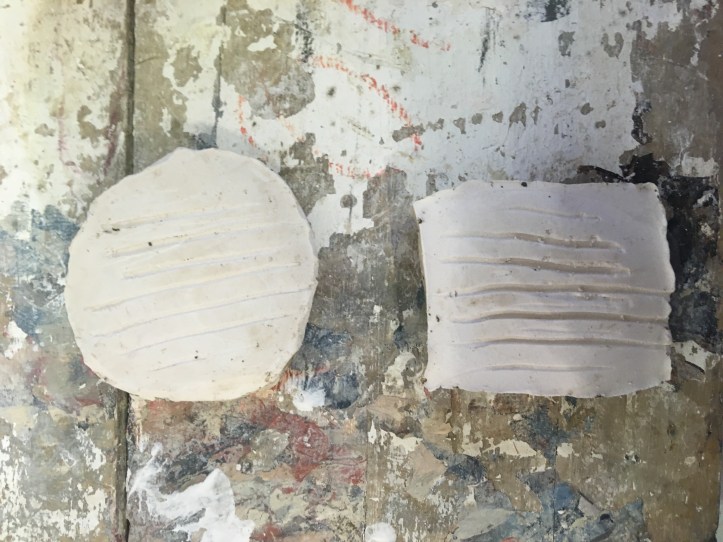
The following day I tried out making plaster moulds. As I was new to this technique, I wanted to experiment in the first half to get more familiar with what I was doing.
With the extra plaster I didn’t use in my molds, I put to good use in the following pieces. I again was just experimenting, but came to love some of the outcomes. The following pictures are scrim dipped in plaster, and hardened over chicken wire. Although I had to work quickly with the remaining plaster as it was setting fast, I loved the ability to shape something, hold it, and for it to be set and being able to move on straight away. I feel that I can sometimes be impatient in the process of my art, and found this a way to work to my advantage. I also found that making sculptures that weren’t to be anything in particular, I was able to experiment with viewpoint and presentation freely. Some of this work was created sitting a certain way, but I actually noticed that once dried, I preferred it to sit a differently – sometimes to even bring attention to the flat base it had created while drying.
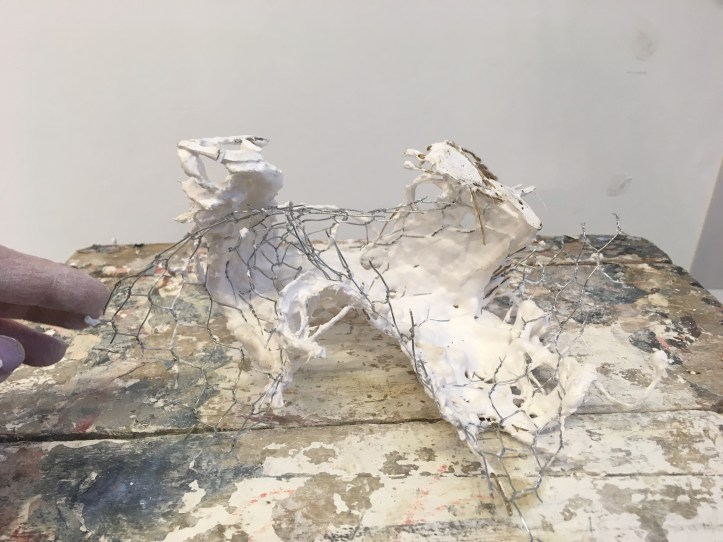
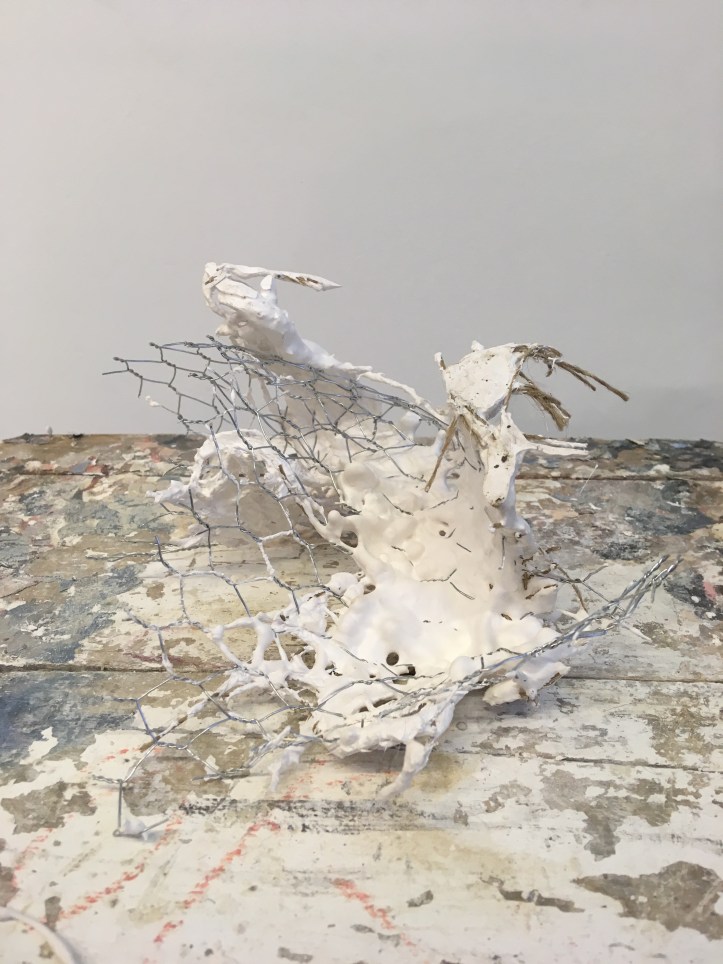
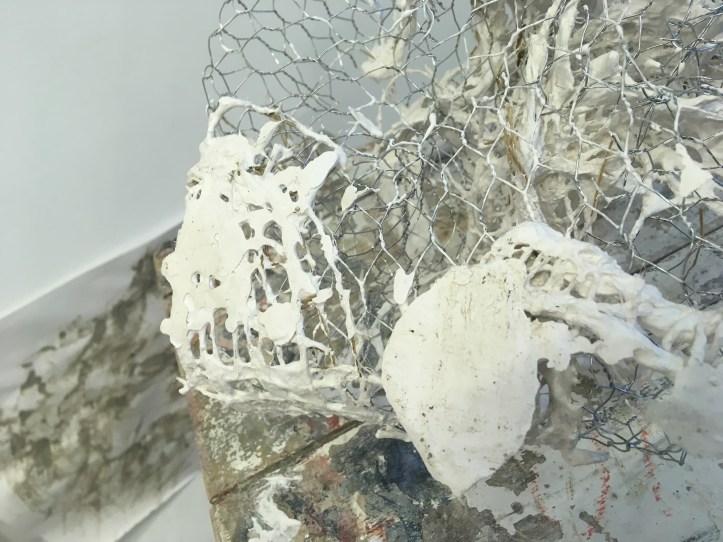
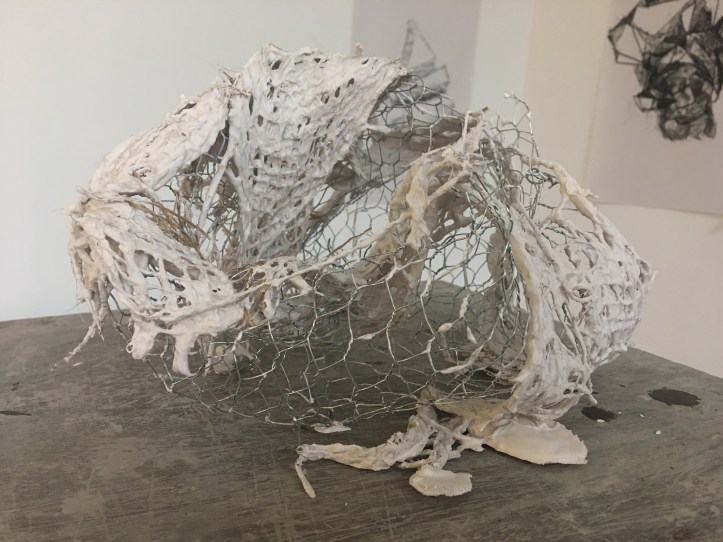
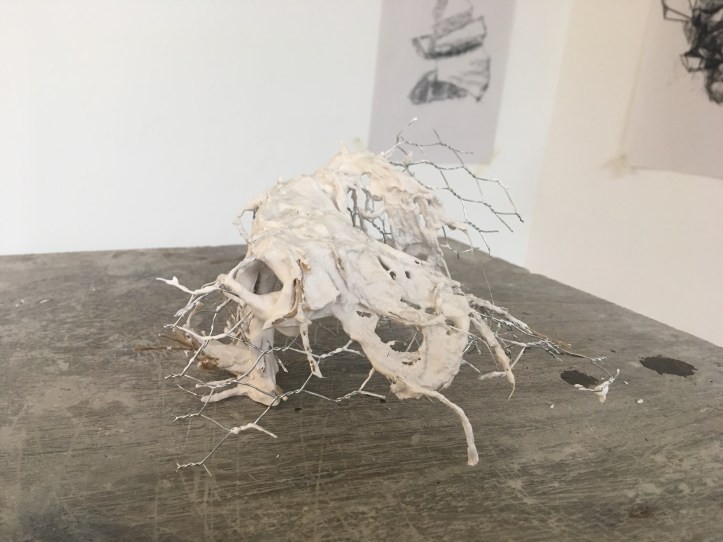
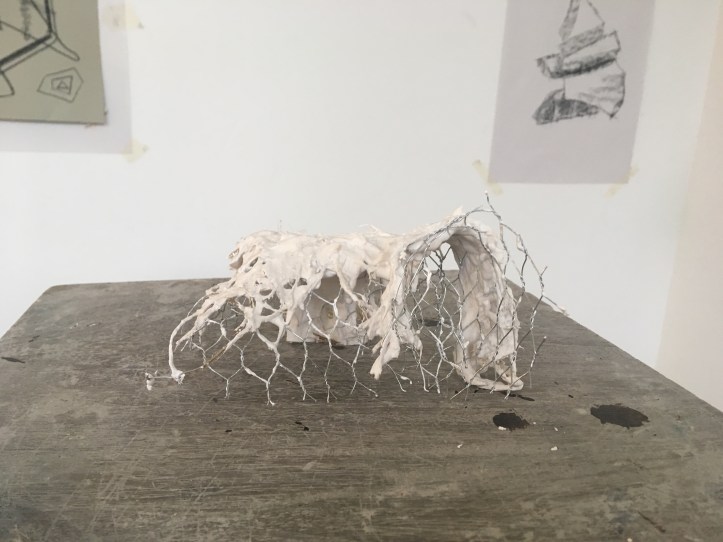
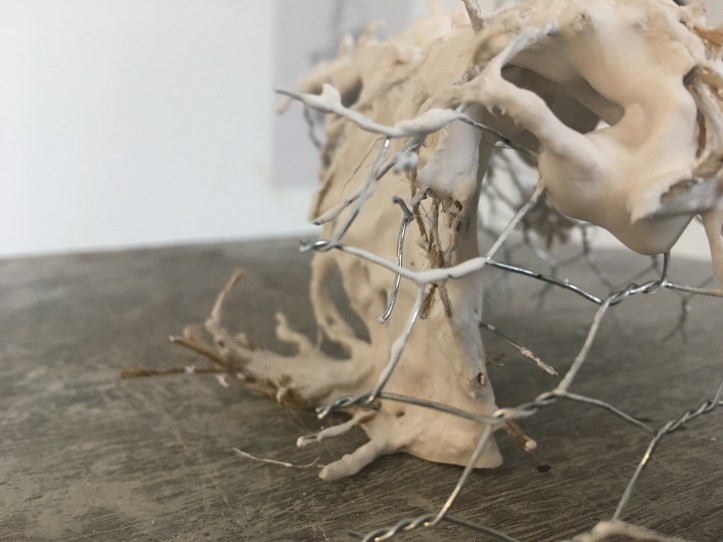
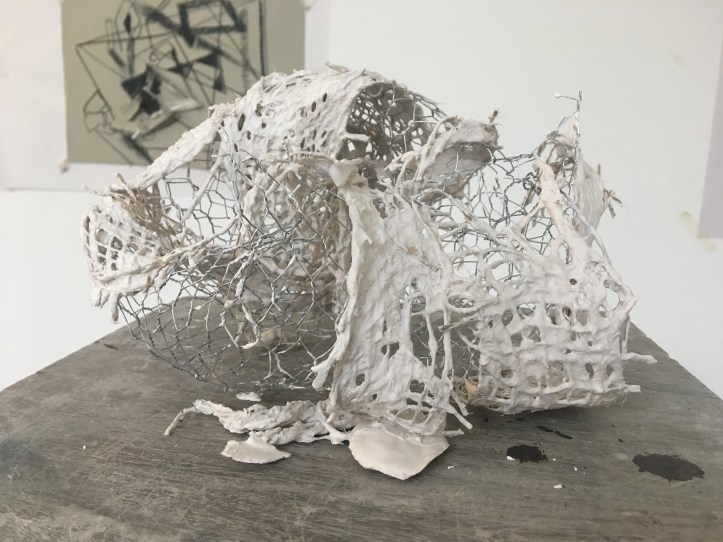
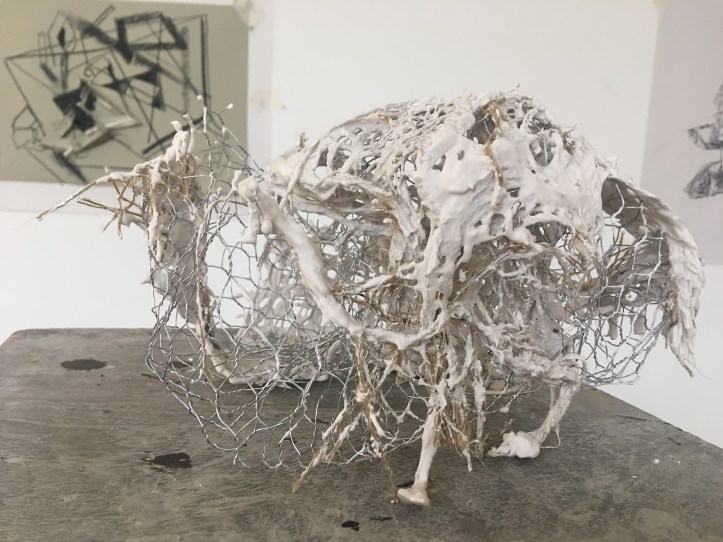
With time being on my mind, I thought I’d use this in the next pieces. I poured the plaster and held the chicken wire to my liking while I waited for it to be secure enough to dry alone.
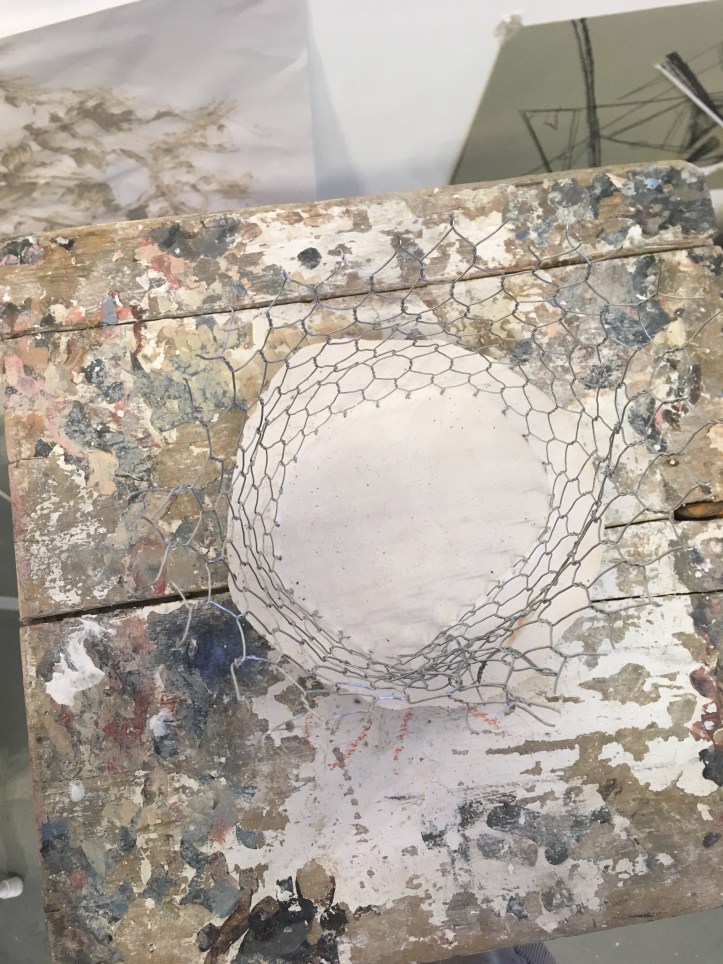
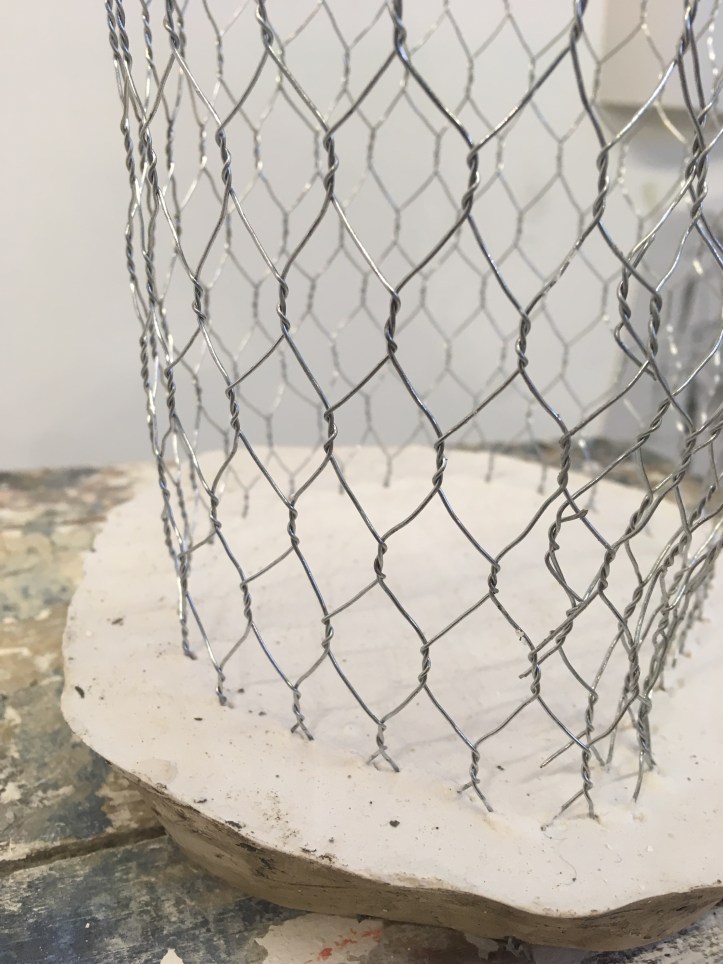
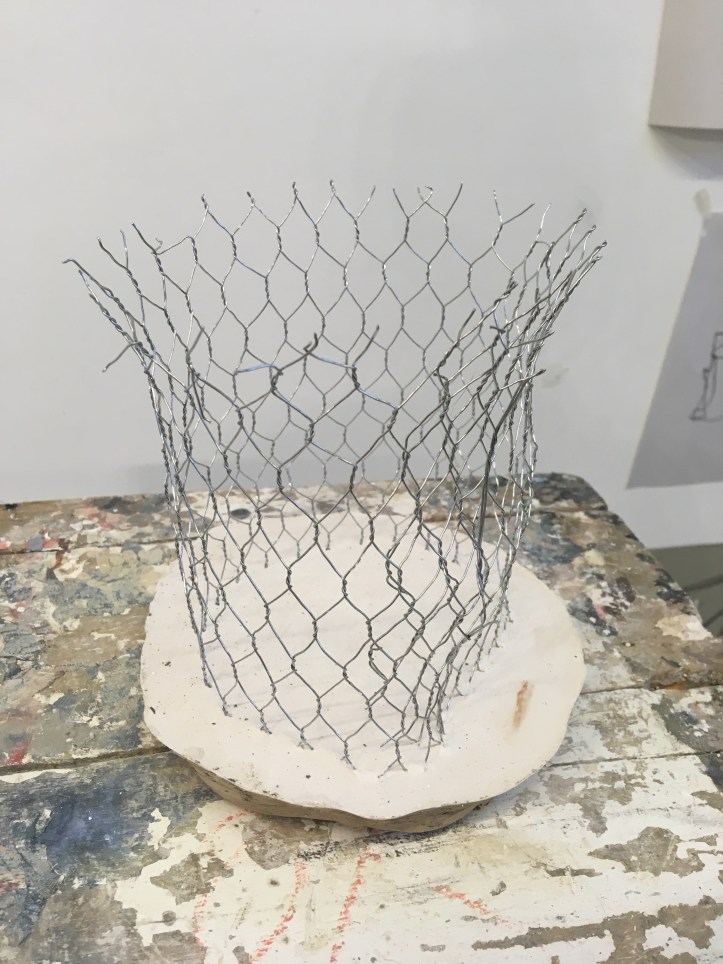
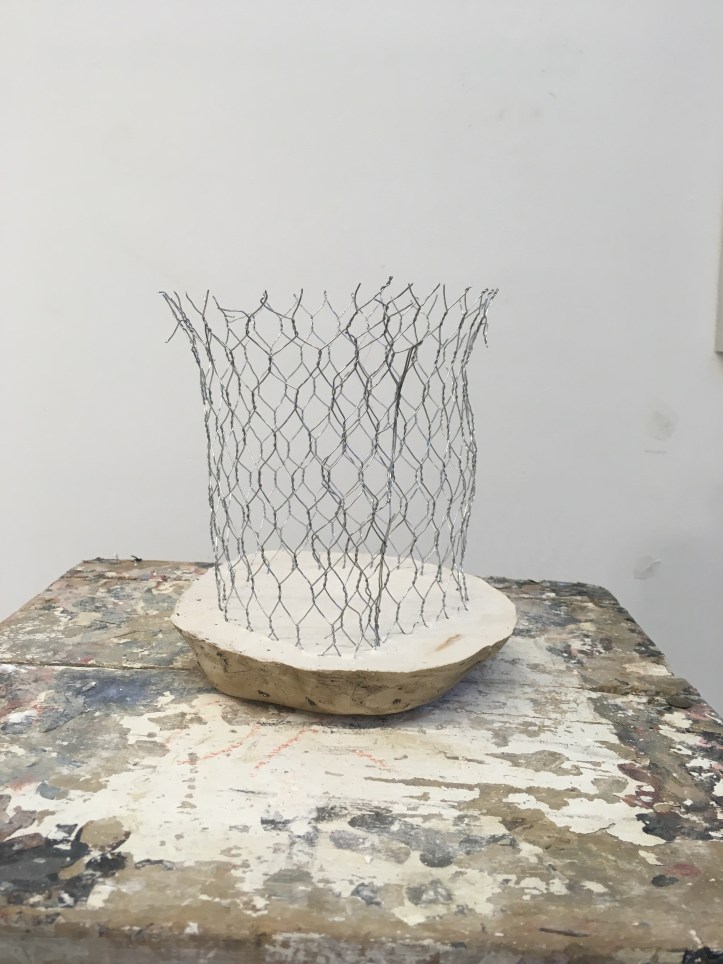
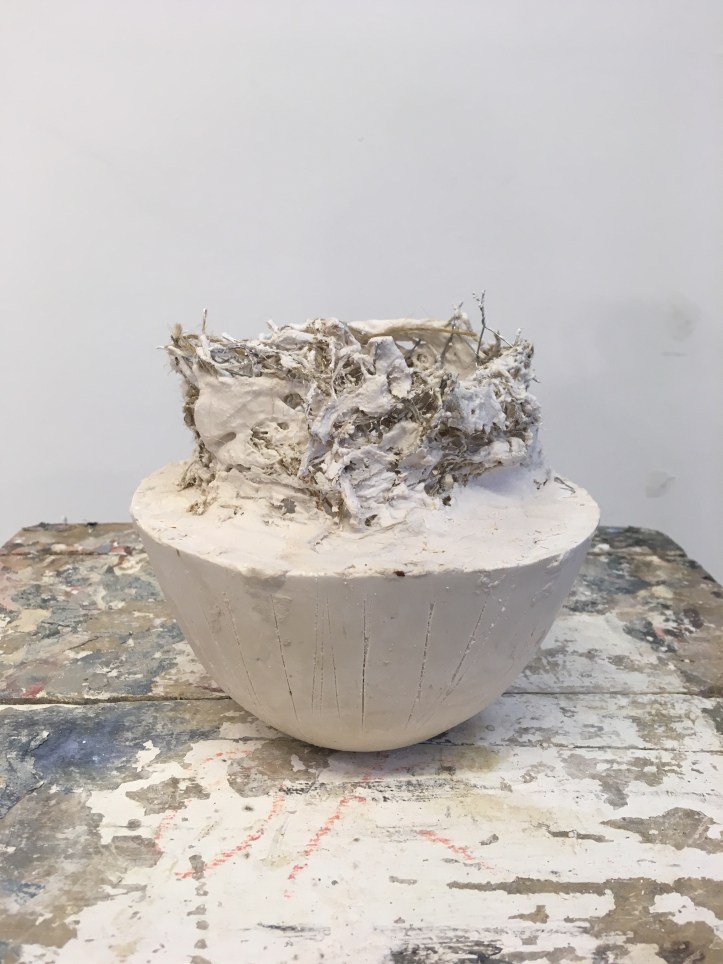
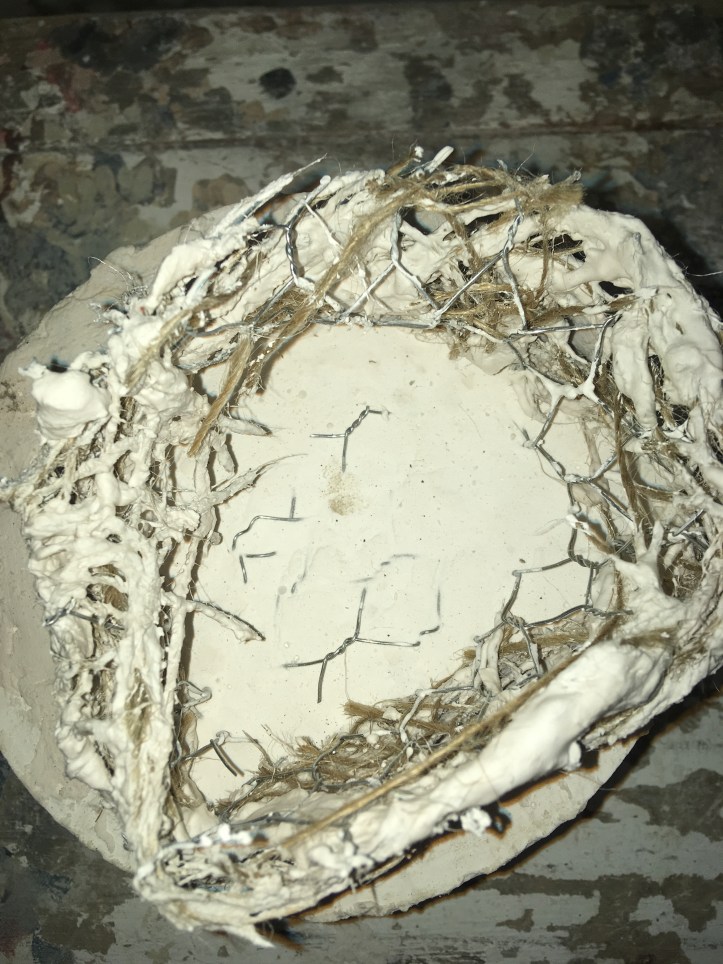
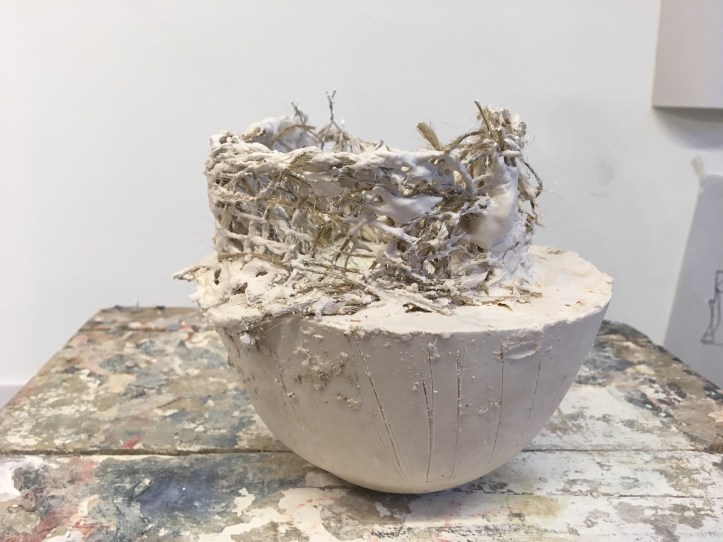
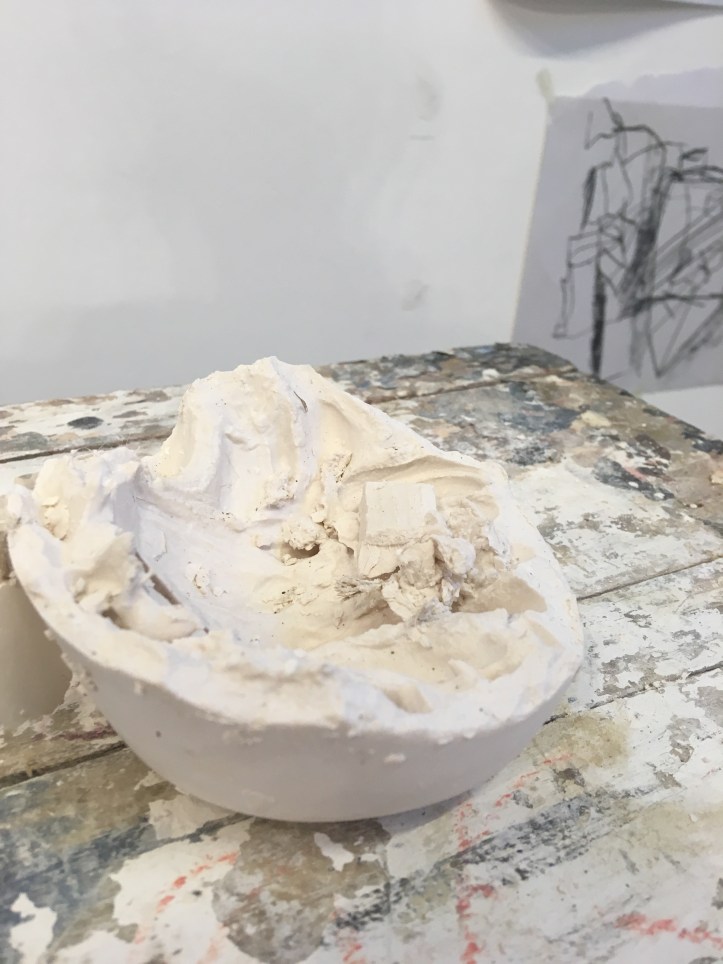
Throughout the week, I had been putting my scraps of dry plaster or scrim in to the pots used to mix plaster. I was curious to see if I had poured plaster into these filled pots, then broke the block after it set, would you be able to see the scraps inside? I also worked with using chicken wire placed on plaster and sanding down to reveal its pattern.
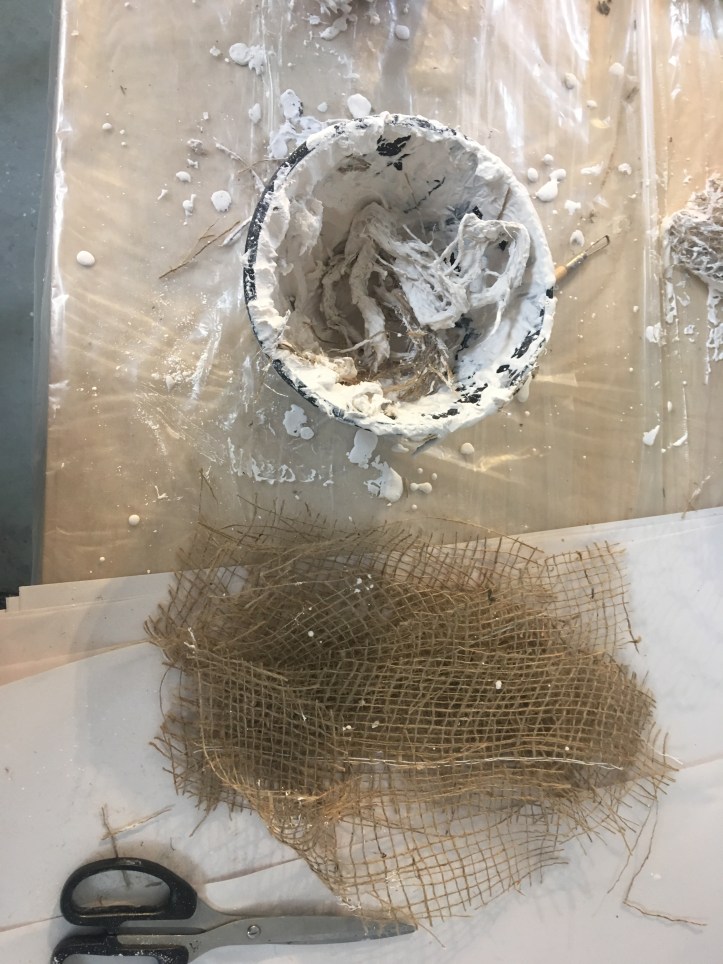
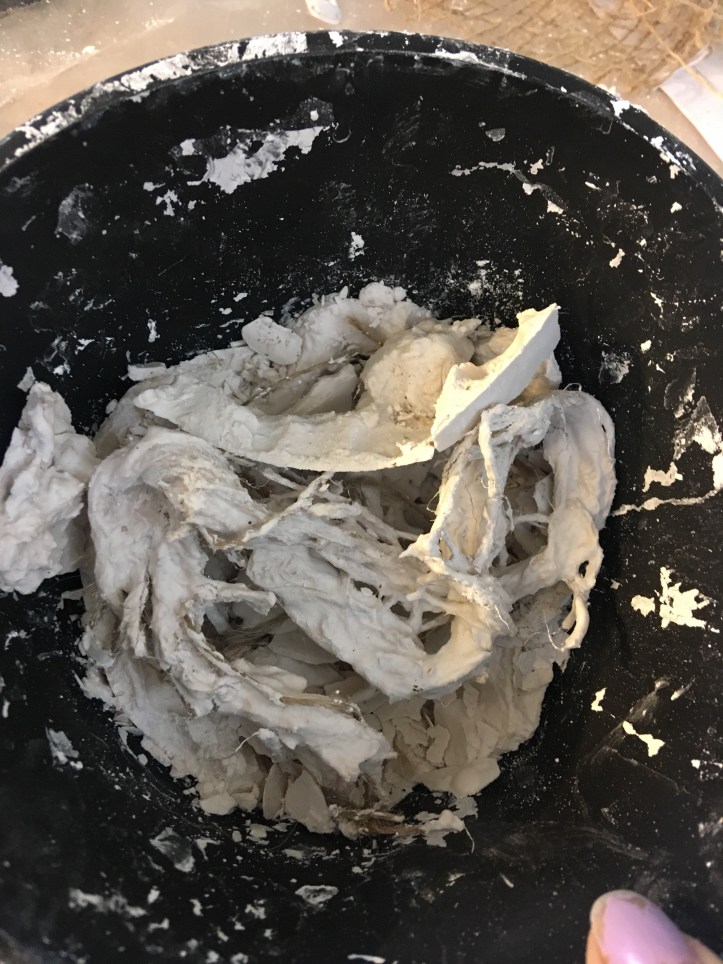
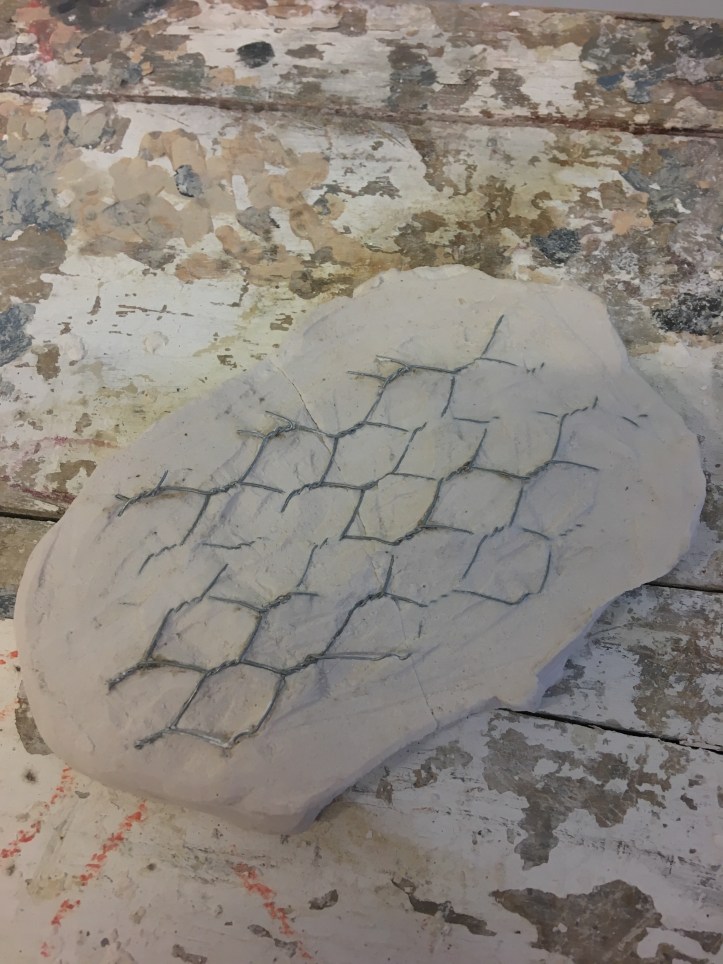
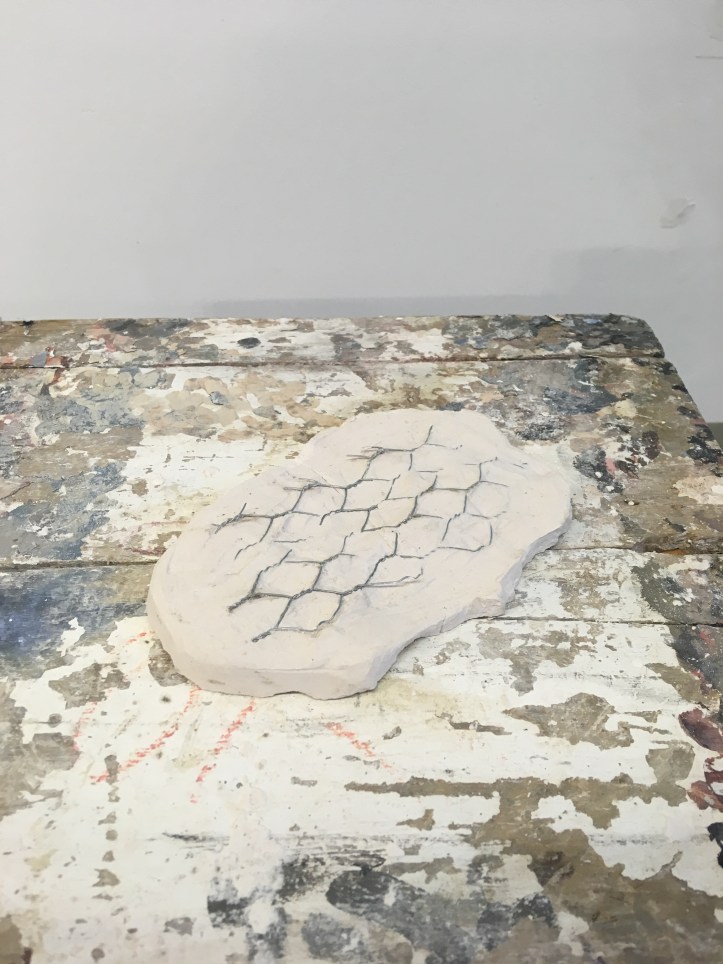
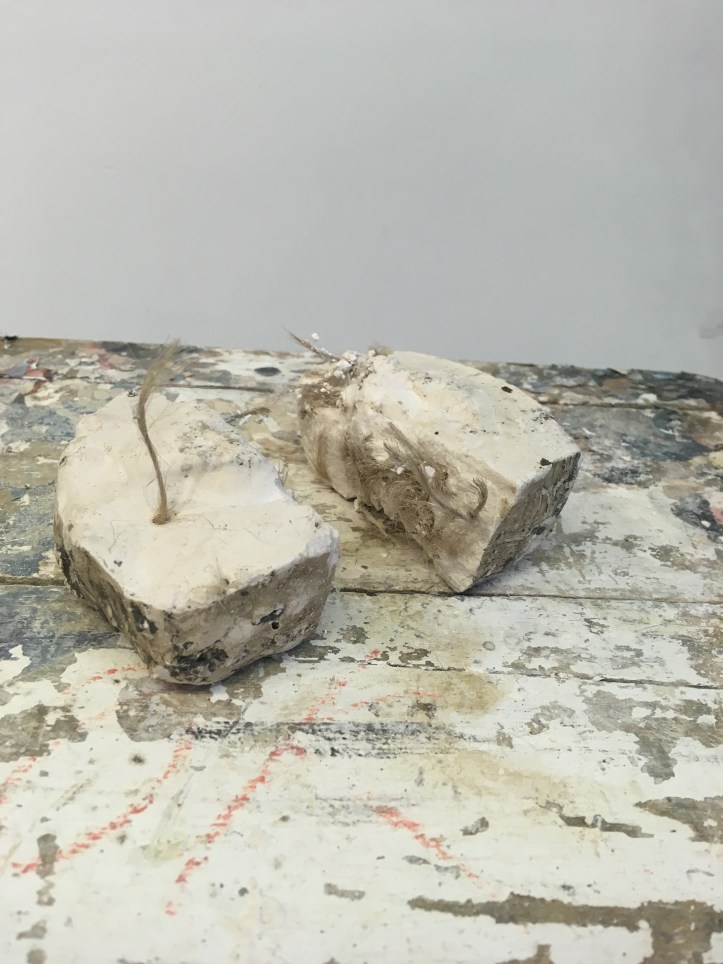
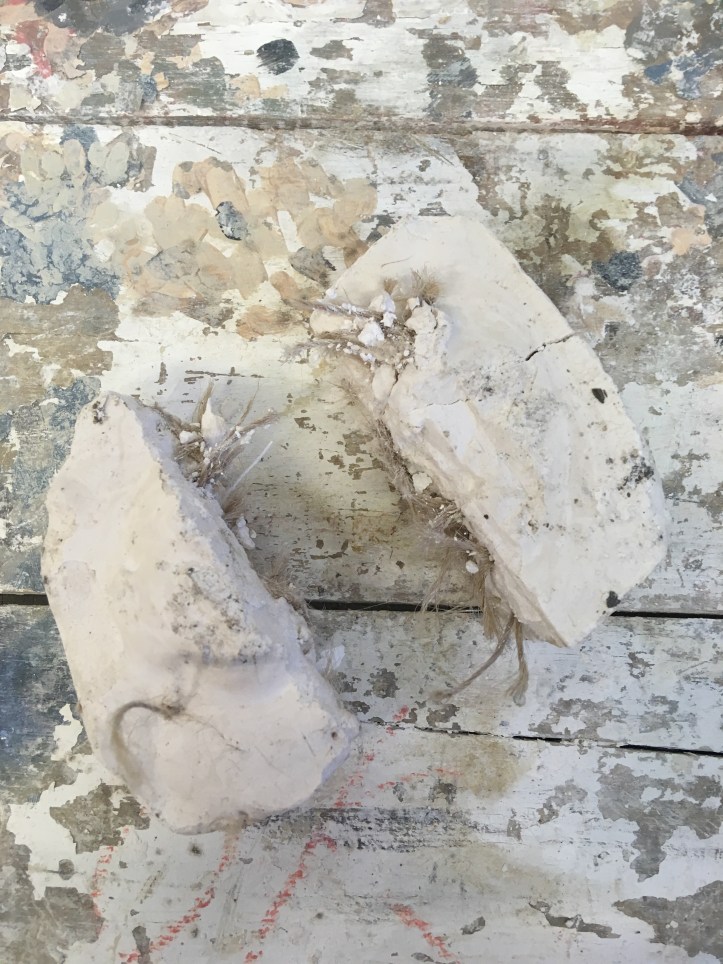
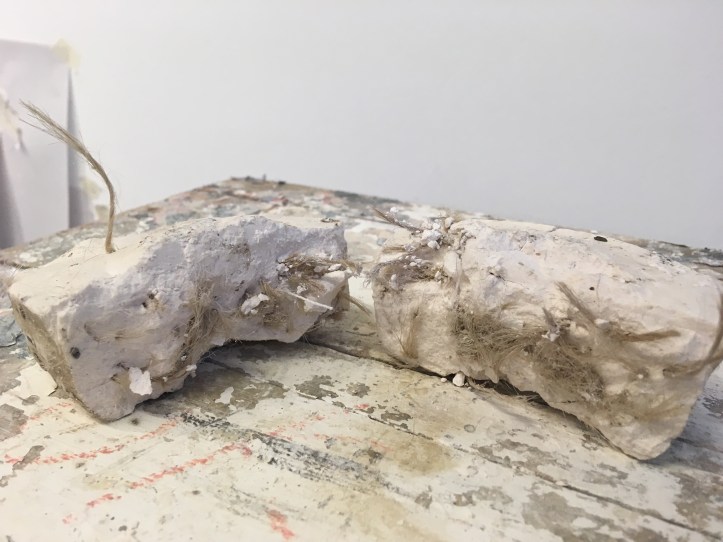
As my work so far was very similar in scale, shape and quality, I wanted to use everything I had learned so far and create a more resolved piece. I used clay as a base to support a piece of wire as a very basic skeletal base, then wrapped chicken wire around it to stand up. I then made a thick mixture of plaster, and let it begin to set before dipping in scrim and applying it to the wire. As this made it very heavy, it was an ongoing process of slightly changing its form as I needed to be aware of how it could still support itself while standing and having the slight curve I desired.
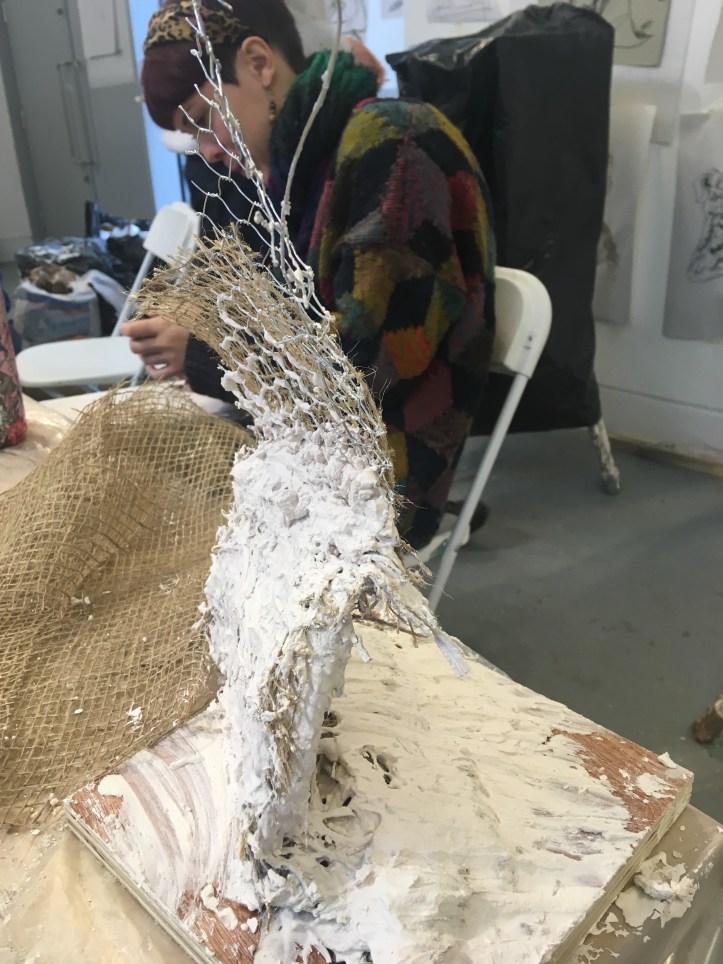
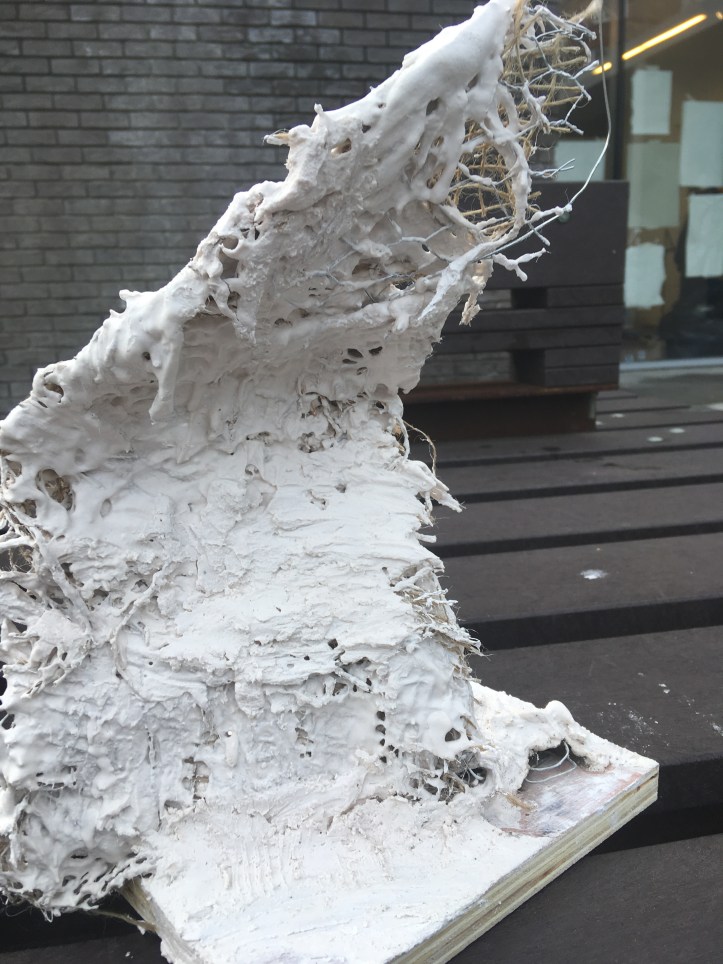
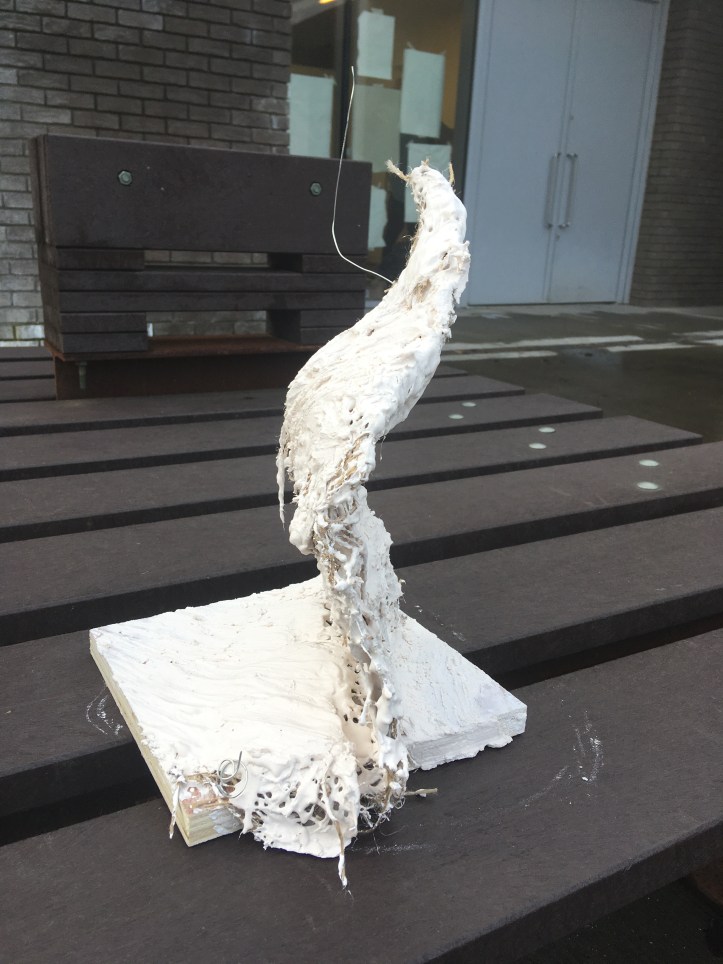
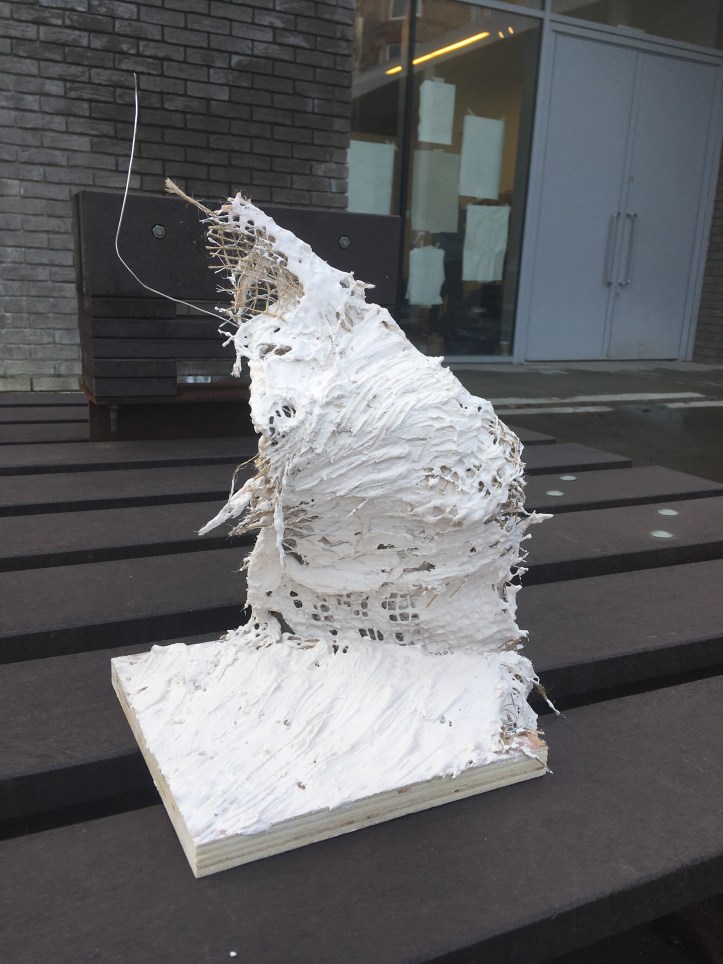
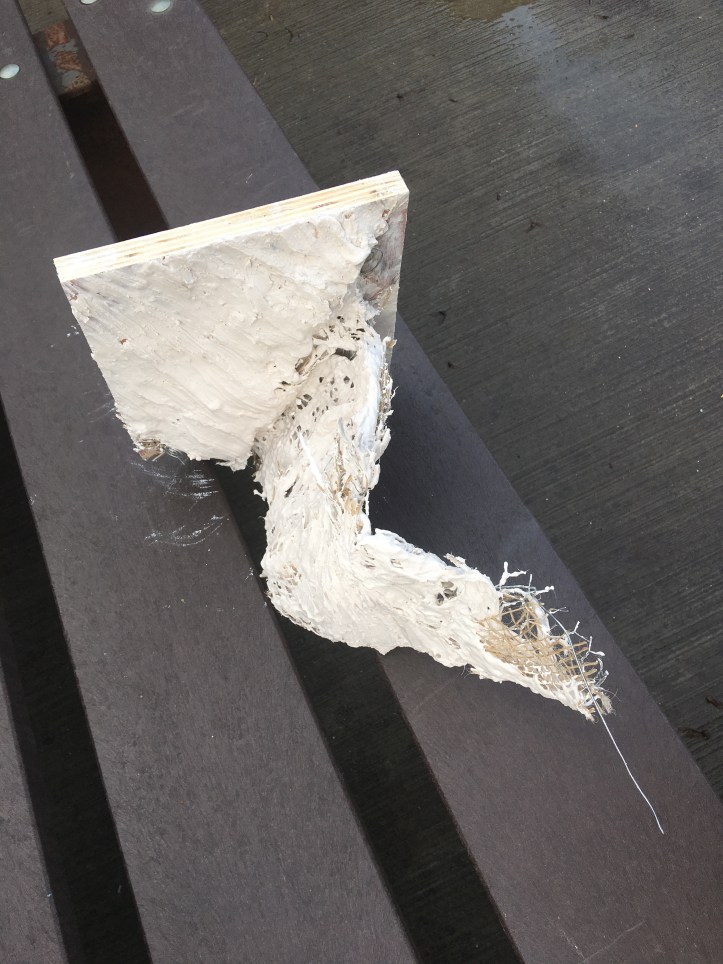
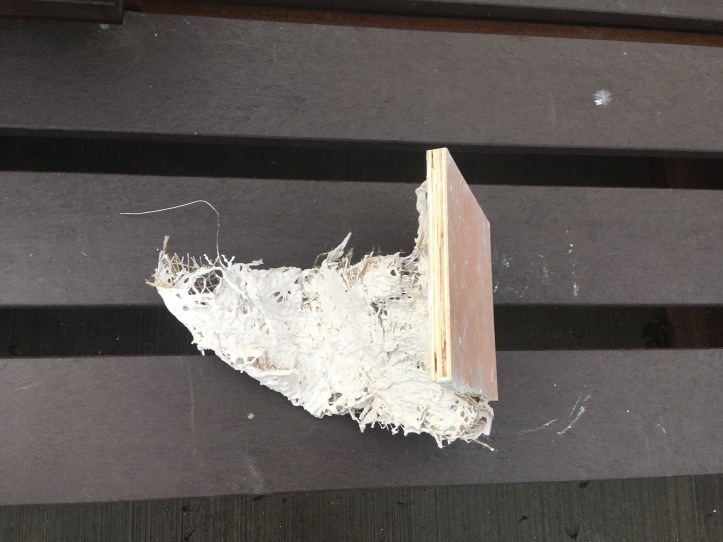
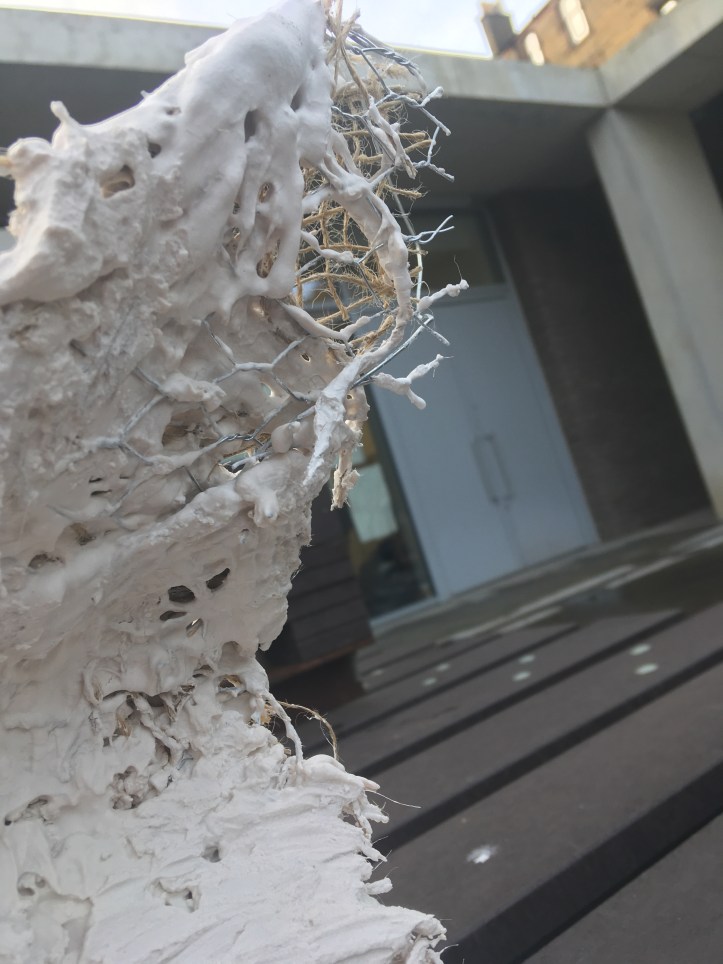
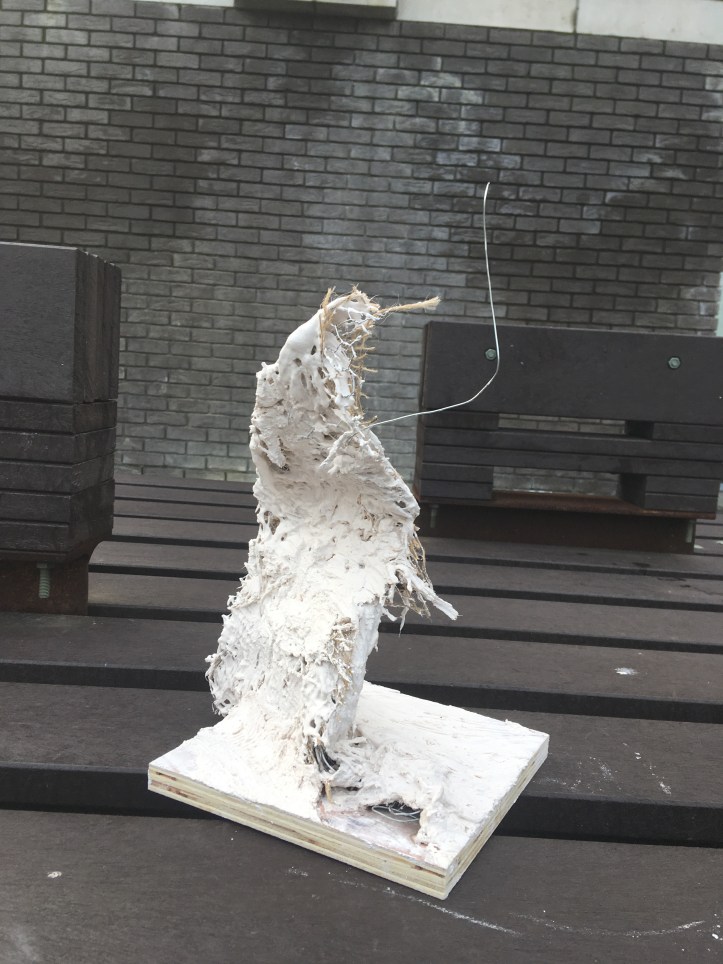
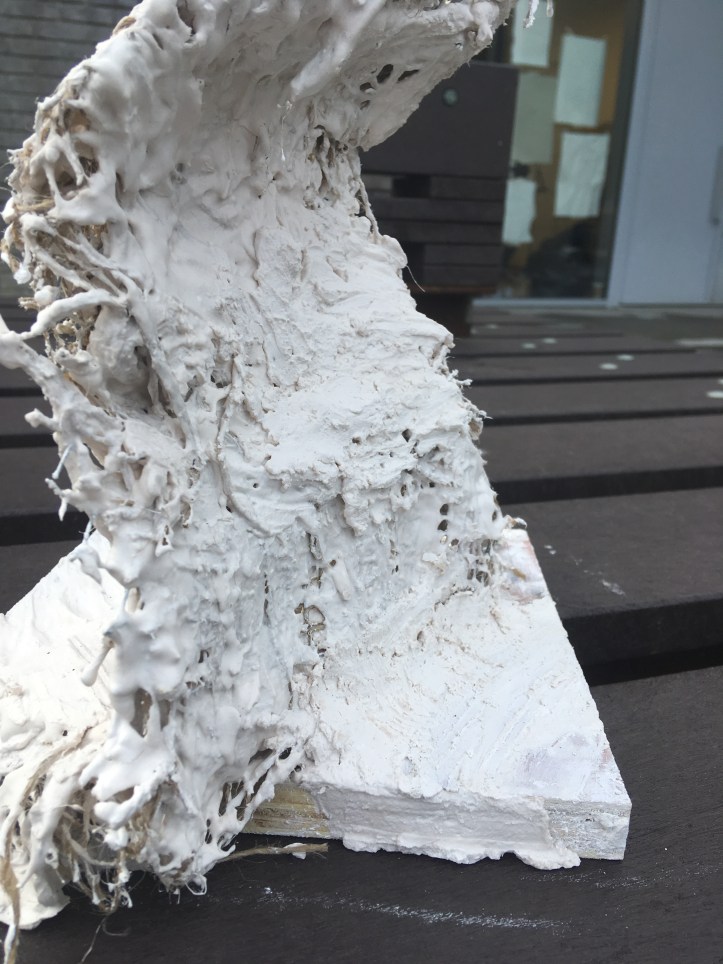
Once I was content with the piece and it had dried, I started working with viewpoint.
 ninamcmullanHND