LEONARDO DA VINCI
When researching artists who used mirrors in their work, I stumbled upon a website dedicated to Leonardo Da Vinci’s work and the methods he used. It wrote of his self created short hand language, as well as his mirrored writing. This is said to have been a way of taking notes intended for himself only, or as a way to deter people from stealing his ideas. As Da Vinci was left handed, it could have also been a way to write without by dragging his hand it over the writing.

ELEONORA WEBER
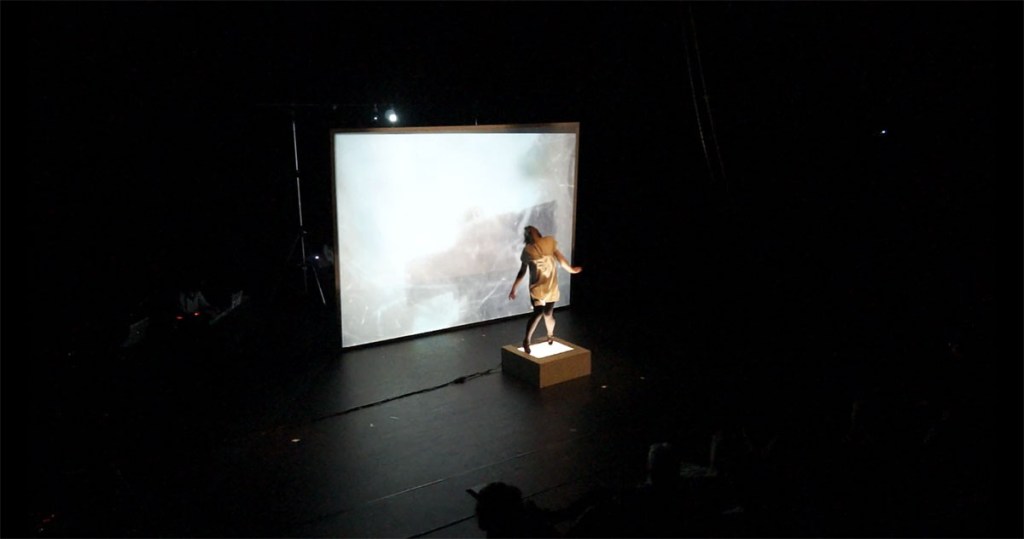
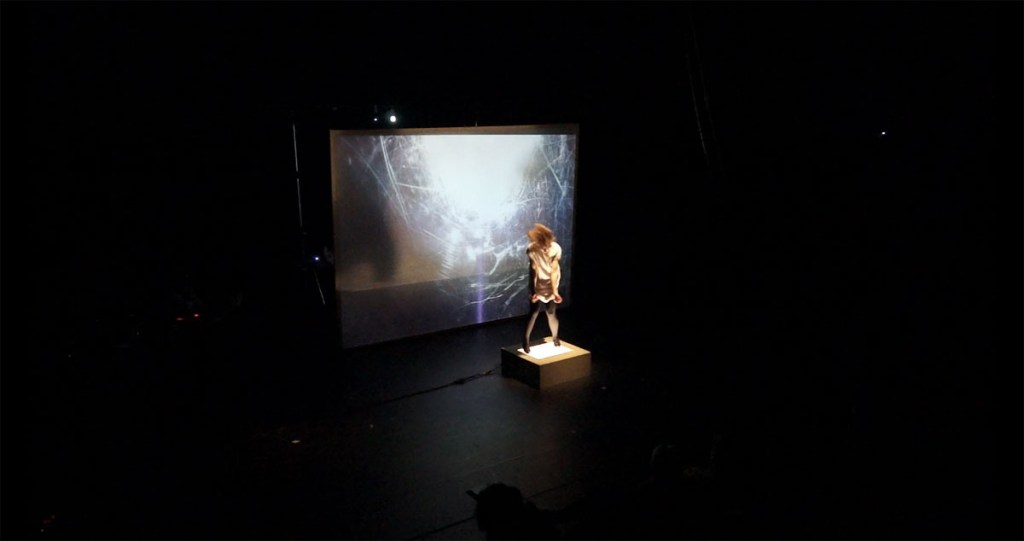
‘This is a live performance with real time sound and video processing. The artist questions the way one can sense himself through a mirror effect provided by a video device. The movements of the body, in between performance and dance, is restrained in the space of a one square meter box which uptakes a video picture from below. This picture is broadcast on a background screen, showing the audience an under scanned, inverted and blurred vision of the performer’s perception. The sounds generated by the steps on the box are real time treated, creating a live concrete sound peace.’
OTTO PIENE
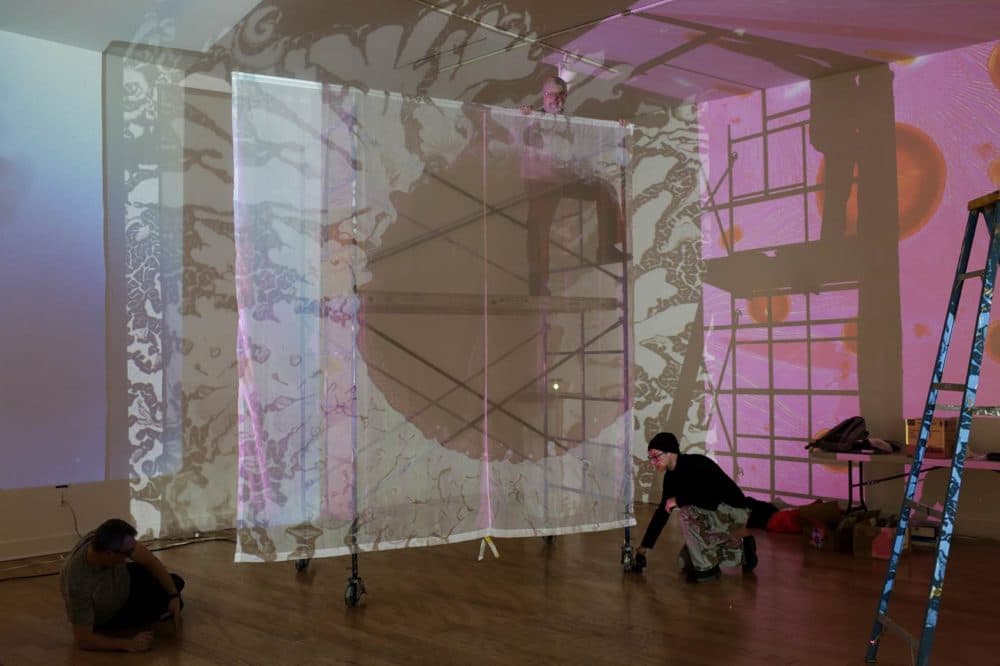
German artist Otto Piene’s “Proliferation of the Sun,” a projected, multimedia performance from digitized hand-painted glass slides.
ISABEL YELLIN
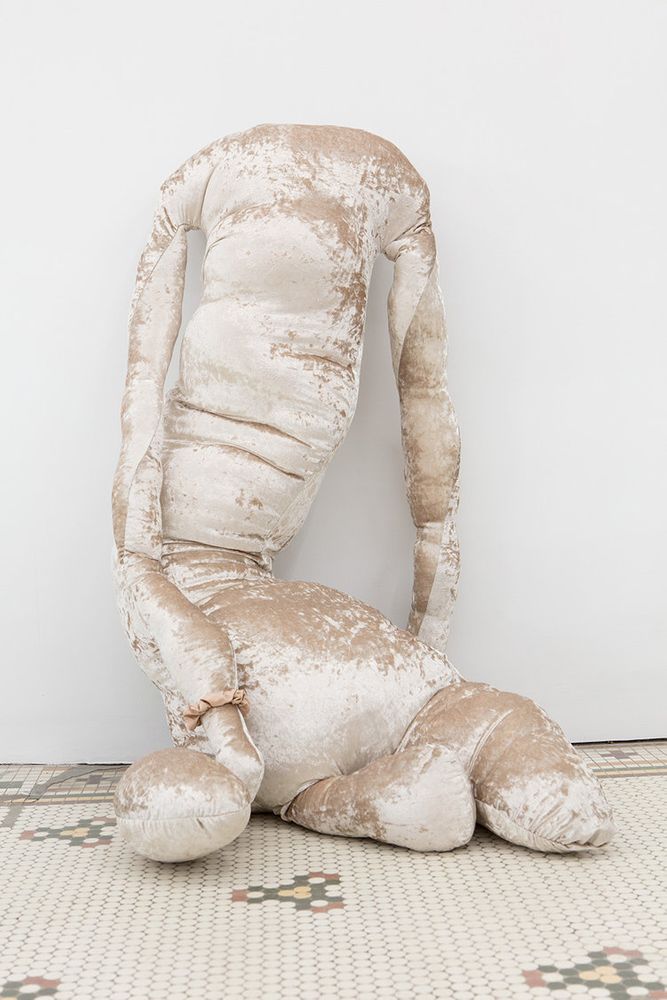
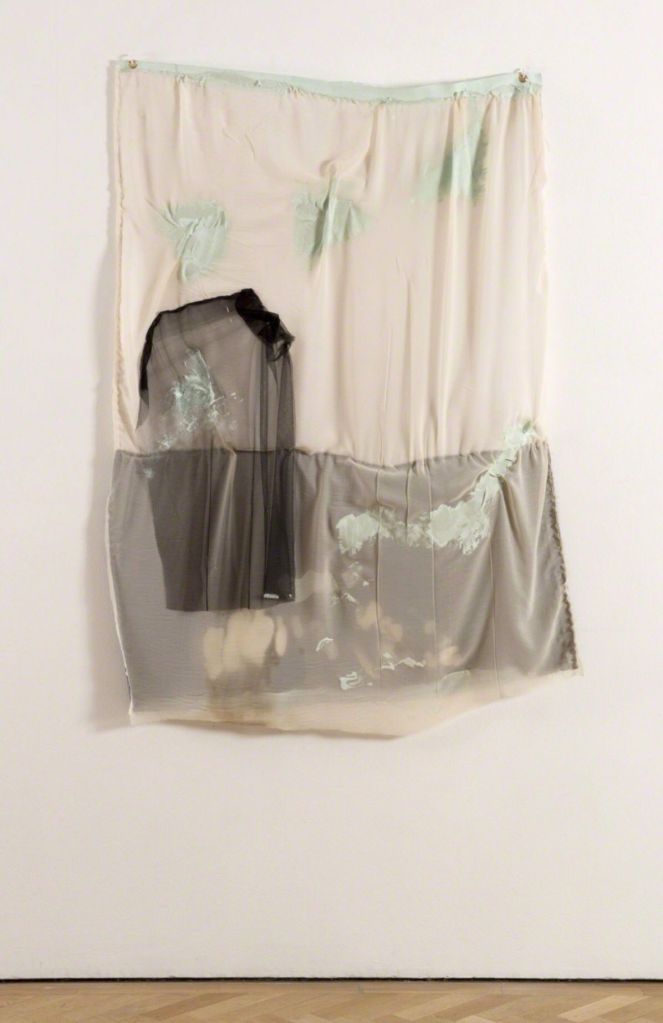
Yellin’s work resolves around her emotions and personal life and often relates to her childhood. It focuses on human needs – relationships/love/physicality – linking to use of materials and colours. These themes are interpreted through these alien/creature like shapes. Texture is obviously very important in Yellin’s work, from the crushed velvet soft shapes, to hanging sheets, to the heavy pillow like shapes made from plaster. Her choice of material is linked to the feeling of the work – for example, the velvet gives off a soft and calming atmosphere, while her use of plaster contrasts against the subject matter of pillows.
I was inspired by Yellin’s use of colour, as well as the soft velvet shapes. I have been using foam in my current project, which links to comfort.



JOAN JONAS
I found Joan Jonas while researching for artist who use mirrors in their work. In the 1960s, Jonas created a series of work using mirrors – including performance art. Below I have shown images from a the performance ‘Mirror Piece 1’ (1969) in which the performers slowly walk holding mirrors, reflecting not only themselves, but the audience – emphasising the feeling of separation.


While researching further, I realised that I myself saw her work in London. I was not so familiar with installation work then, but I remember being curious to how a space can be used- and how it differed from my usual understanding of displaying art. Her projections on to curved panels in a dark room created a feeling of unease and I remember not wanting to be alone while walking past. I would like to work more with installation art as I am curious to how you can use space to create a specific atmosphere just like I experienced at Joan Jonas’s exhibition.
DAN GRAHAM
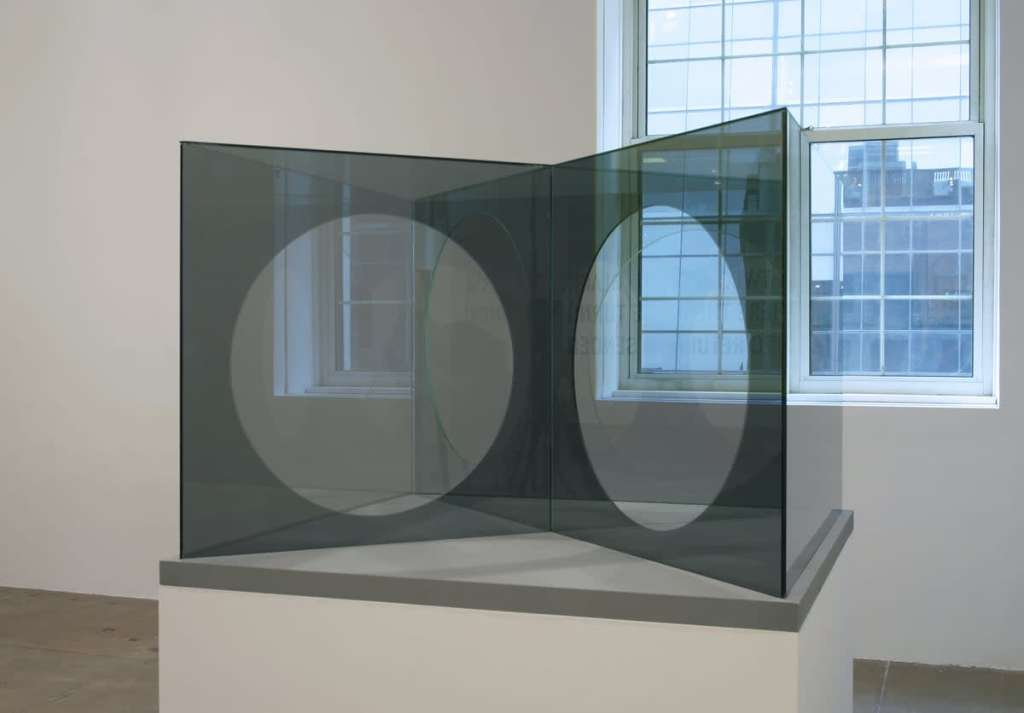
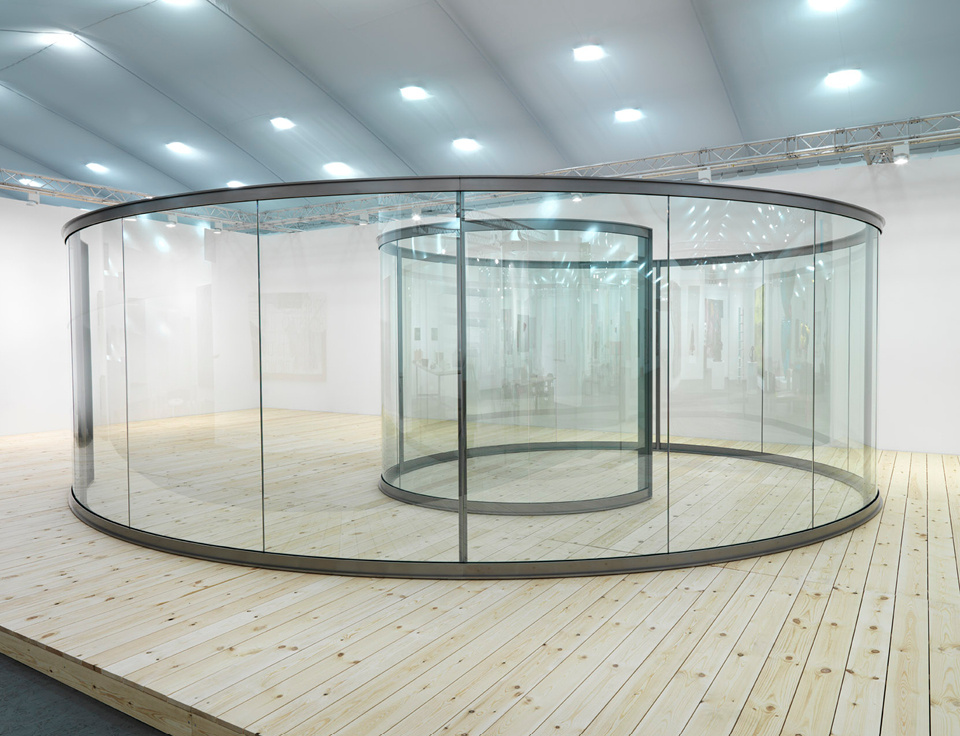
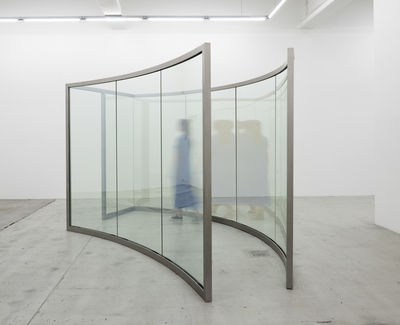
I am interested in Dan Graham’s use of shape and material. The location of his work is also very vital – as some are displayed in public spaces so they are not easy to miss. By using mirrors in places we are so often used to solely looking at others, it creates a surreal feeling of truly seeing how you look in every day settings.
The transparent large scale works also caught my attention due to their size and shape. I love the idea of interacting with a piece of work by looking at it from every angle – as well as the fact of seeing through the work itself. It’s almost like a window or frame for whatever it on the other side. I’m also curious of the reflections and how its shape alters ones perspective.


FRANCESCA WOODMAN
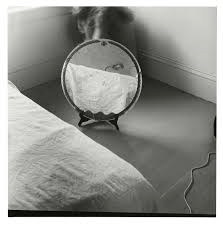
I have been looking a lot into Francesca Woodman’s work recently after attending the Body as a Material workshop due to personal interest. While looking at her photography, I noticed she worked a lot with mirrors – linking to the theme of self reflection. I am also interested in the way Woodman uses empty space, as well using herself in her photography and performance work.
The middle image is from a performance video by Woodman which shows her naked body behind a plastic sheet. She writes on to the front of the sheet (backwards for her), and continues to rip through the material. I was inspired the materials transparency, and the idea of hiding yet barely being seen. It makes me think of recovery from some type of illness, and displaying strength by breaking through this barrier.


 ninamcmullanHND