Jenny Holzer was born July 1950, Ohio, US. She studied art in North Carolina, and specialised in painting, print making and drawing in Chicago. After this, she moved to Manhattan where she began working with language and installation which lead her to create some of her most famous works. She was also part of Colab, a collective consisting of New York artists. Holzer is part of a group of artists who rose in the 80’s, whose work centered around identity and femininity. This is alongside artists such as Cindy Sherman, Barbara Kruger, Louise Lawler, and Sarah Charlesworth. Although she originally wanted to be an abstract painter, she now currently resides in New York with her current practice mostly consisting of public installations of text.
Jenny Holzer is mostly known for her public large-scale installations, created through billboards, posters, and projections. She includes every day outdoor structures, from buildings to benches, as well as posters hung on public walls. The outside world is her canvas. I feel the use of public spaces to display her work relates to fighting back as a feminist artist in the 1980’s. Throughout the last century, it is evident that women have struggled to be seen in the art world and are not equally represented in gallery spaces as men are. By displaying her work in public, Holzer is fighting against this issue by giving people no other choice but to see her work. Furthermore, Holzer’s subject matter often expresses feminist/political issues. This is demonstrated in the piece below which speaks of the gun laws in America.
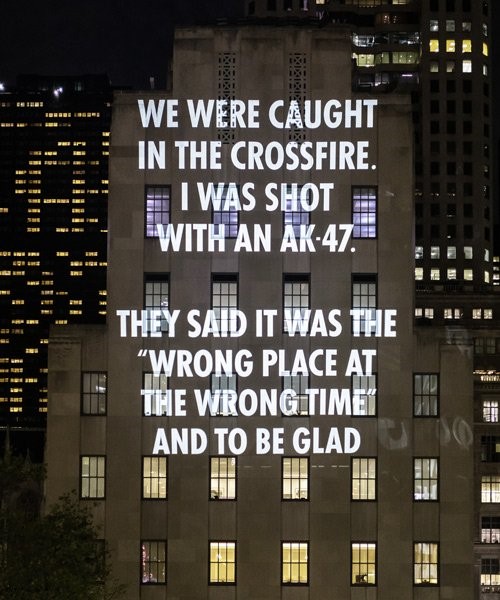
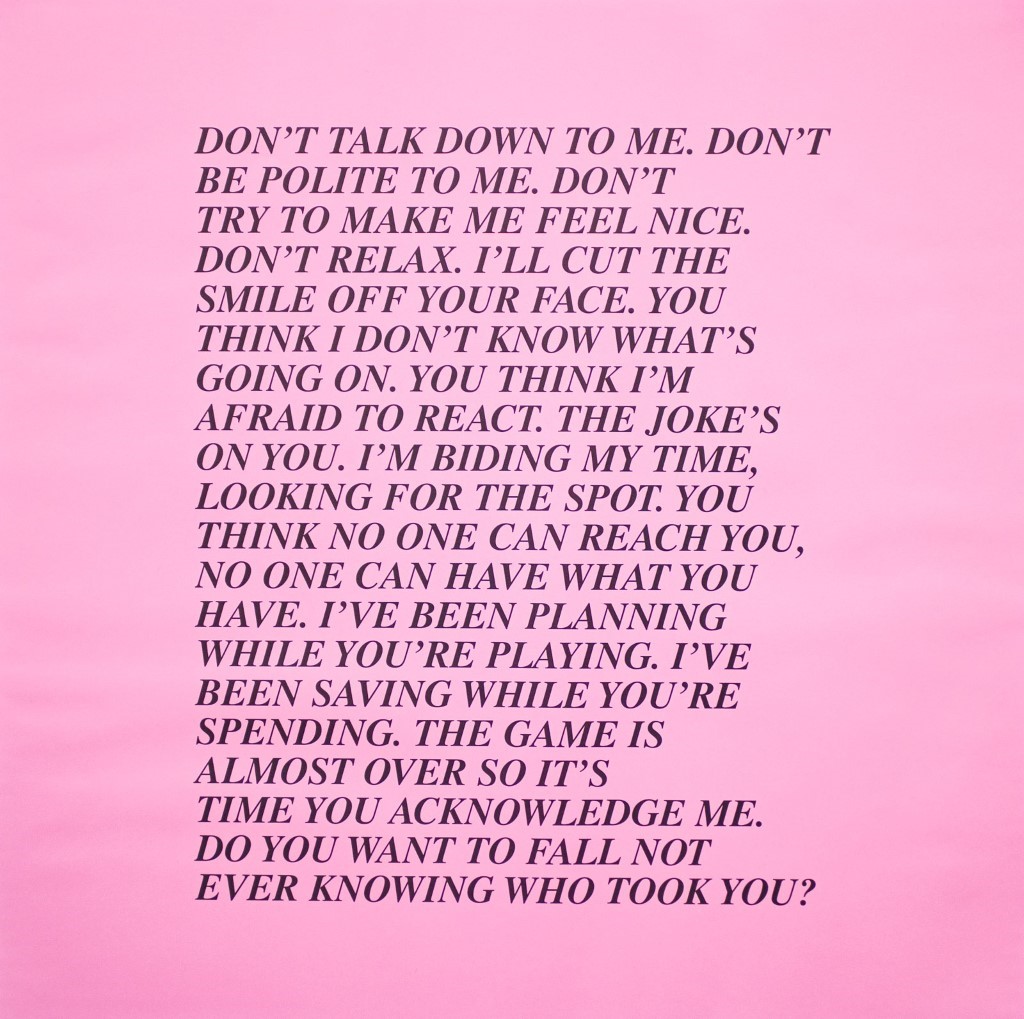
I wanted to focus on the work of Jenny Holzer as I relate to her confessional writings. I look up to her as a feminist artist and am inspired by her aggressive energy which she conveys through her writings. I also love the impact the scale of her work has, as well as the way in which she displays it. It is very forward, raw, and honest, and feels unapologetic. This is displayed in the piece below.
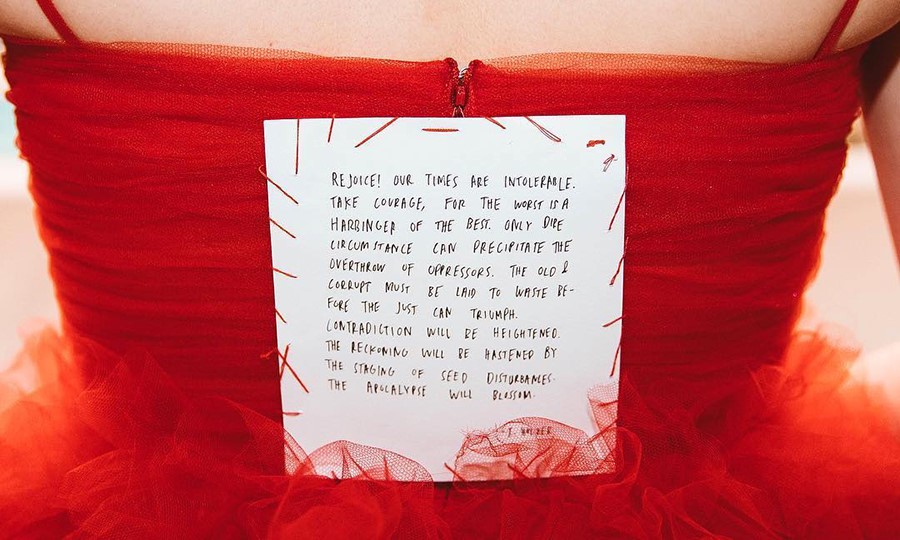
In January of 2018, Holzer’s work was displayed at the Grammy’s, sewn on the back of singer Lorde’s dress. The small piece refers to sexism in pop culture, particularly due to the fact Lorde was refused a solo performance that year while her male counterparts were. This also highlights Holzer’s feminist work being presented in a somewhat taboo and rebellious way. I was inspired by this piece as I am using embroidery in my current project. I am also inspired by the lack of colour used, the use of Holzer’s handwriting, and the placement of the piece. I think it would be interesting to combine my work with fashion in future practice.
 ninamcmullanHND