Before doing some contextual research, my knowledge of the origins of collage was centred around 1912 when artists such as Picasso and later with Matisse who started this new way of creating art by compiling different parts into a resolved piece. Many refer to these artists as the pioneers of this modern way of working, which continues to evolve with modern technology due to programmes such as Photoshop. However, after reading ‘The Women Who Invented Collage’ written by Claudia Massie (July 2019), my understanding of the history and timeline of collage has since been rearranged.
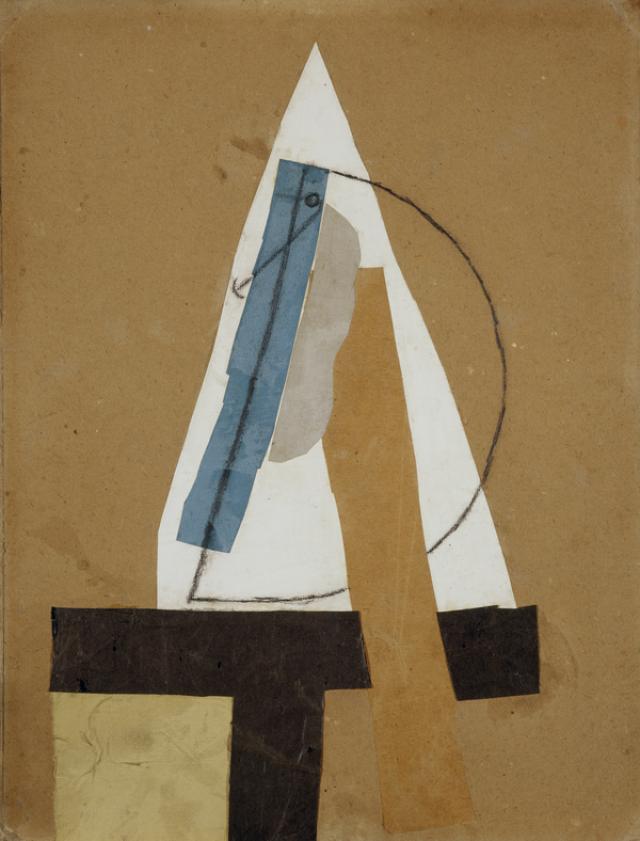
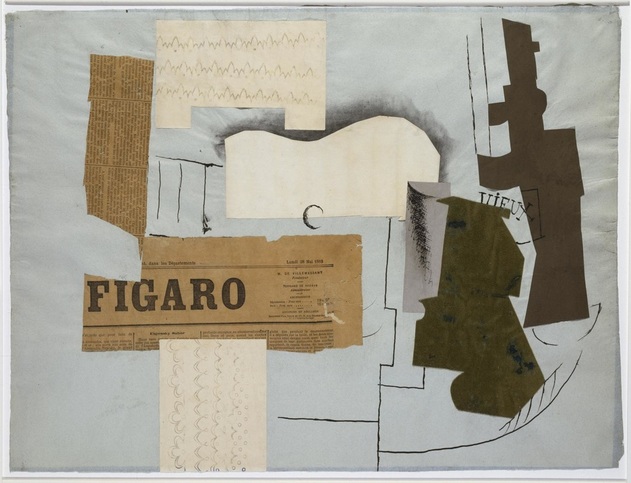
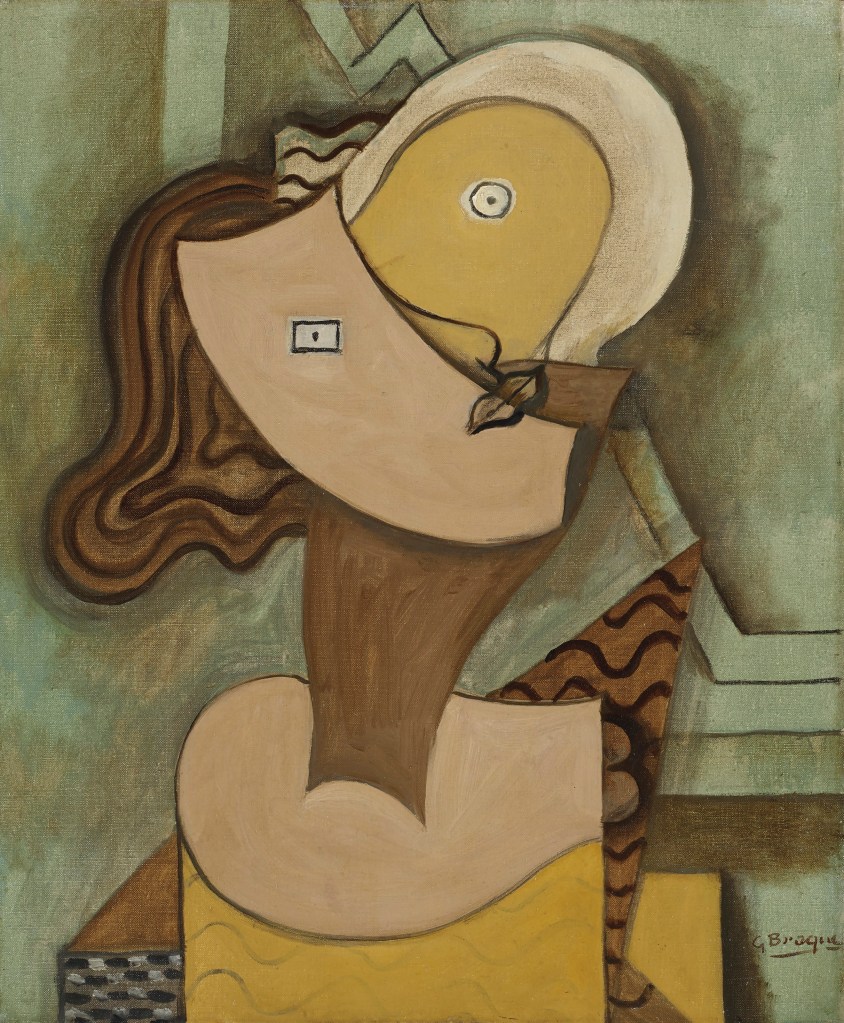
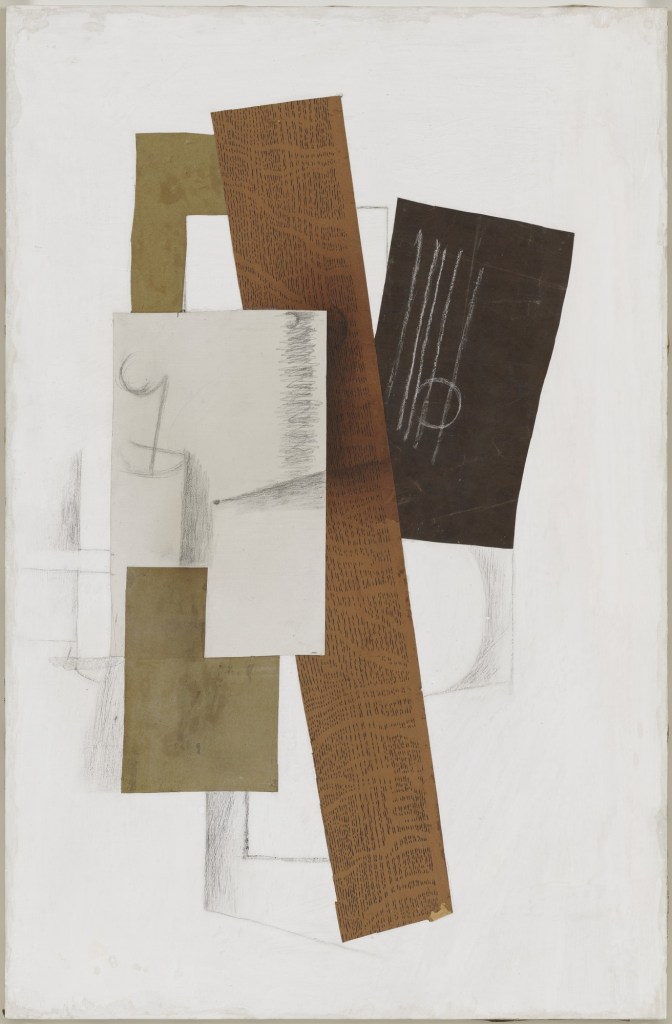
ABOVE SLIDESHOW: Examples of collage by Pablo Picasso (1881-1973), followed by Georges Braque (1882, 1963).
If you Google the word collage, it will tell you two things: the word collage is French for ‘to stick together’, and that this term was first used in reference to artists Picasso and Braque in the early 1900s. Although the word ‘collage’ may have only been distinguished by 1912, it does not mean that this is where the technique began. The aforementioned article writes of Edinburgh’s ‘Cut and Paste: 400 Years of Collage’ exhibition held in 2019, and runs through a variety of artist and their history of using the method of ‘cutting and sticking’. It is obvious that people have been using this as a way of working for longer than many know, including female artists who were not credited for their work, simply due to their sex.
This is sadly a common theme within the art world, with female representation in art still today being devalued to a point of their work being dismissed. An older example of this is that women were not accepted into England’s Royal Academy Antique Schools until 1862, and even then, they were did not have access to a nude male model until 15 years later. And although things have improved since, a woman’s art is still undervalued in comparison to their male counterpart, including in the ever growing world of collage.
The method of collage quickly became a mainstream technique within art following the First World War due to it’s inexpensive nature, and its recyclability using minimal resources. This particular article writes of the many anonymous pieces of collage work, which we can assume is left unknown as it was made by a woman – and therefore faced the risk of not being appreciated to its full extend because of its creator. Collage for many was a quick way of making art – whether that be through adjusting photographs to create a group montage (e.g. Oscar Gustave Rejlander – Two Ways of Life, 1857), or playing around with unusual imagery to create a surreal piece (e.g. Hannah Höch – Indian Dancer, 1930). Furthermore, it is important to mention the relationship between art and domestic life, involving home made items and their elements of collage which have existed throughout history to document, express, and for practical use.
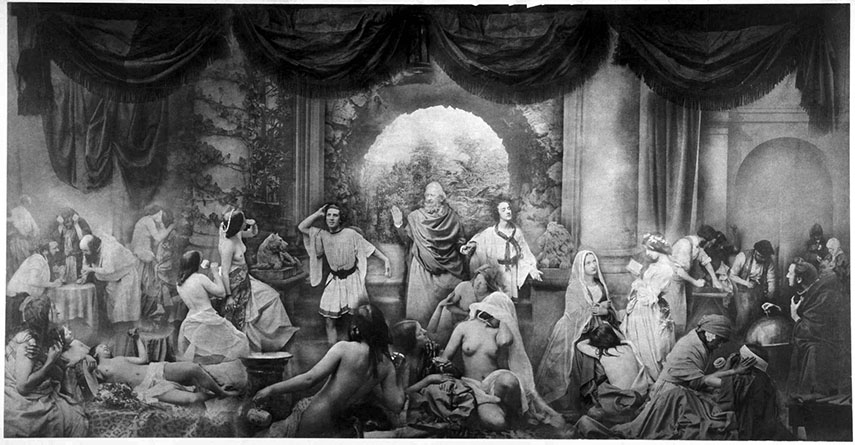
Oscar Gustave Rejlander (1813-1875) 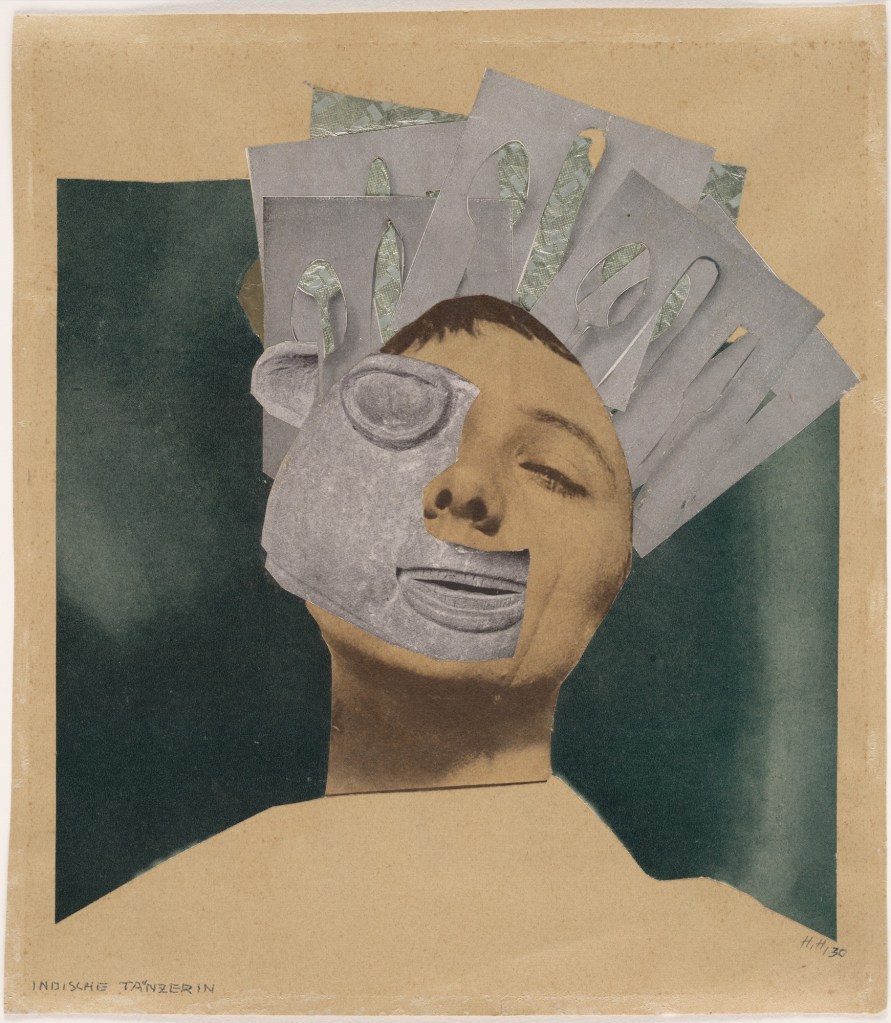
Hannah Höch (1889-1978)
We cannot forget the hundreds of years which saw a never-ending collection of a wide variety of artists, creating and experimenting using this method – especially the female artists who were not given the deserved recognition for their work. As previously mentioned, this is an ongoing issue within the art world, with the method of collage being no exception. We owe it to those who used what was available to them for their developments, which resulted in the awareness of collage growing in the early 1900s to today.
 ninamcmullanHND