(December 22, 1960 – August 12, 1988)
“I don’t think about art while I work, I think about life.”
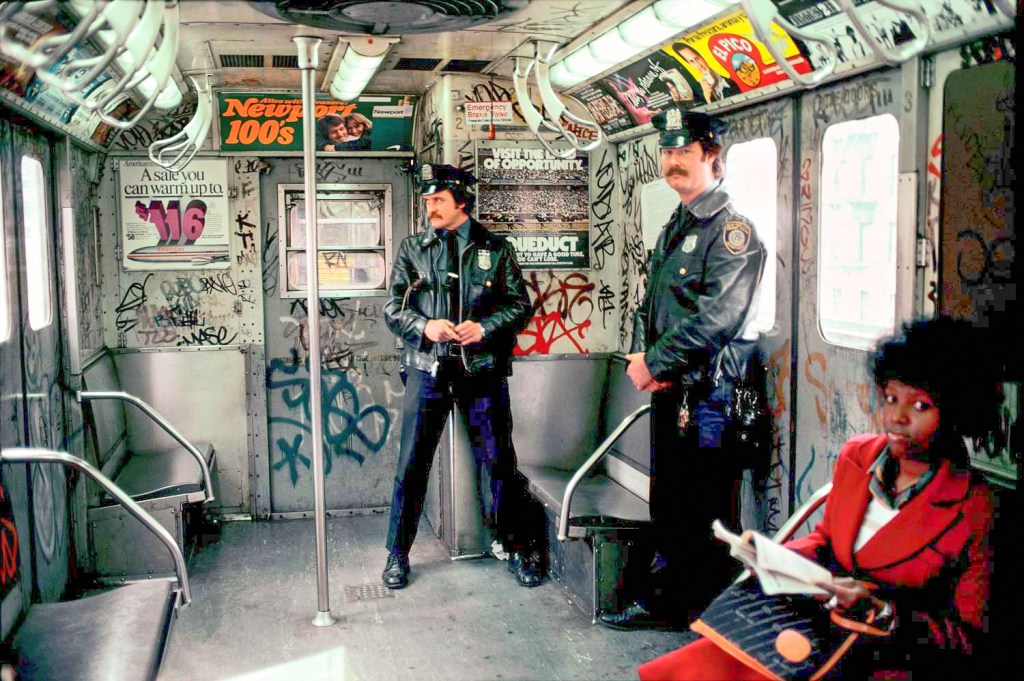
Born in Brooklyn in late 1960, Jean-Michel Basquiat was creating art from a very young age. Encouraged by his mother, he spent his childhood painting, often visiting museums. Following this, he spent his adolescent years spray painting around New York, adopting the tag ‘SAMO’, which can be seen in his work throughout his career. Basquiat’s interest in street art lead him to become a very significant name in the graffiti world in the mid 70’s, as well as being crucial to the start of his art career, using aspects of graffiti art in his own work.
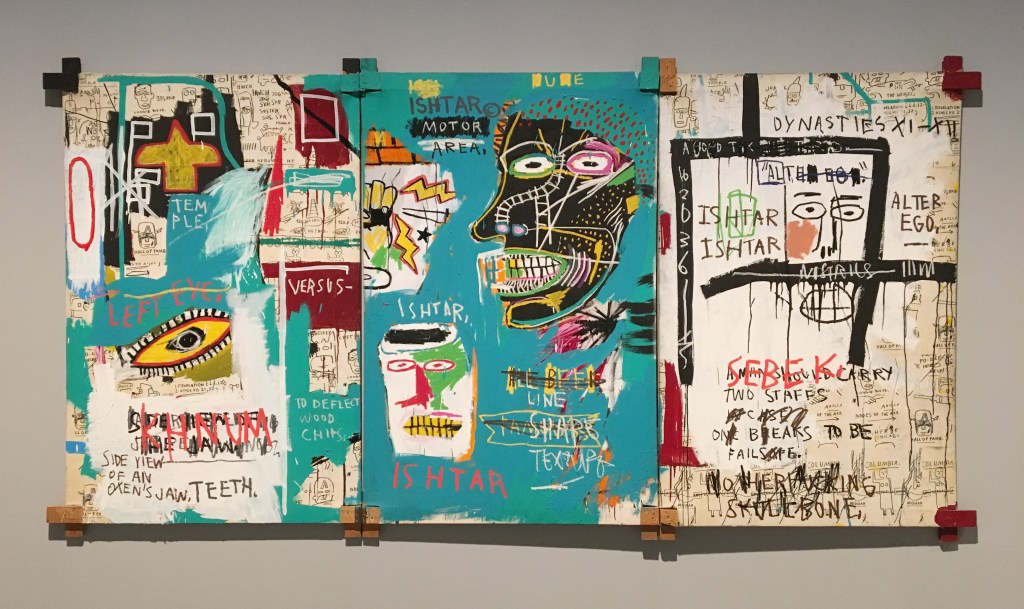
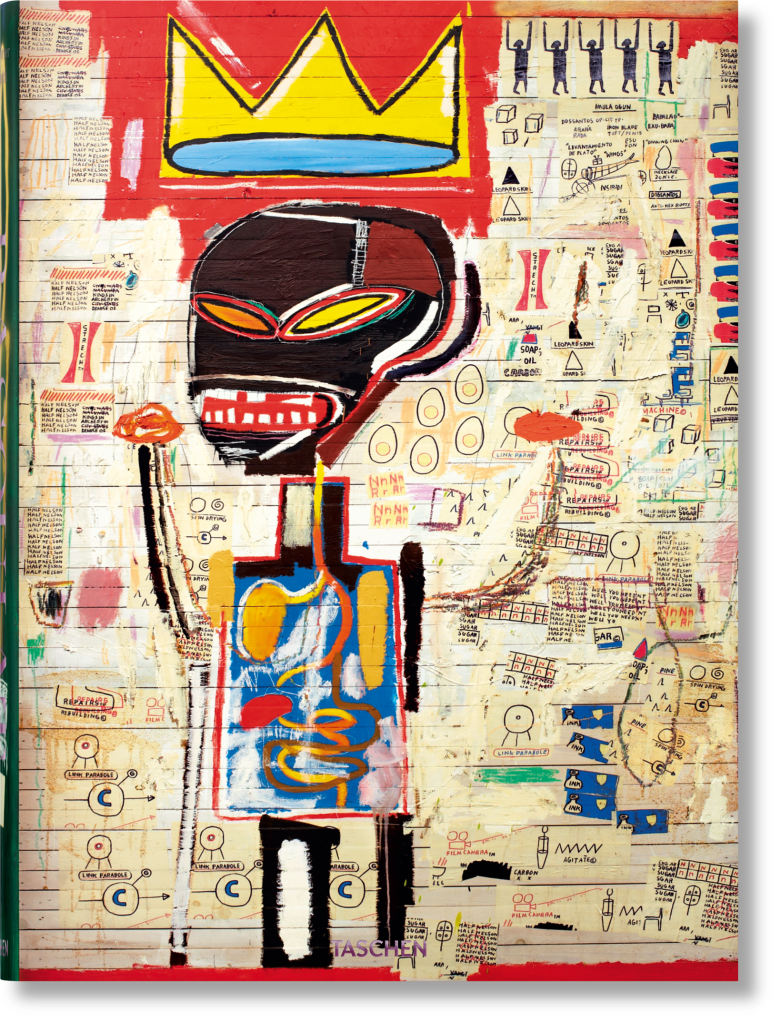
Basquiat’s work is known for its scribbly, messy, expressive appearance and bold mark making alongside his frequent use of political, religious, and cultural themes and imagery, holding an instantly recognisable look to them. Often taking months to complete, these large pieces combine multiple mediums together create an energetic, and somewhat chaotic atmosphere, demonstrating the countless influences and culture that this work is the consequence of.
He drew subjects from his own Caribbean heritage—his father was Haitian and his mother of Puerto Rican descent, meaning he was trilingual, speaking French, English and Spanish. This was an influence in some of his art work, as he was particularly fond of French poetry. Using his family history to influence his work can also be seen as he often paints mask like faces, as well as skulls alongside colourful shapes and line, correlating to his African American heritage.
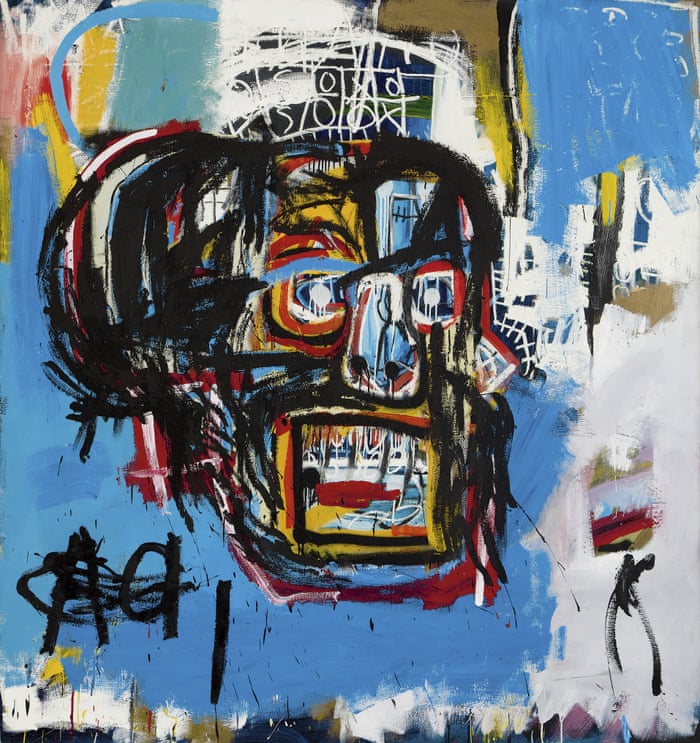
Untitled (1982) 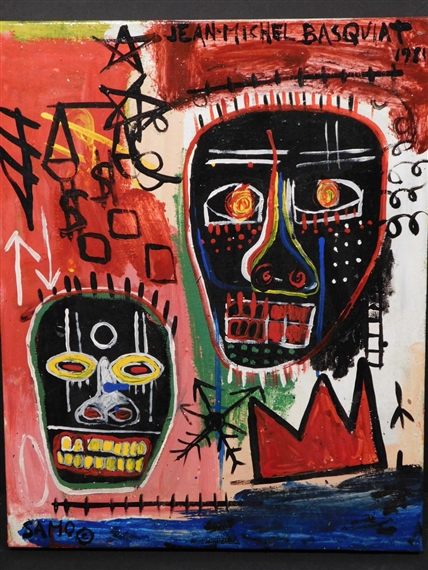
Two Heads (1981) 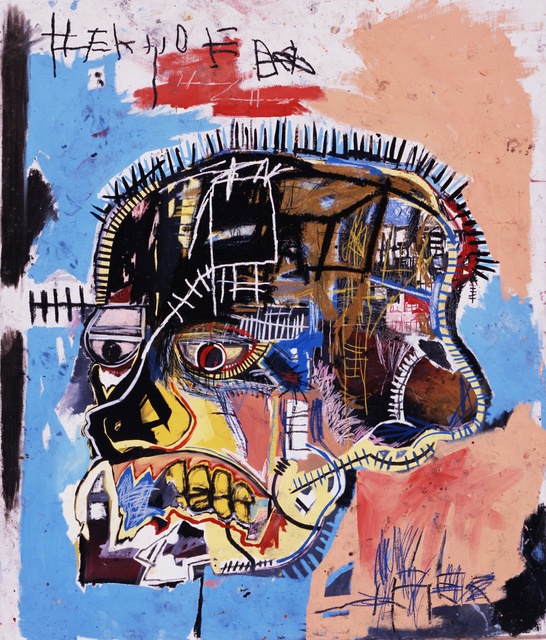
Skull (1981)
Climbing to fame in the late 70’s, he became friends with other famous names in the art and music world, such as Andy Warhol, Keith Haring, and even having a romantic relationship with singer Madonna. This lead him to become familiar with the party lifestyle. New York in the late 70’s saw a huge development in LGBTQ+ empowerment, with the ballroom age and drag scene reinventing night life in New York.
Basquiat’s legacy has carried on to this day concerning the New York drag scene, as seen below. This is a photograph of drag queen Sasha Velour, 2017 winner of the tv show ‘Rupaul’s Drag Race’. Velour wears a Basquiat inspired blazer alongside a tall golden crown on her head. This crown is an homage to a frequently used subject in Basquiat’s work, to which is said to have been a nod to illustrating black men as kings over the western world. The crown also relates to conveying the importance of his idols of the art world.
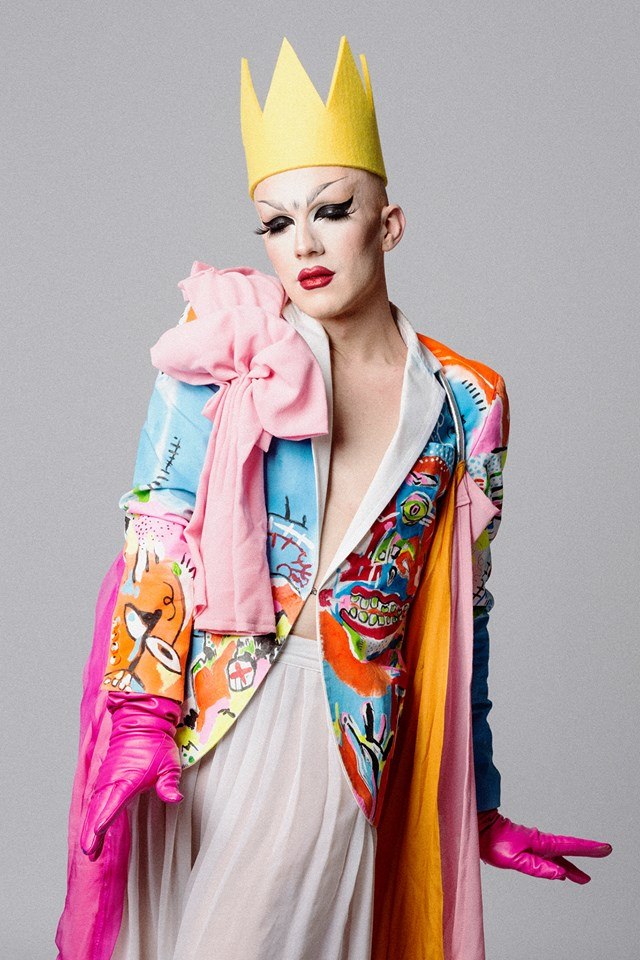
Drag queen Sasha Velour 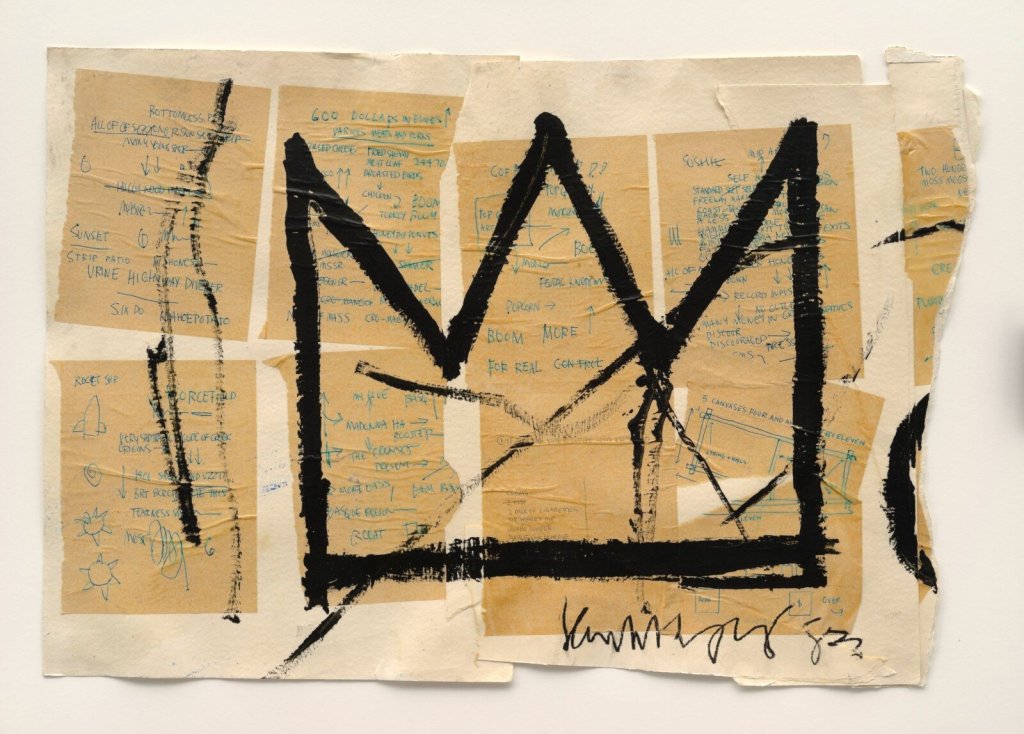
1982 Basquiat collage, including the crown imagery. 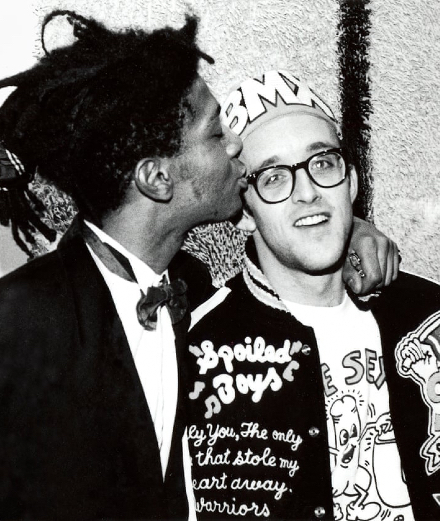
Basquiat and Keith Haring
Following the death of friend and fellow artist Andy Warhol, Basquiat’s final years were filled with drug dependency while continuing to create and travel for exhibitions around the world. Although Basquiat claimed to have abandoned his drug addiction, he sadly died of an accidental heroin overdose in his New York studio in 1988, aged just 27.
INSPIRATION
As I am dealing with personal matters in my current project (which is a recurring quality of my art), I relate to Basquiat’s work, respectively his use of text of seemingly random yet meaningful words and sentences.
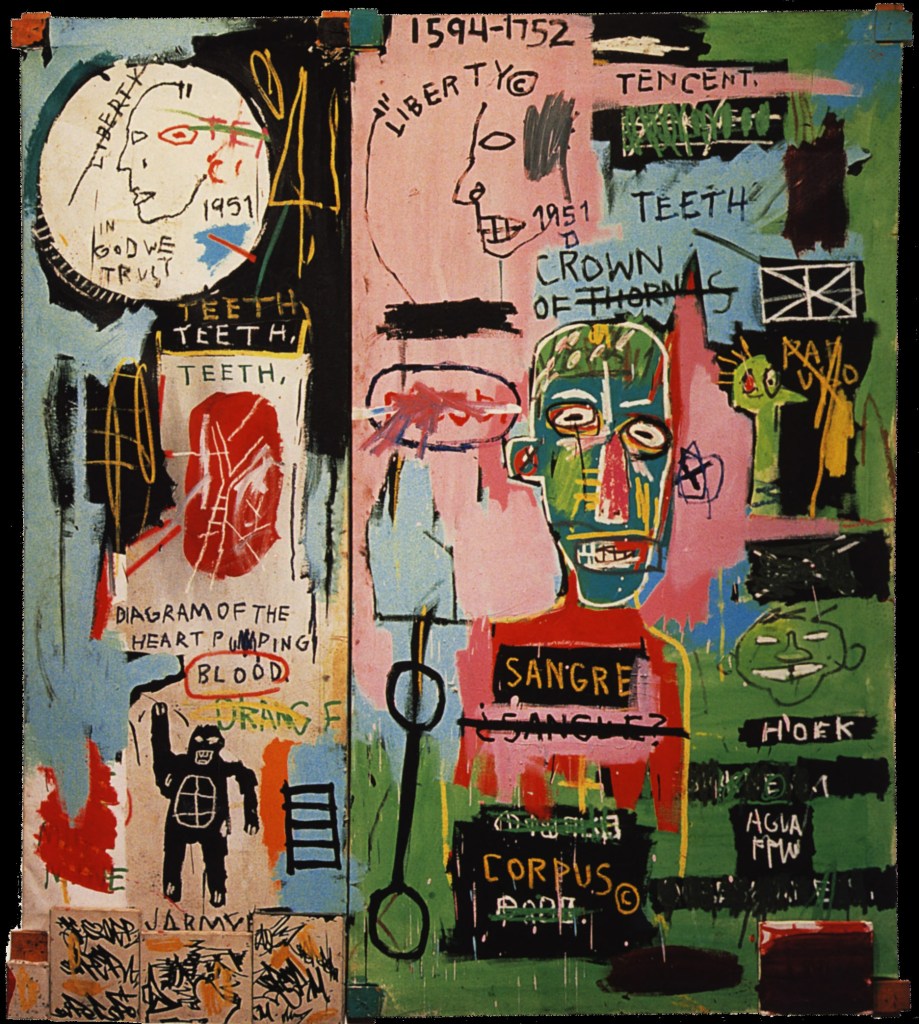
I am drawn to his bold yet still subdued use of colour, especially seen in the images below. Although the piece catches your eye, they are not obnoxiously blinding combinations and are often layered beneath a myriad of culturally important subjects. I think I am interested in this style of work as although it is purposefully imperfect, it is still beautiful art. It goes against this incorrect idea people have of needing to be an incredible drawer to create art *. Each piece has so much going on, it draws you in – every time you look you find something new.
*That is not to say that this work looks unskilled or rushed, it’s almost the opposite. I wish I could have seen a piece be created in real time, watching the progress of layers built on top of layers, covering old subject matter with a coat of paint.

 ninamcmullanHND