The timeline of embroidery can be recognised as far back as 30,000 B.C., with archaeologists discovering rare findings such as stitched clothing. Embroidery has also been recorded to be used in ancient China and India, with precious items of clothing such as silk wedding dresses being embellished with beautiful decorative stitching. Since then, there are many records of embroidery existing for many different uses all over the world, yet the subjects have developed throughout history, relating to political and social movements. I am beginning to use embroidery in my own work for my project, and felt it was crucial to look into the story of embroidery, especially its relation to women and femininity.
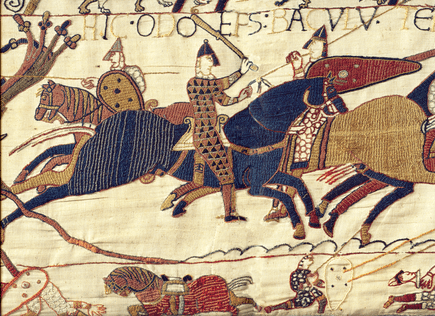
As aforementioned, embroidery has existed most likely since before we have record of. The use of needle and thread has historically been a skill passed down between family and communities members, notably being used as a way to document the life happening around them. Techniques were shared between women and stored in a ‘stitch book’ to be passed on through generations. For example, the Bayeux Tapestry, created in England between the 10th-11th century. The Bayeux Tapestry (or, La telle du conquest), is a 70 metre by 50cm tapestry, telling the story of the Battle of Hastings. This large piece displays 70 scenes, each hand embroidered with wool yarn (known as the technique ‘crewel’) on linen.
Embroidery was also used as a way of mending old and broken material items such as clothing. For those of the lower class, this was an inexpensive way of recycling items which are otherwise still usable. For the upper class, embroidery was taught and used in a more decorative manner – including personalisation on linen, known as monogramming. This was partly a way of showing status, but also to help house maids keep track of what belonged to who.
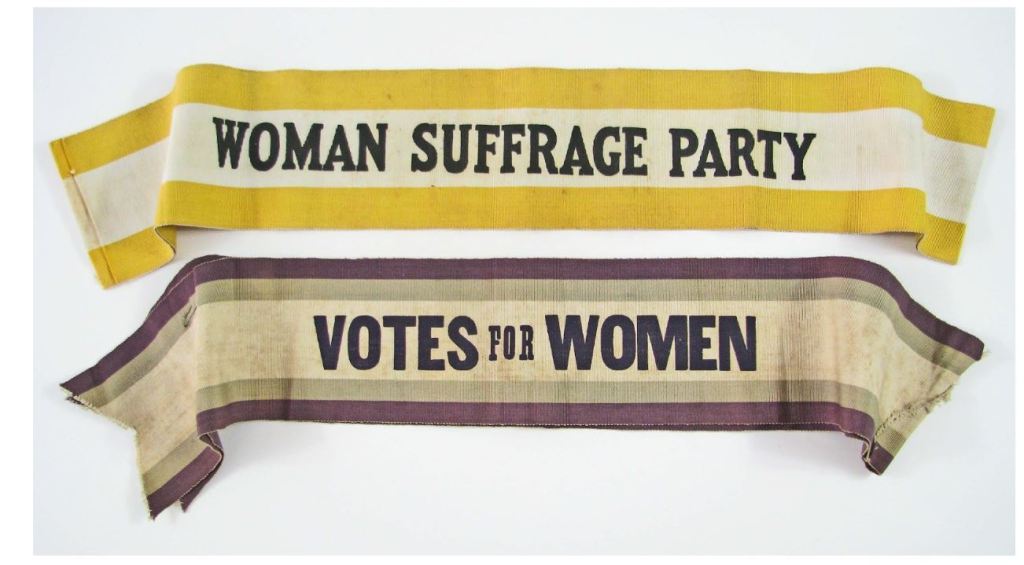
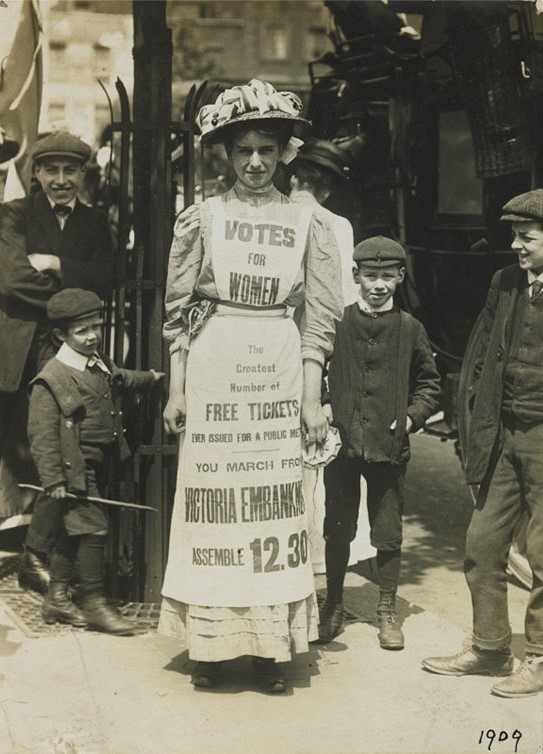
Approaching more recent years of the 1900’s onwards, embroidery became a way for women to express themselves, relating to the drive for the equal rights of women. The suffragette movement in the early 1900’s saw a huge influx of embroidery being used on items of clothing, including dresses, handkerchiefs and sashes, embroidered with words fighting for the rights they deserved. This traditionally feminine way of creating was now being used to combat sexist views. And although this was largely to voice anti patriarchy views, some engaged in embroidery as a way to safely speak up for their rights while remaining anonymous.
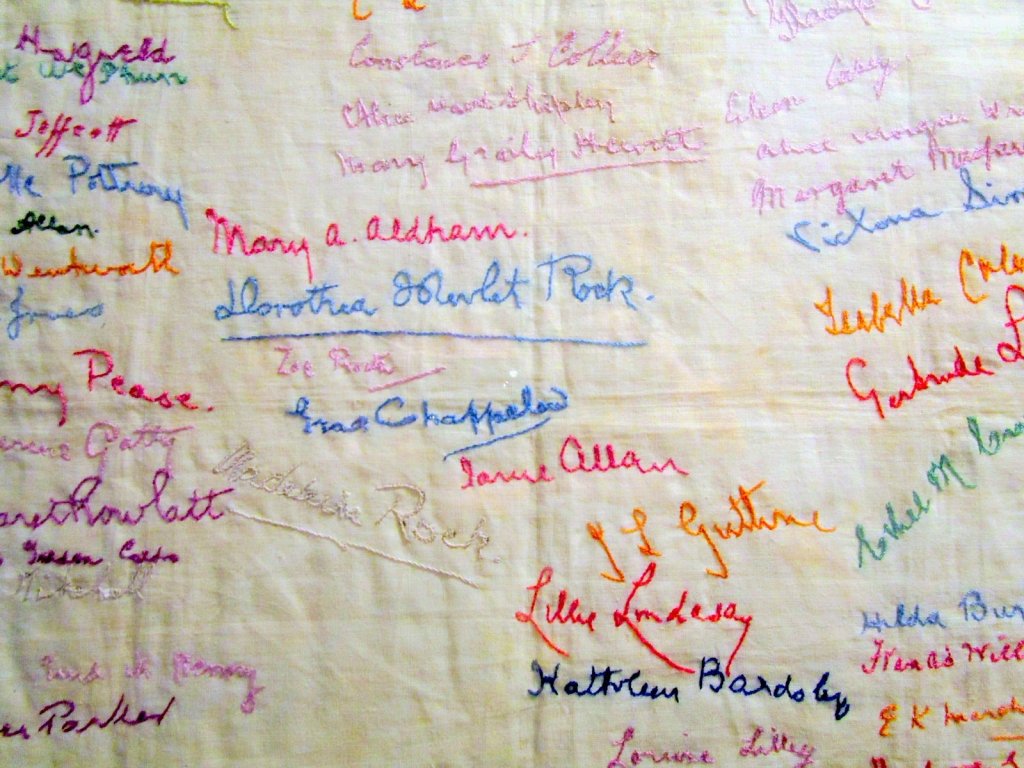
The handkerchief dated 1912 shown above displays a collection of names of women who were arrested during the suffragette movement, residing in Holloway Prison, London. Each imprisoned woman embroidered their own names as a way of documenting those who suffered.
This has since translated to contemporary art, as seen below. If you Google ‘feminist embroidery’, you are advertised girl power embroidery stencils on Amazon. This signifies a huge shift from the female rights driven protest embroidery of the suffragettes.
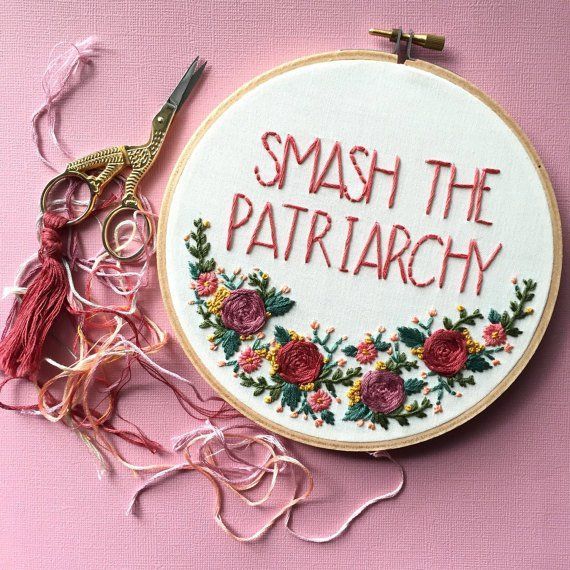
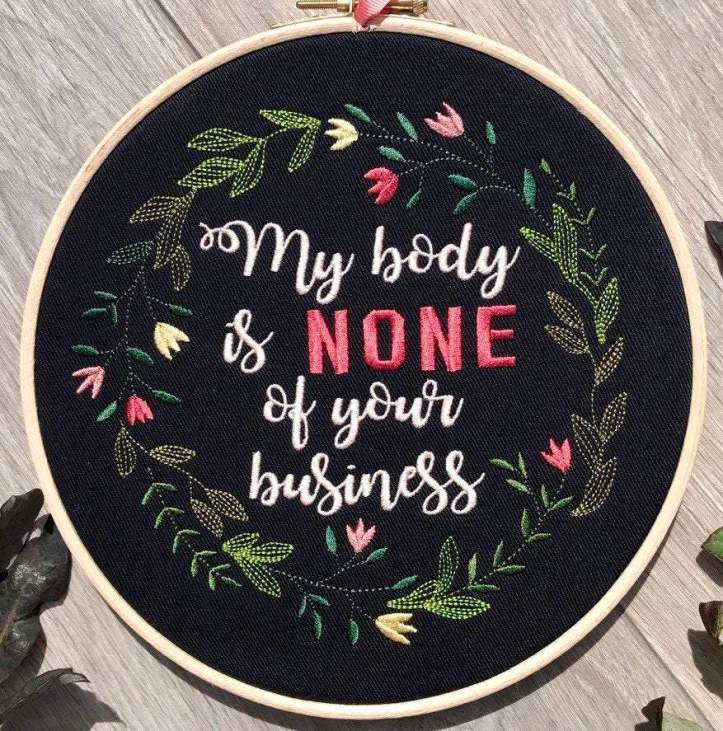
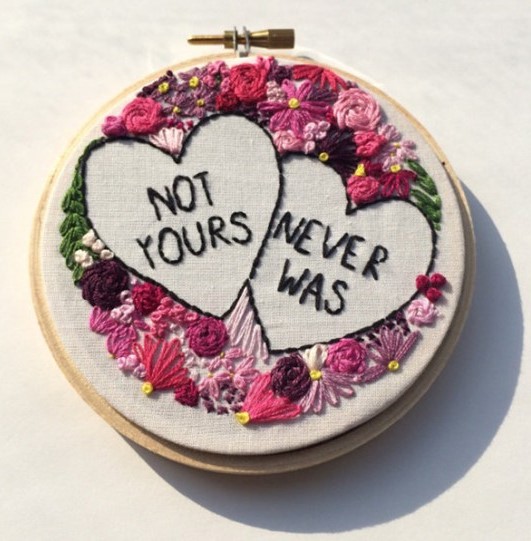
It has become apparent that although embroidery may have been used to express powerful subject matter, it has too remained a peaceful activity shared between women in communities and families from very early years. It has been used as an escape for some, a relaxing and focused way to create, communicate, and document. I look forward to using embroidery in my own current project due to its relaxing, visually effective nature, while holding this very important history simply through its existence.
Opinion | The Feminist Power of Embroidery – The New York Times (nytimes.com)
Embroidery as Record and Resistance (contingentmagazine.org)
History of embroidery and its rise in popularity | Charles and Elin
Mark My Words: The Subversive History of Women Using Thread as Ink (vice.com)
Prison embroidery by Suffragettes, 1905 – 1914 – Selvedge Magazine
 ninamcmullanHND