KARLA BLACK (1972)
Scottish born sculptor Karla Black primarily works in 3D form, using materials such as plaster, paint, paper, and chalk to create forms which explore themes such as feminism and psychology. She studied at Glasgow School of Art, graduating in 1999.
The theme of femininity is explored through her use of materials in a myriad of her works, using cosmetics as paint. The pieces below show examples of this, using substances such as fake tan, lipstick, vaseline, and hand cream.
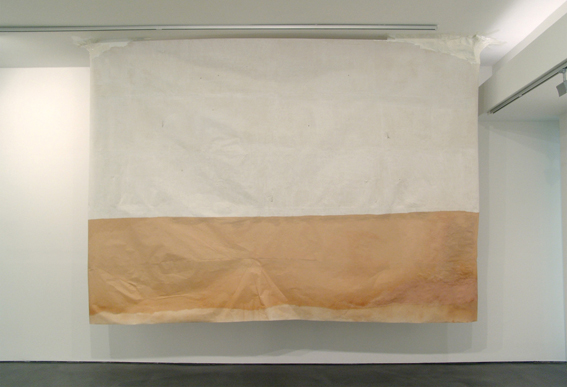
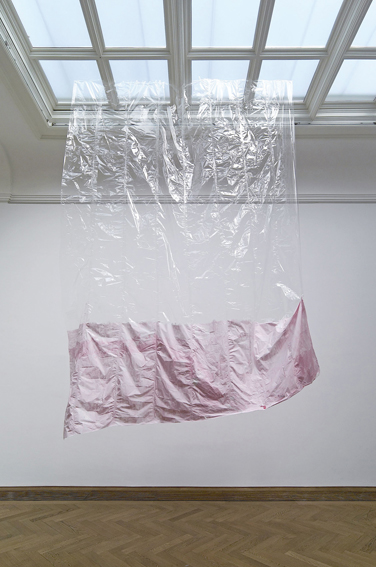
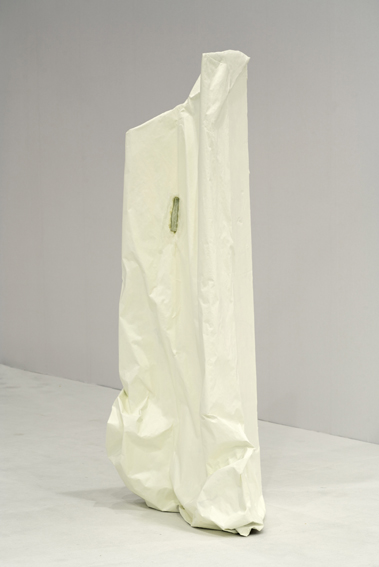
Her colour palette is usually very pale and washed out, combining pastel blues and pinks which could resemble societies stereotypes of gender. Her work often reminds me of a childrens bedroom due to the colours and her work being showcased in very large and bright spaces. Despite their childlike appearance, Black’s sculptures still hold a strong and dominating feeling due to the large scale of her work, no matter the material.
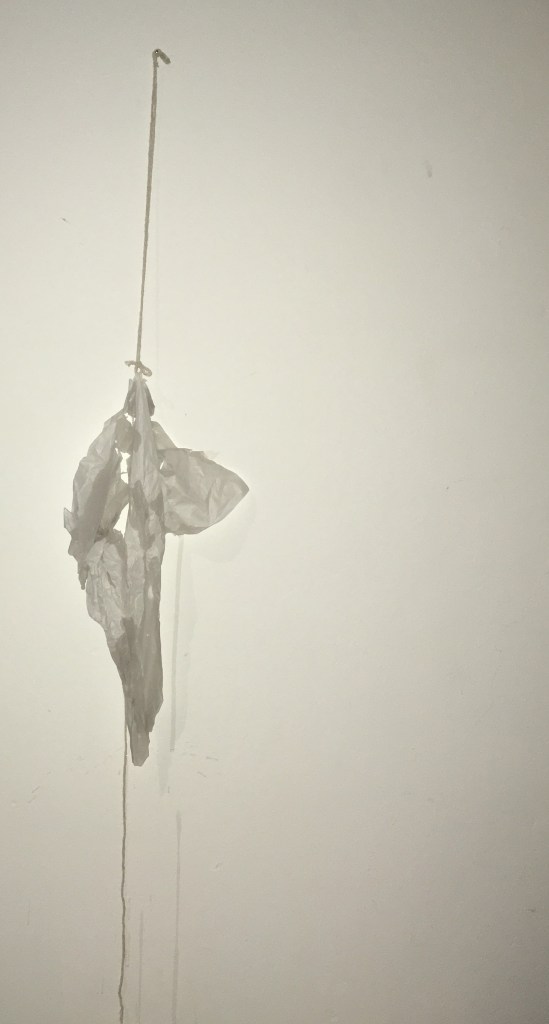
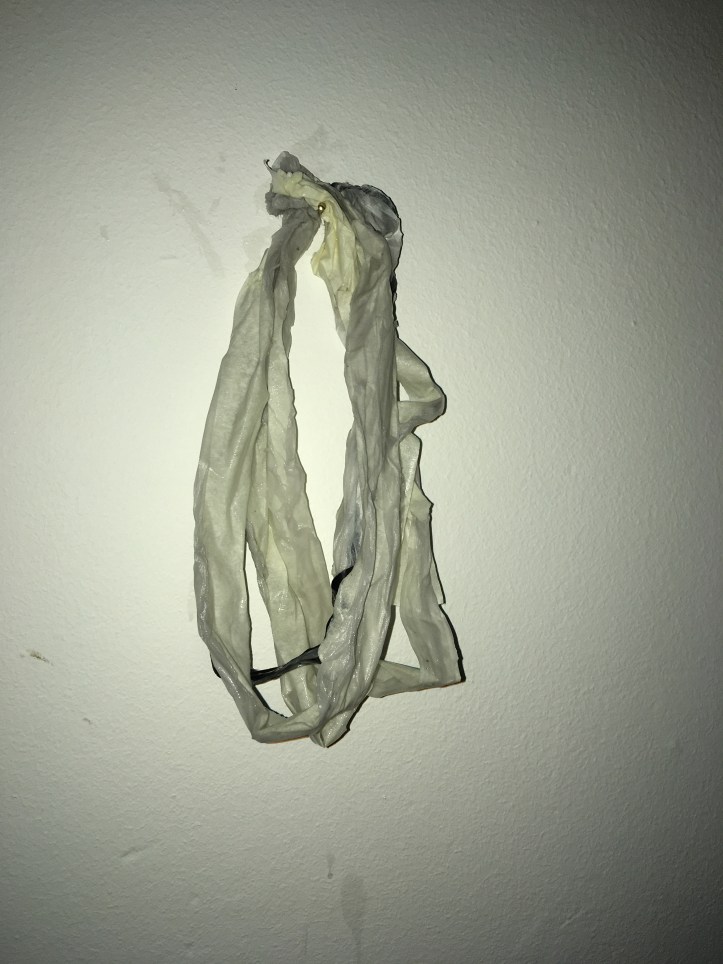
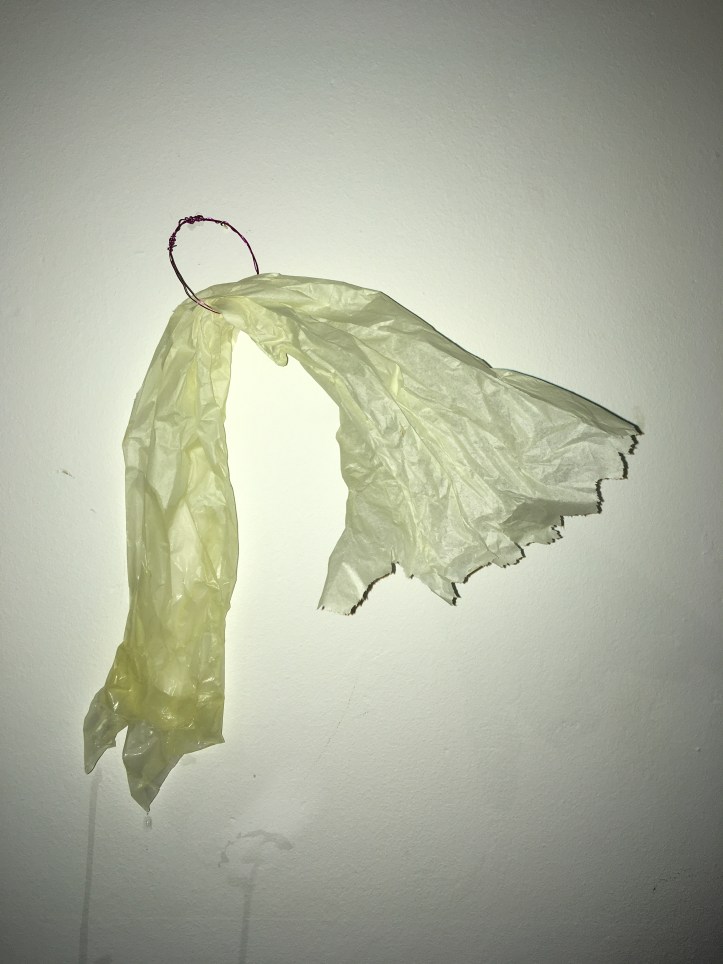
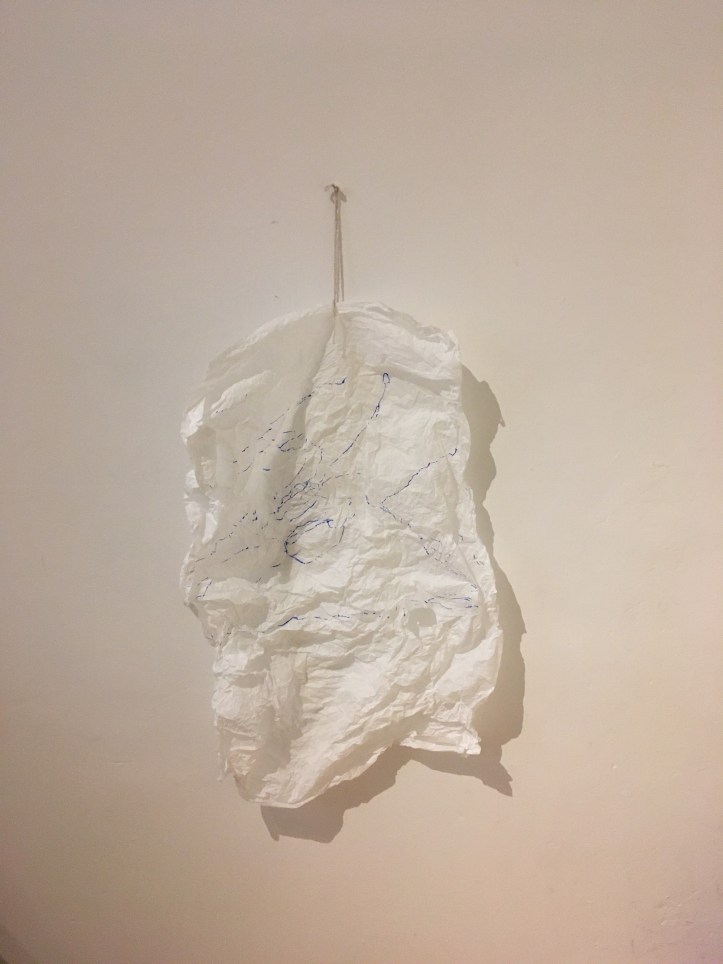
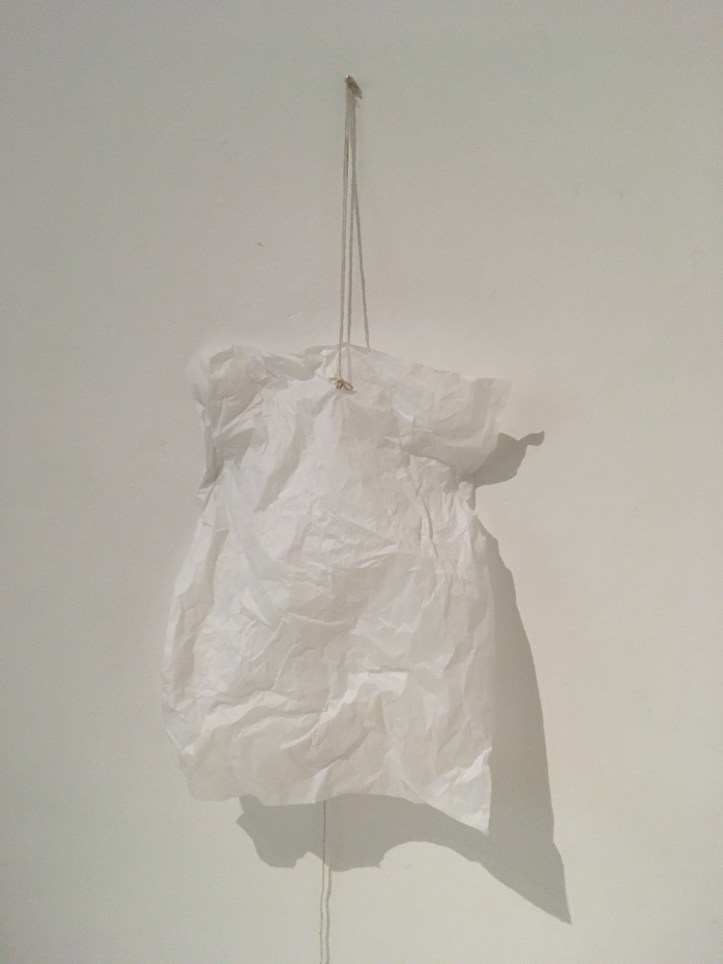
I was inspired by Karla Black for this project due to her use of materials. I was drawn to her visual aspect of weightlessness which she executes through her use of materials such as sugar paper, cellophane, and cardboard. I explored this idea by using tissue paper and water hanging on string, playing around with weight and the change of form once wet.
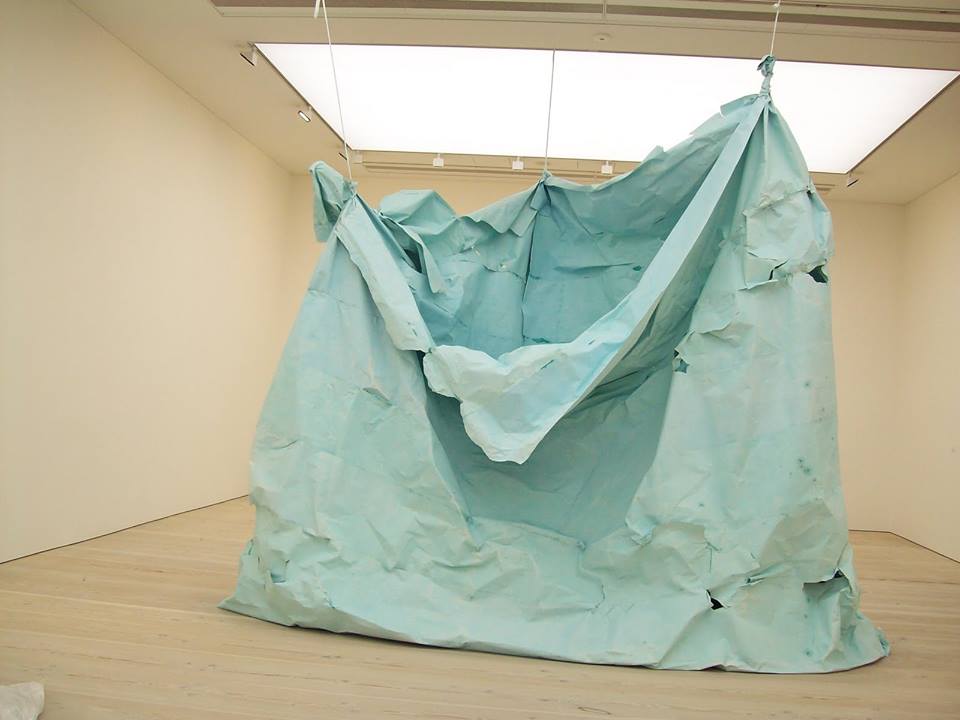
The condition of the materials Black uses in her work interests me as they often appear imperfect. The piece below, titled ‘Nothing is A Must’ shows a large bag/sack form made from sugar paper hanging from the ceiling by ribbon. The form slouches as it reaches the floor, shown with rips and marks all over it made from chalk, lipstick, and glitter hairspray. This clumsy and unclean appearance gives the piece a sense of familiarity, character, and almost sadness due to its hunched posture. It appears fragile and alone. The weight being drawn to the bottom of the bag creates a sense of wonder if it is truly empty – and if not, what is in there? The height reaches 312cm, meaning that we are only able to see enough of the bag and not see inside.
Below is a slideshow of my work inspired by Karla Black.
HENRI MATISSE (1869-1954)
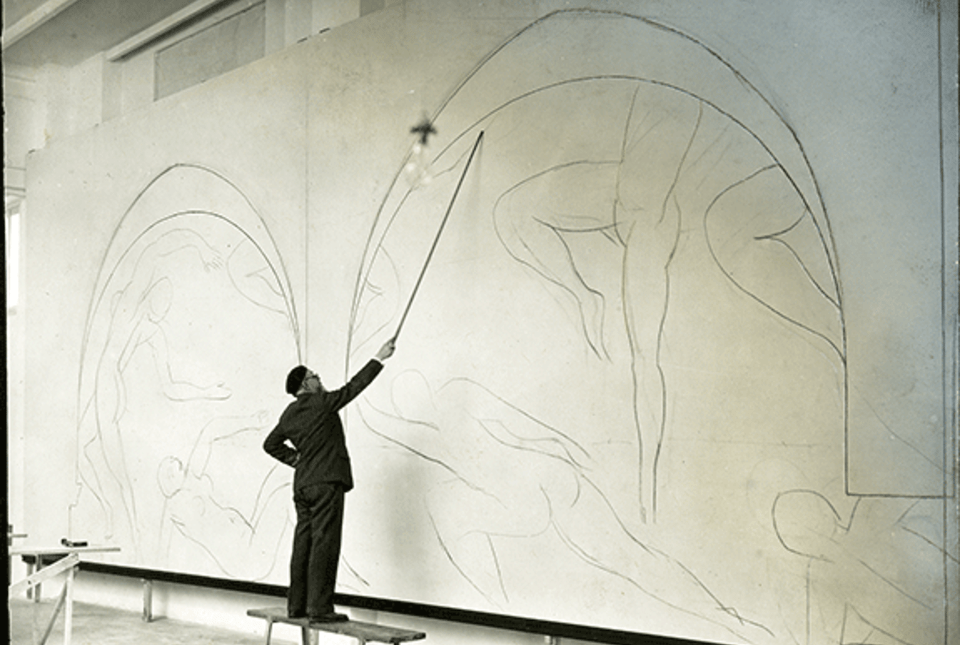
Although Henri Matisse is largely known for his cutouts and abstract paintings, I decided to focus specifically on one method he used for his work – drawing with charcoal attached to a six foot bamboo stick. This method originates from the very simple fact that smaller drawings did not fit the ideas in his head, and that the large scale was more aesthetically pleasing for him. This technique was especially significant as art created during Matisse’ life was still very tight and still. His loose and rounded forms were unusual at this time, and stood out among famous artists from this time period such as Florence Fuller, George Bellows, and Edmund C. Tarbell. Matisse was alongside artists such as Picasso, Edvard Munch, and Egon Schiele, who were pushing the boundaries in form and colour – especially in portraiture.
As Matisse was still working into the later years of his life, he adapted to his living conditions by using this method. He said that holding a pencil was difficult due to arthritis, so using this cane as his pencil was far easier. As his work was usually large scale, the bamboo stick allowed him to continue creating, even if it was while sitting in bed.
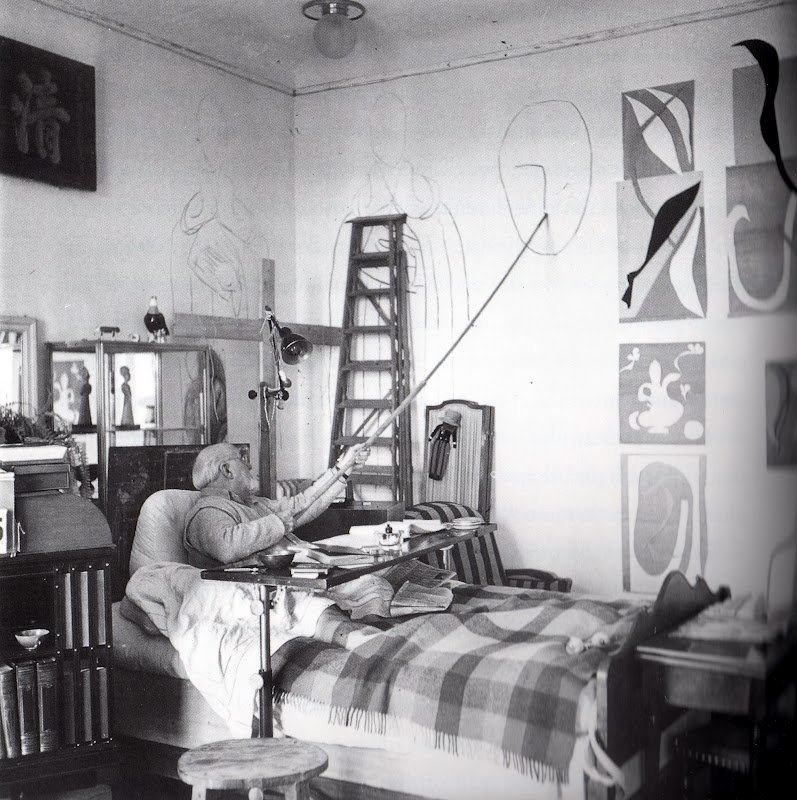
This method obviously makes it easier to cover a large scale surface quicker, beneficial in Matisse’ work as he predominantly worked in a larger scale, even drawing and painting full rooms. What continues to amaze me is his precision and accuracy when working in this method. I would like to use this in future work if working in large scale as it would be time effective and could create some unexpected results. I worry I am too perfect and specific with my work sometimes, so it could be helpful to use this technique to help loosen up my drawing.
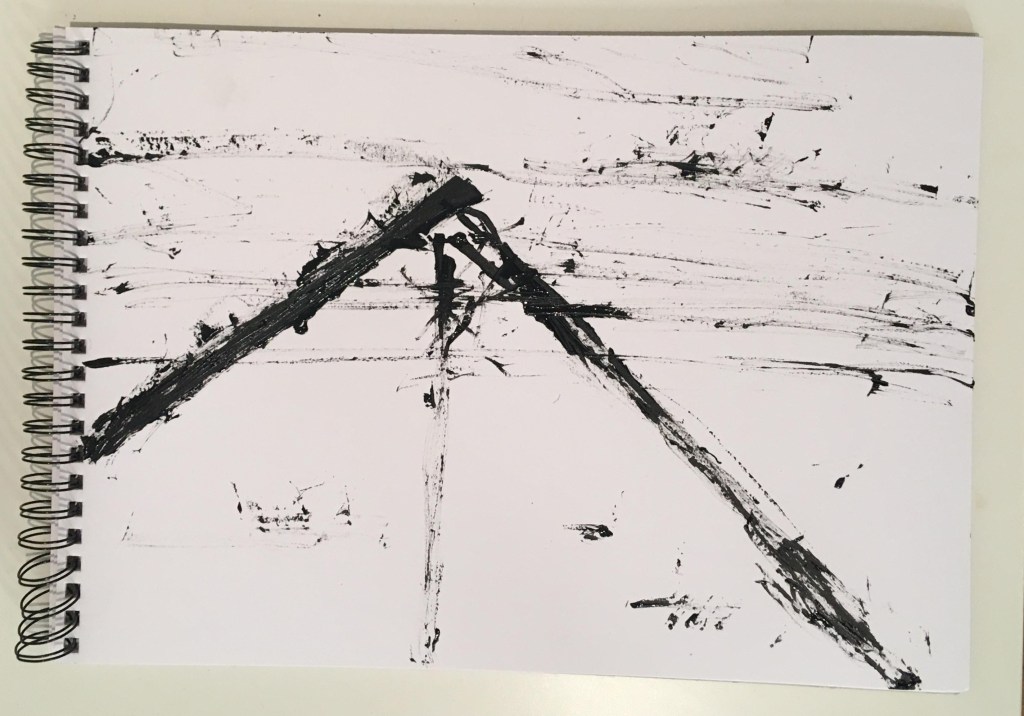
I tried out this method in my project when creating my environmental drawings. I used a stick as my paintbrush, dipping it into black acrylic paint. I loved the jagged lines, and the freeness of not knowing exactly what the outcome will be. It made painting feel more exciting. Although it felt frustrating at the time of attempting to draw waves with a stick, I loved the outcome and how it changes the image. The black on white looks punchy, and using this technique makes you think carefully about the mark you are making before dedicating to it.
 ninamcmullanHND