Justin Bower (1975, San Francisco)
Born in 1975 in San Francisco, Justin Bower graduated in 2010 with a Master’s of Fine Arts from the Claremont Graduate University. He received his undergraduate degree from the University of Arizona in Art and Philosophy. The artist now lives and works in Los Angeles, CA.
Justin Bowers glitched portraits offer an insight to how technology has affected our perception of identity. With technology feeding into our lives more and more every day, Bower as a contemporary artist uses his interest in our relationship with the digital world to inspire his use of brushstrokes, as well as the expression of the model feeling very robotic and cold. Each painting shows the model wide and bright eyed staring towards the viewer or at someone/something else, almost looking for approval. It draws us in to the piece as we become concerned with why they look this way.
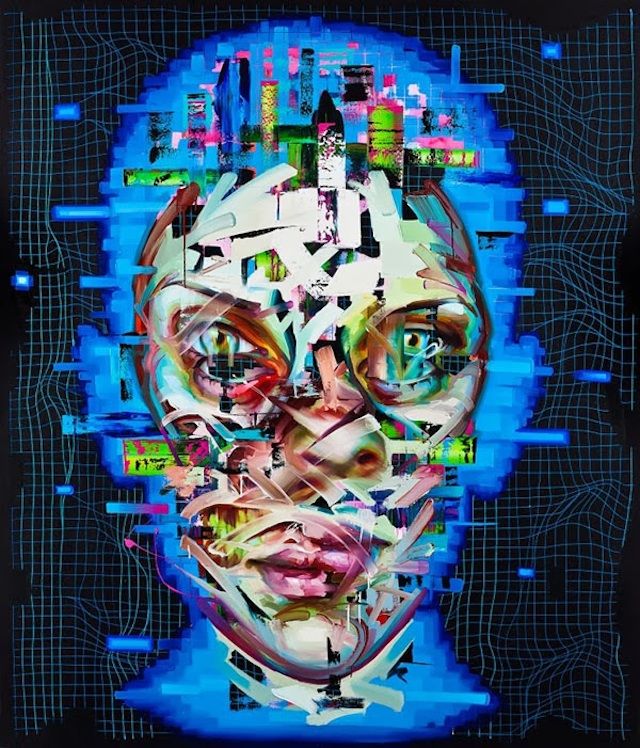
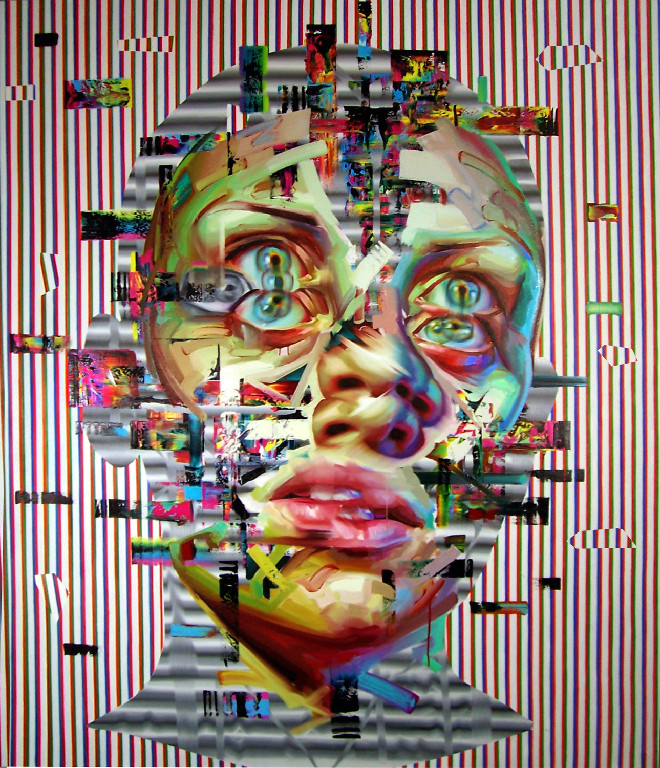
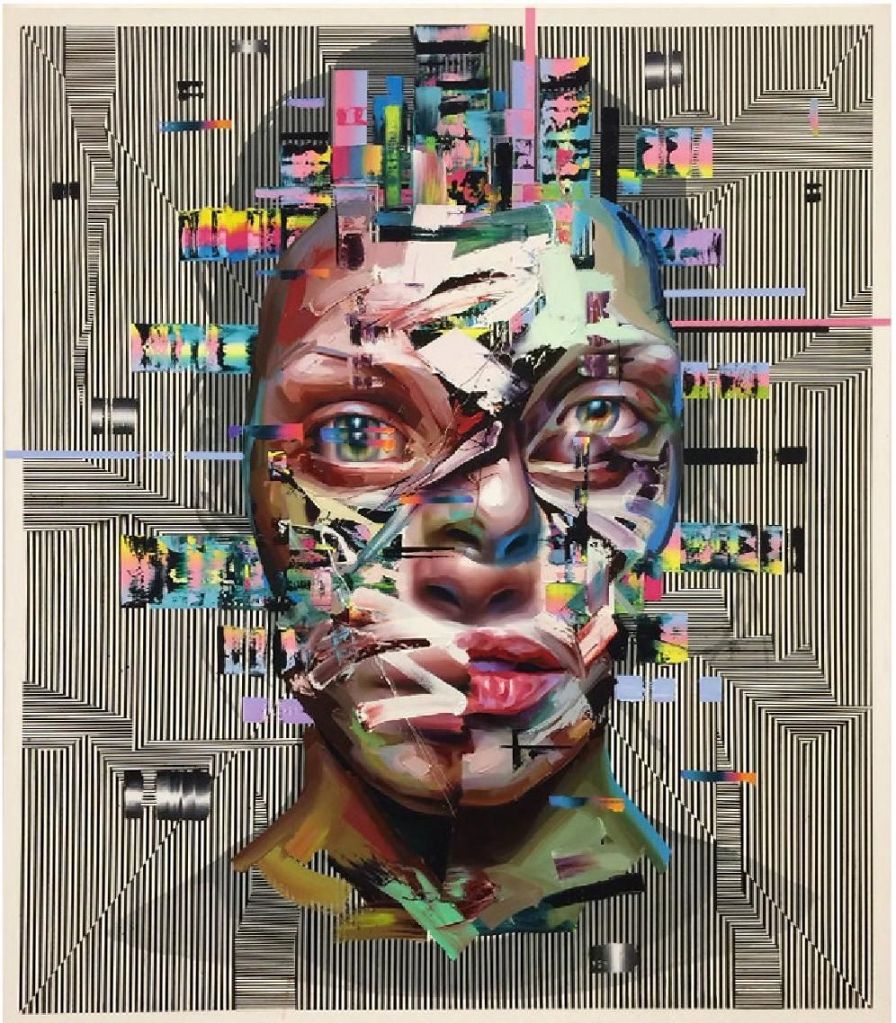
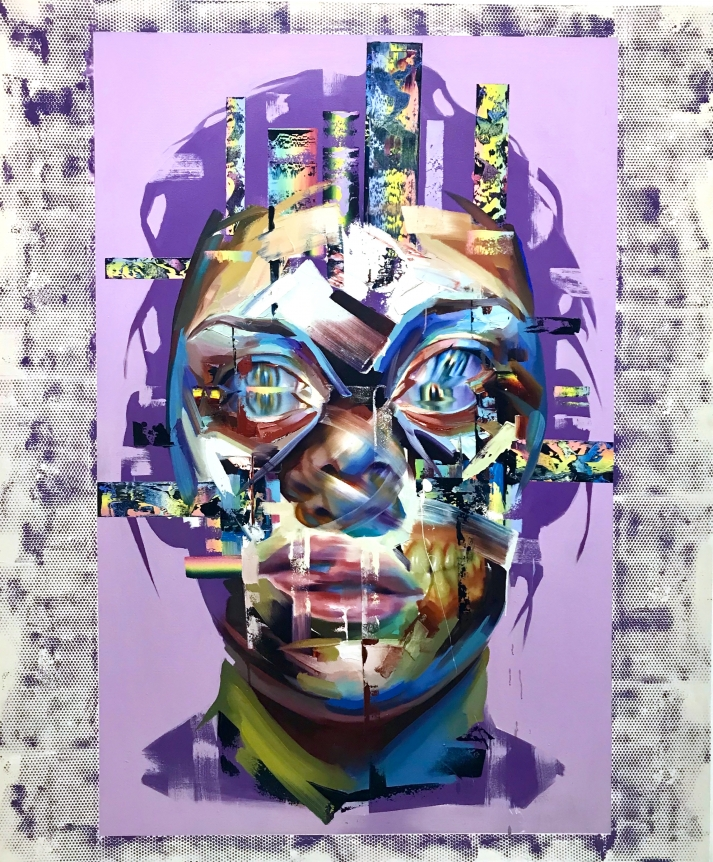
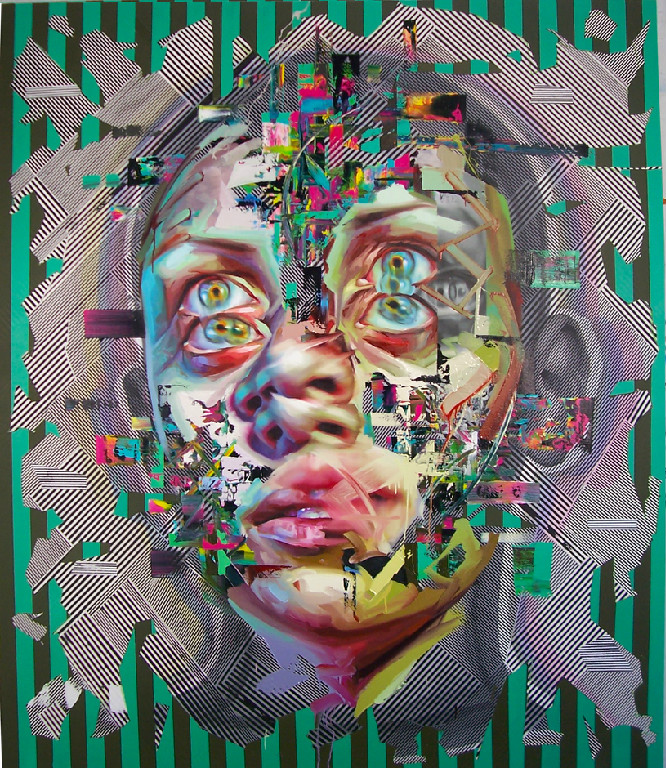
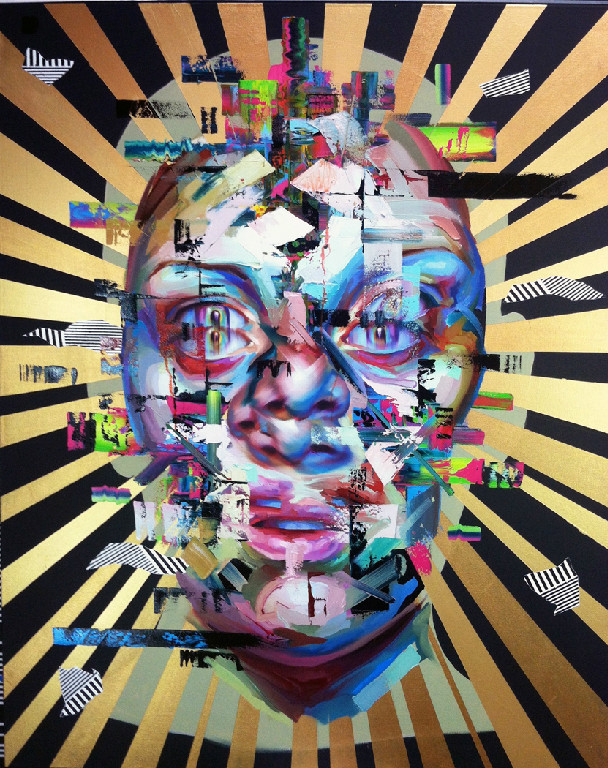
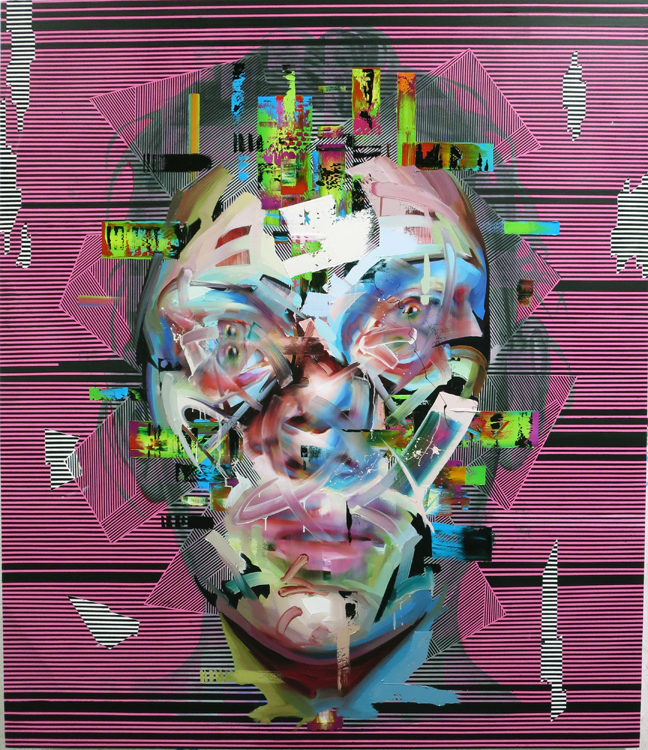
Bower has said that while he is inspired by artists such as Douglas Gordon, Chuck Close, and Willem de Kooning, his biggest influence is the work of Leonardo da Vinci. Parallels between their work can be seen through his interest in the human form, painting expressionless portraits in similar composition.
His use of colour emphasises the theme of the digital world, combining neon blues, greens, and dusty pinks to bring life to the subject. The obvious use of pattern makes each piece more attention grabbing, as well as sometimes making the piece more difficult to look at. These overlapping layers create this overwhelming feeling as they are placed around or even on top of the model. The subjects look as though they are being controlled, making them appear more unhuman. This links back to the artists influence of technologies affect on our every day lives and how it is has been conditioned into every aspect of our lives.
I came across Justin Bower’s work while looking for tutorials on how to draw glitches, and found that his use of short brush marks and overlapping patterns help to achieve this appearance. By multiplying the facial features, it takes away from realism and thus creates a more digital feel. I love his use of colour as his the undertones and hues used stand out from traditional portraiture, helping to add to the atmosphere of each painting.
 ninamcmullanHND