In my previous blog post, I researched the history of embroidery, mentioning the social and political relationship it has had with women. As I plan to look into embroidery and stitching in clothing, I felt it was important to specialise in the history of embroidery in the fashion world.
Embroidery is recorded to relate to a symbol of societal status across different cultures. For example, embroidery in Japan (known as nihon shishu) 1600’s years ago was solely used to embellish items of clothing worn in events such as weddings and religious ceremonies, specifically using precious materials such as silk. In the modern world, artists have since taken this technique into their own hands as a way of creating and expressing without religious undertones.
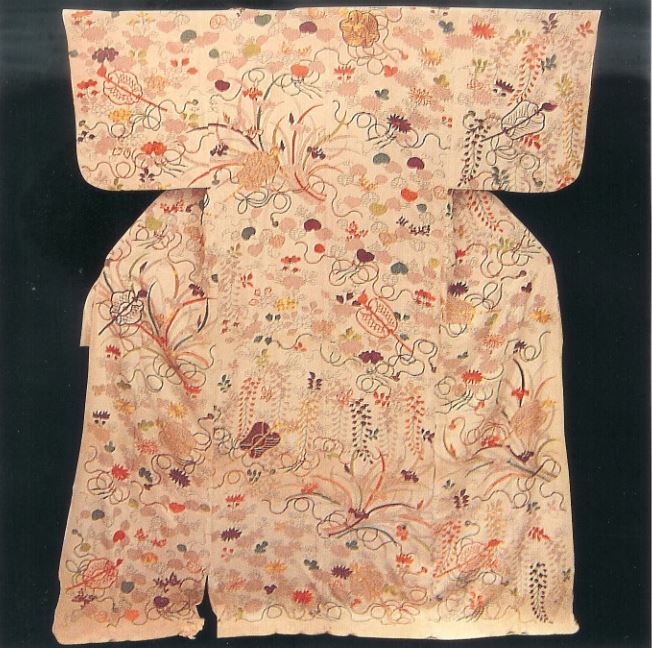
While embroidery in clothing was used to embellish special items of clothing and to show social status, artists began to take this technique into their own hands as a way of creating and expressing without religious undertones. It was around the mid 1800’s before embroidery in the western world began being used for commercial items when 15 women were hired by Swiss designer Jacob Schiess in New York to hand embroider onto clothes. These embellished items were worn by the upper class due to the price because of the time and effort put into the garment, but as popularity grew, creating by hand could not keep up with the high demand. By the 1870’s, the construction of handloom embroidery in Switzerland was being utilised in fourteen companies. Machine embroidery was then introduced in America by Joshua Heilmann in the 1800’s, an intention influenced by the Swiss loom machine.
Looking ahead to the contemporary world, the technology of sewing machines have grown massively to make the process of embroidery and sewing so much easier and quicker than before.
EMBROIDERY AND TEXT IN THE FASHION WORLD
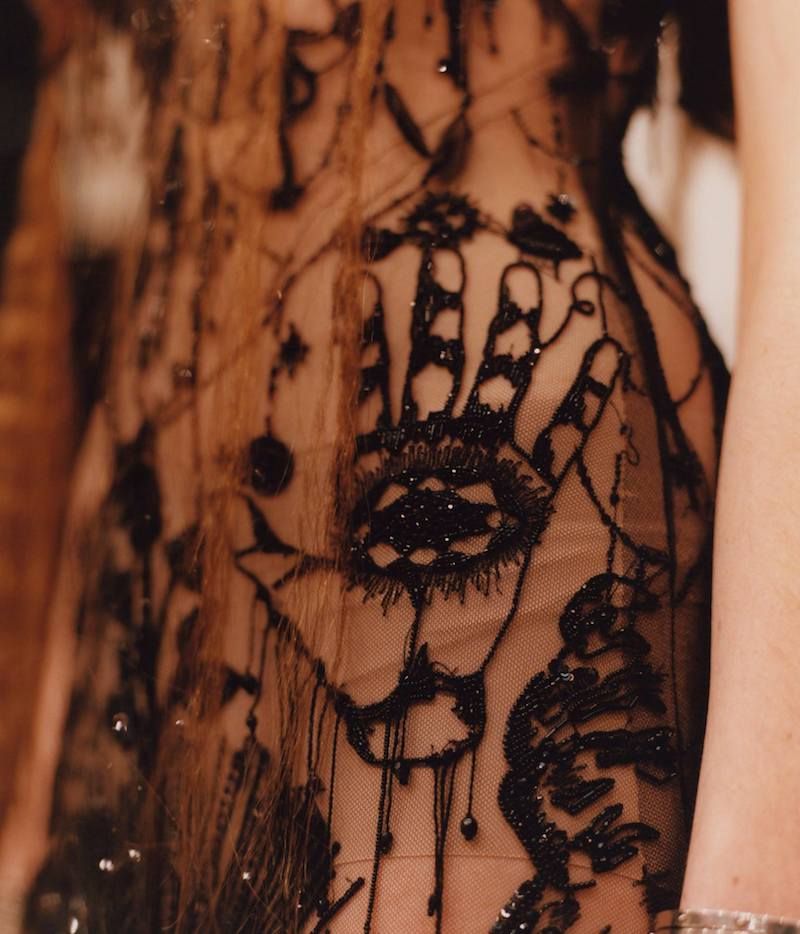
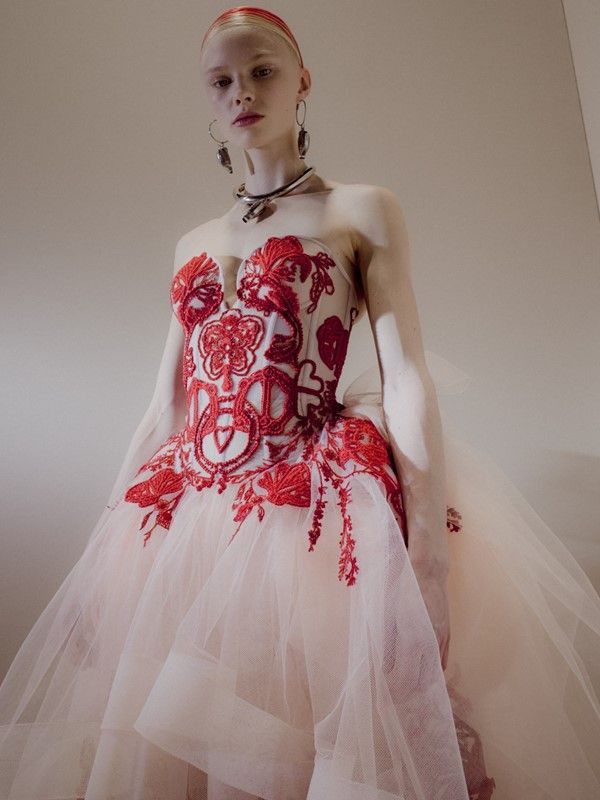
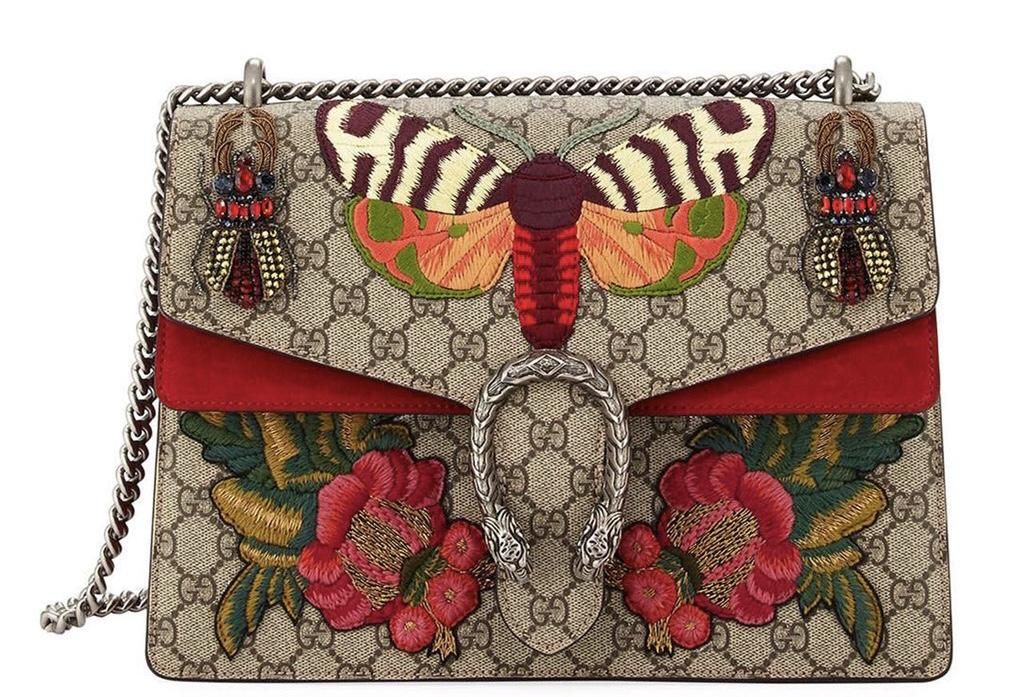
As aforementioned, embroidery in fashion began as a way of showing social status and embellishing precious garments. In the contemporary world, embroidery is still used in high fashion as a way of decorating items. Names such as Chanel, McQueen, and Valentino (featured below) have used embroidery as a way of adding texture and pattern.
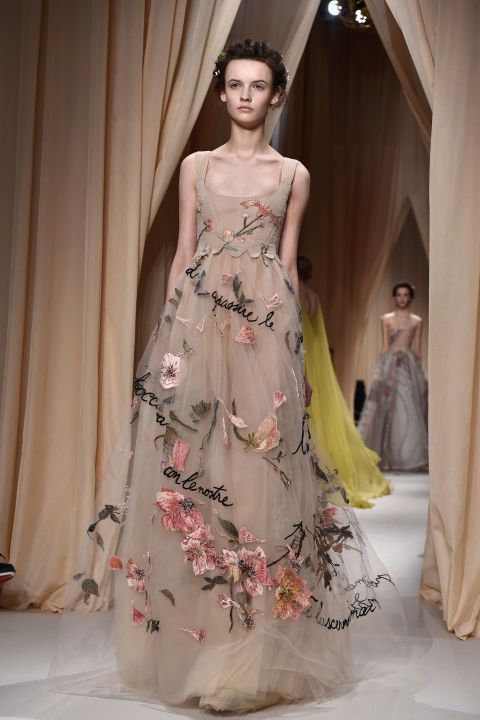
Embroidery too exists in the feminist world amongst contemporary artists, used by names such as Louise Bourgeois and Jenny Holzer. Both have used embroidered text in clothing to express feminist views. This is important as although embroidery is known as a female oriented art, they are using this to speak out against sexism. Displayed below are examples of this work;
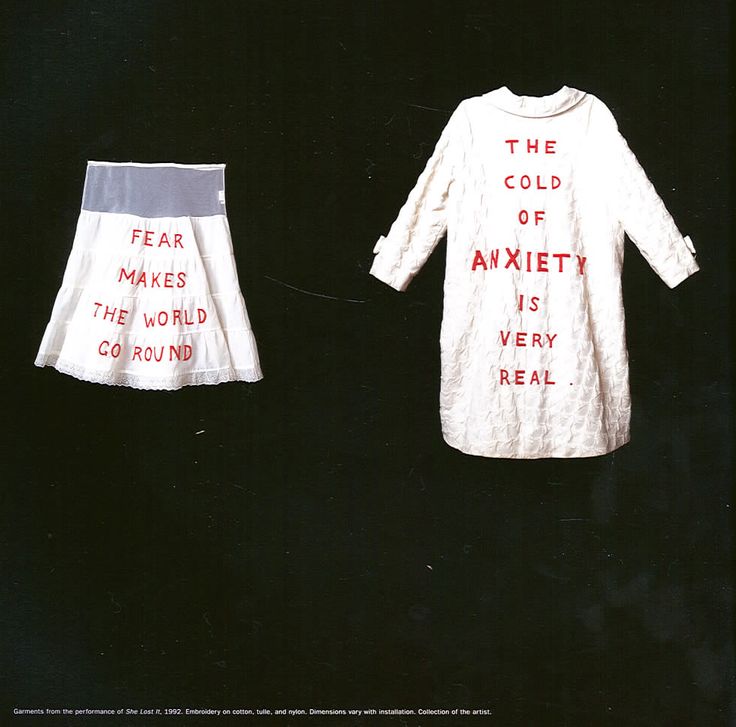
Louise Bourgeois (1992) 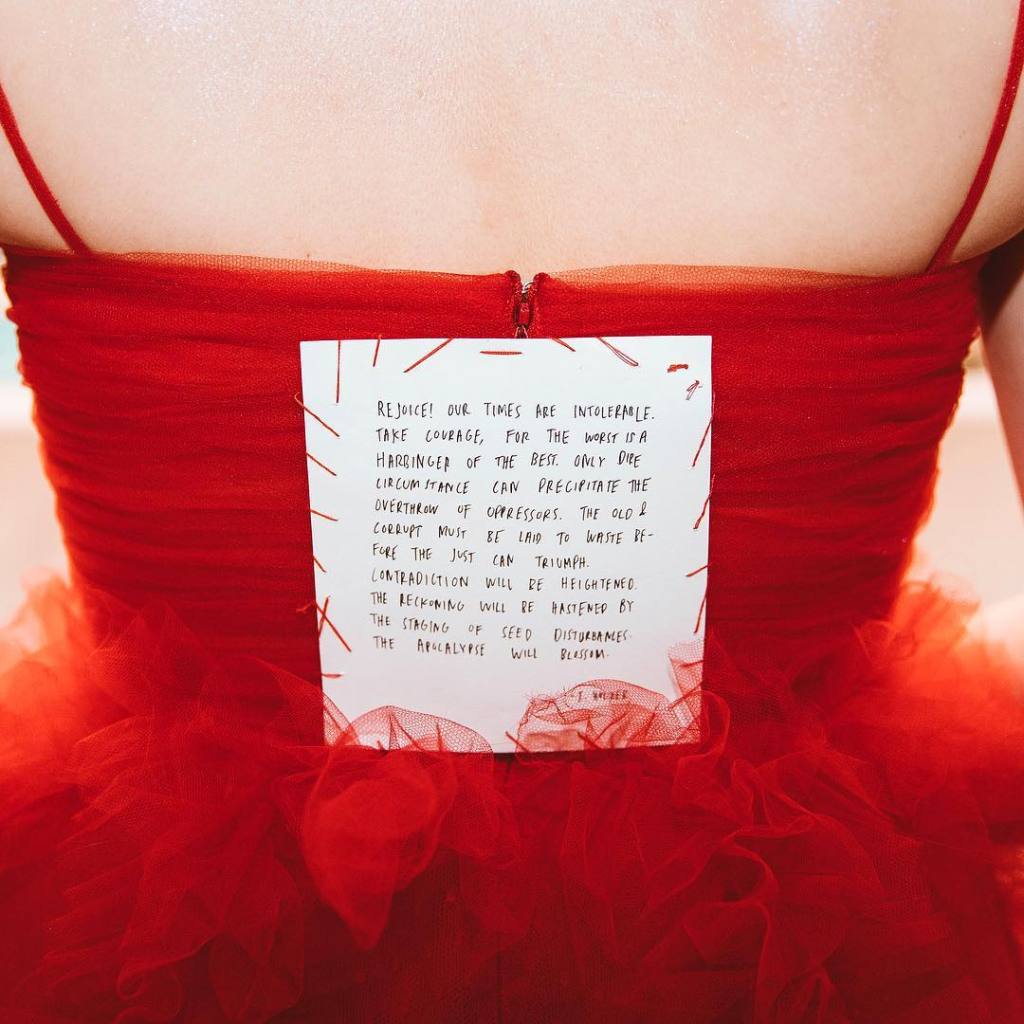
Jenny Holzer (2018)
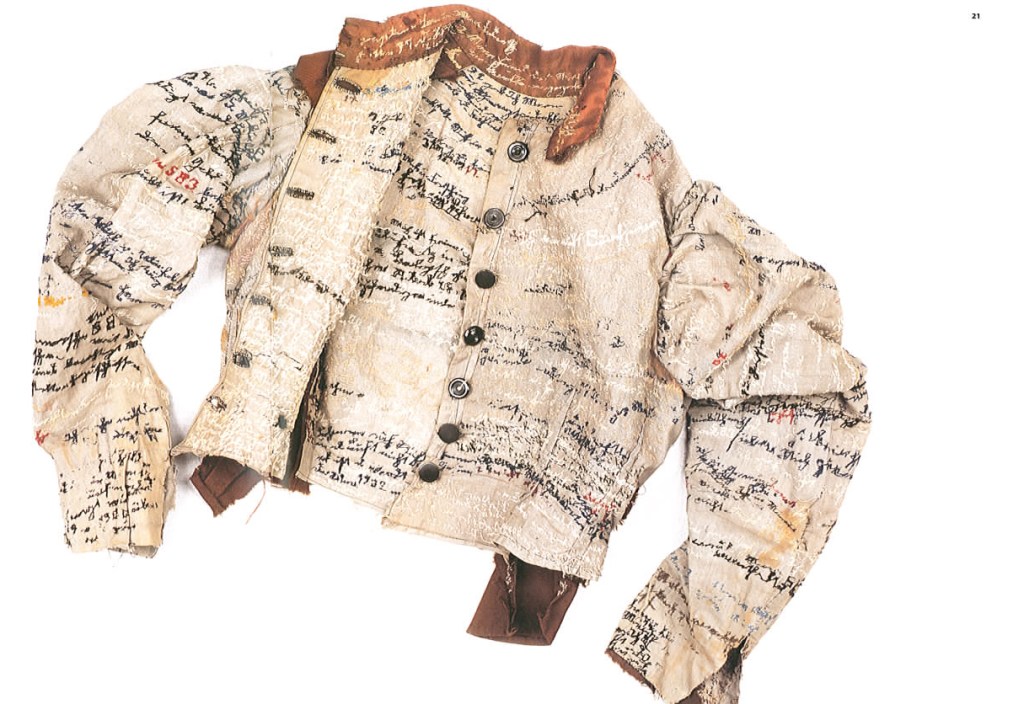
An early example of embroidered text on clothing can be seen in Agnes Richter’s 1895 linen jacket. Richter was admitted to a mental hospital during this period due to suffering from extreme paranoia, and used this jacket as an attempt to remember who she really was while facing the forced life of being institutionalised, almost like a diary. This is very much like the story of the imprisoned suffragettes sewing their names onto a handkerchief as I wrote about in my previous blog post. This signifies that embroidery is often used as a way of documentation and communication alongside artistic expression.
Embroidery | LoveToKnow
Fashion Archives: A Look at the History of Embroidery (startupfashion.com)
daruma-nihonshishu.pdf (fuyuya.com)
Unveiling The Intricasses Of Embroidery In Luxury Fashion (bocadolobo.com)
 ninamcmullanHND